
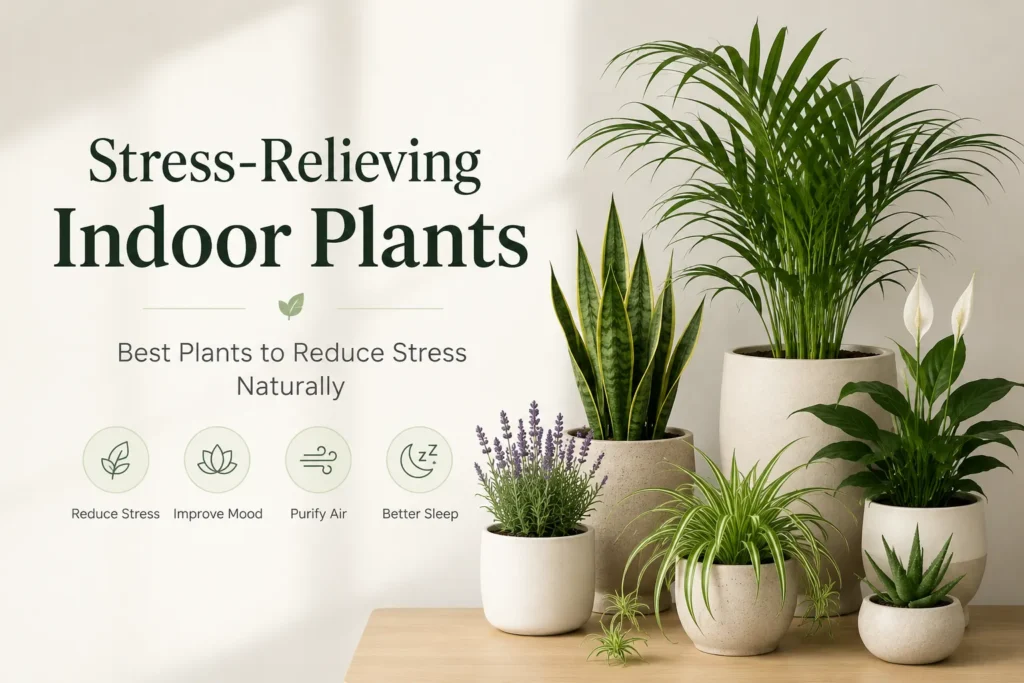
Introduction
Modern life can feel busy and stressful. Long work hours, endless screen time, and daily responsibilities often leave people feeling tired and anxious. Creating a peaceful home environment can help reduce that stress. One simple way to do this is by adding stress-relieving indoor plants to your living space.
Indoor plants do much more than decorate your home. They clean the air, improve humidity, and bring a touch of nature indoors. Many plants also have calming scents or beautiful green leaves that help your mind relax. Even spending a few minutes caring for plants can improve your mood.
This guide explains the best indoor plants for reducing stress naturally. You will also learn how these plants support mental wellness, improve air quality, and create a healthier home.
Why Indoor Plants Help Reduce Stress
Many people feel calmer when they spend time around nature. Indoor plants bring that natural feeling inside your home or office. Their green leaves create a peaceful environment that helps your mind slow down.
Research shows that plants may lower stress levels and improve emotional well-being. Looking at greenery can reduce mental fatigue after a long day. Caring for plants also encourages mindfulness because it helps you focus on the present moment.
Indoor plants also improve indoor air quality. Cleaner air and a comfortable environment can make you feel healthier and more relaxed. That is why many homes, offices, and wellness spaces include plants as part of their design.
Best Stress-Relieving Indoor Plants
Different plants help reduce stress in different ways. Some have calming fragrances, while others purify the air or create a relaxing green environment. Choosing the right plant depends on your lifestyle and personal needs.
Fragrant Flowering Plants
Flowering plants release pleasant scents that naturally relax the mind. Many people place these plants in bedrooms or living rooms to create a peaceful atmosphere.
Lavender
Lavender is one of the most popular plants for stress relief. Its gentle fragrance helps calm the nervous system and encourages better sleep. Many people also use lavender to reduce anxiety and improve relaxation after a busy day.
Jasmine
Jasmine produces sweet-smelling flowers that create a soothing environment. Its pleasant scent may improve mood and reduce feelings of stress. Keeping jasmine near a sunny window can make your room feel fresh and peaceful.
Chamomile
Chamomile is well known for its calming properties. Its light fragrance supports relaxation and restful sleep. Many people enjoy growing chamomile because it offers both beauty and wellness benefits.
Rose
Roses are loved for their beautiful flowers and comforting fragrance. Their scent creates a relaxing atmosphere that helps improve emotional well-being. Indoor rose varieties also add elegance to any room.
Lilac
Lilac flowers fill the room with a soft floral scent. Their fragrance helps create a calm environment and supports relaxation. They also brighten indoor spaces with colorful blooms.
Foliage & Palm Plants
Leafy plants create a cool and refreshing atmosphere. Their green appearance reduces visual stress while improving indoor air quality.
Snake Plant
Snake Plant is one of the easiest indoor plants to grow. It removes indoor pollutants and releases oxygen during the night. This makes it an excellent bedroom plant for better sleep.
Areca Palm
Areca Palm adds a tropical look to your home. It naturally increases indoor humidity while filtering the air. Its large green leaves create a peaceful and relaxing environment.
Spider Plant
Spider Plant is beginner-friendly and grows quickly. It removes harmful pollutants from indoor air and requires very little care. It also looks beautiful in hanging baskets.
English Ivy
English Ivy works as a decorative climbing plant. It helps clean indoor air by removing airborne pollutants. Its trailing vines add a soft natural touch to your home.
Fern
Ferns increase humidity while adding gentle greenery. Their soft leaves create a relaxing visual effect. They grow well in bathrooms and other humid spaces.
Money Plant
Money Plant is popular because it is easy to maintain. It grows well indoors and improves air quality. Many people also believe it brings positive energy into the home.
Herbs & Succulents
Some herbs and succulents offer both health benefits and practical uses. They require little space while adding fresh fragrance to your home.
Basil (Tulsi)
Tulsi holds an important place in traditional wellness practices. Its refreshing aroma creates a calming atmosphere. It also grows easily in sunny indoor spaces.
Aloe Vera
Aloe Vera is famous for its healing gel. Besides its medicinal uses, it also helps improve indoor air quality. It requires very little watering and is ideal for beginners.
Jade Plant
Jade Plant has thick green leaves and needs very little maintenance. It survives well with minimal watering. Its neat appearance creates a clean and calming environment.
Rosemary
Rosemary produces a refreshing herbal fragrance. Many people believe it helps improve concentration and memory. It is an excellent choice for study rooms and home offices.
Lemon Balm
Lemon Balm releases a fresh citrus-like scent. Its calming fragrance helps reduce stress and improve relaxation. It also grows well in containers near sunny windows.
Health Benefits of Stress-Relieving Indoor Plants
Indoor plants support both your mind and body. Their benefits go beyond simple decoration. A healthy indoor environment can improve your overall quality of life.
Mental Well-being
Indoor plants help reduce anxiety and mental fatigue. Green surroundings improve mood and make stressful situations feel more manageable. Caring for plants also builds a relaxing daily routine. Many people feel happier and more focused after spending time with their plants.
Physical Improvements
Plants may help lower blood pressure and reduce heart rate during stressful moments. Cleaner air supports easier breathing throughout the day. Some plants also improve sleep quality by creating a healthier bedroom environment. Better sleep naturally supports overall physical health.
How Indoor Plants Reduce Stress
Indoor plants reduce stress through several natural processes. Together, these benefits create a healthier and more relaxing home.
Air Purification
Many indoor plants remove pollutants from indoor air. Cleaner air makes breathing easier and creates a fresher environment. Some plants help reduce airborne toxins and improve indoor comfort. Snake Plant also releases oxygen during the night, making it ideal for bedrooms.
Sensory Benefits
Plants appeal to several senses at the same time. Their green leaves reduce visual stress while fragrant flowers calm the mind. Natural scents encourage relaxation without artificial fragrances. Together, these features create a peaceful indoor atmosphere.
Psychological Benefits
Caring for plants encourages mindfulness. Watering, pruning, and watching new leaves grow creates a sense of achievement. These simple daily habits help reduce anxiety and build positive routines. Indoor gardening also strengthens your connection with nature.
Tips to Care for Stress-Relieving Indoor Plants
Healthy plants provide the greatest wellness benefits. Simple care keeps them growing strong throughout the year.
Place most indoor plants in bright, indirect sunlight. Water only when the soil feels dry to avoid root rot. Choose pots with drainage holes to prevent excess water buildup. Wipe dust from leaves regularly so plants can absorb more light. Rotate pots every few weeks for even growth. Check leaves often for pests and remove damaged foliage quickly.
Choosing the Right Plant for Your Home
Every home has different needs. Some plants improve sleep, while others clean the air or require very little care.
| Need | Recommended Plant |
| Better Sleep | Lavender, Snake Plant |
| Air Purification | Spider Plant, English Ivy |
| Easy Maintenance | Snake Plant, Money Plant |
| Better Focus | Rosemary |
| Anxiety Relief | Chamomile, Lavender |
| Small Spaces | Aloe Vera, Jade Plant |
| Better Humidity | Fern, Areca Palm |
Choose plants that match your lifestyle. Beginners often succeed with low-maintenance varieties like Snake Plant or Money Plant. If you enjoy fragrant flowers, Lavender and Jasmine are excellent choices.
Common Mistakes to Avoid
Many indoor plants suffer because of simple care mistakes. Learning these early helps your plants stay healthy.
Avoid overwatering because wet soil can damage roots. Do not place plants in dark corners if they need sunlight. Always choose pots with drainage holes to prevent standing water. Clean dusty leaves regularly so plants can absorb enough light. Keep plants away from heating vents and air conditioners because sudden temperature changes can affect their growth.
Frequently Asked Questions (FAQs)
Are indoor plants really effective for reducing stress?
Yes. Indoor plants create a calming environment, improve air quality, and encourage relaxation. Caring for plants can also reduce anxiety and support emotional well-being.
Which indoor plant is best for anxiety?
Lavender is one of the best plants for anxiety because of its calming fragrance. Chamomile and Jasmine also help create a peaceful atmosphere.
Can indoor plants improve sleep quality?
Yes. Plants like Snake Plant and Lavender can improve bedroom environments by providing cleaner air and relaxing scents.
What are the best air-purifying indoor plants?
Spider Plant, Snake Plant, English Ivy, Areca Palm, and Money Plant are popular choices for improving indoor air quality.
Which indoor plant requires the least maintenance?
Snake Plant, Aloe Vera, Jade Plant, and Money Plant are excellent low-maintenance indoor plants for beginners.
How many indoor plants should I keep in one room?
There is no fixed number. Two to five healthy plants are enough for most average-sized rooms. Choose a number that fits your available space and the amount of natural light.
Can indoor plants improve productivity?
Yes. Studies suggest that green indoor spaces may improve focus, creativity, and workplace comfort, making them useful for home offices and study areas.
Which plant is best for the bedroom?
Snake Plant is one of the best bedroom plants because it is easy to care for and continues releasing oxygen at night. Lavender is another excellent choice if you enjoy a calming fragrance.
Conclusion
Stress is a common part of modern life, but small changes can make a big difference. Adding stress-relieving indoor plants to your home creates a healthier, calmer, and more welcoming environment. Whether you choose the soothing scent of Lavender, the clean air of a Snake Plant, or the easy care of a Money Plant, every plant offers unique wellness benefits.
Start with one or two plants that match your lifestyle and available space. With proper care, these natural companions can improve your mood, enhance indoor air quality, support better sleep, and help you enjoy a more peaceful home every day.