
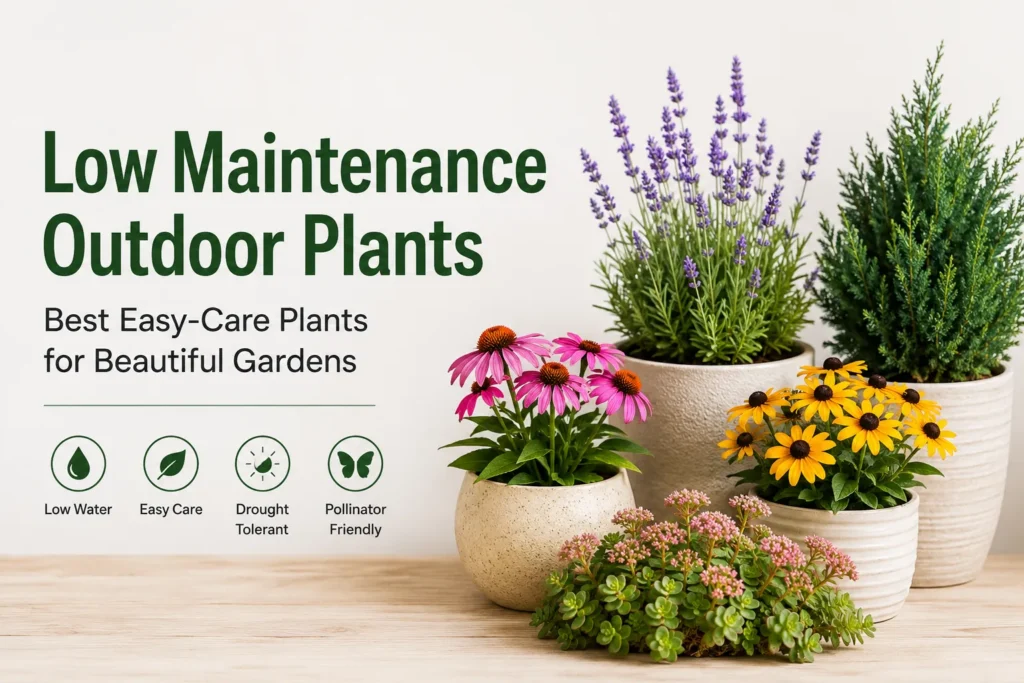
Outdoor plants make every garden feel alive. However, not everyone has time for daily watering, pruning, or constant care. That is why many homeowners choose low maintenance outdoor plants that stay healthy with minimal effort.
These plants offer beautiful flowers, colorful foliage, and long-lasting growth while requiring very little attention. Moreover, many are drought tolerant, pest resistant, and adaptable to different climates. As a result, they are perfect for beginners, busy professionals, seniors, and anyone who wants a beautiful garden without spending hours maintaining it.
Whether you want vibrant flowers, hardy shrubs, or evergreen groundcovers, there is an easy-care plant for every outdoor space. In addition, many of these plants attract butterflies, bees, and other beneficial pollinators, making your garden healthier and more vibrant.
In this guide, you’ll discover the best low maintenance outdoor plants, including flowering plants, hardy perennials, shrubs, and groundcovers. You’ll also learn how to choose the right plants for your climate, care for them properly, and avoid common gardening mistakes.
What Makes an Outdoor Plant Low Maintenance?
Not every outdoor plant demands constant care. Some naturally thrive with little attention while still producing healthy foliage and colorful blooms. Therefore, understanding their characteristics helps you choose plants that match your lifestyle.
Requires Less Watering
Many easy outdoor plants develop deep root systems. These roots help them absorb moisture from deeper soil layers. Consequently, they survive longer between watering sessions.
Drought Tolerance
Drought-tolerant plants continue growing during dry weather. Moreover, they stay healthy even when rainfall is limited. This makes them ideal for water-efficient landscaping.
Pest and Disease Resistance
Some plants naturally resist common insects and diseases. As a result, they require fewer pesticides and less maintenance throughout the year.
Minimal Pruning
Many low maintenance garden plants keep their natural shape without regular trimming. Therefore, you spend less time cutting back branches or removing unwanted growth.
Adaptable to Different Climates
Easy-care plants often tolerate heat, cold, humidity, and changing weather conditions. Because of this flexibility, they grow successfully in many regions.
Long Blooming Season
Many flowering varieties produce blooms for weeks or even months. Consequently, your garden remains colorful without the need for frequent replanting.
Best Low Maintenance Outdoor Flowering Plants
Flowering plants bring color, fragrance, and life to any garden. Fortunately, many beautiful flowers need very little attention once they are established. Moreover, these plants bloom for long periods, tolerate different weather conditions, and attract helpful pollinators. If you are looking for the best low maintenance outdoor plants, these flowering varieties are excellent choices.
Blanket Flower
Blanket Flower (Gaillardia) is a cheerful perennial known for its bright red, orange, and yellow blooms. It flowers for months and thrives in hot, sunny locations.
| Feature | Details |
| Mature Size | 1–3 feet tall and wide |
| Sun Requirements | Full sun |
| Water Needs | Low once established |
| Bloom Season | Late spring to fall |
Care Tips
- Plant in well-drained soil.
- Water regularly during the first growing season.
- Remove faded flowers to encourage more blooms.
- Avoid overly rich soil, as it can reduce flowering.
Best Landscape Use
Blanket Flower works well in borders, cottage gardens, rock gardens, and pollinator-friendly landscapes. It also adds bright color to dry areas where many plants struggle.
Marigold
Marigolds are among the easiest outdoor flowering plants with low maintenance. Their golden, orange, and yellow flowers brighten gardens throughout the growing season.
| Feature | Details |
| Mature Size | 6 inches–3 feet, depending on the variety |
| Sun Requirements | Full sun |
| Water Needs | Moderate |
| Bloom Season | Spring until frost |
Care Tips
- Water only when the soil becomes dry.
- Remove spent flowers for continuous blooming.
- Plant in areas with good air circulation.
- Avoid waterlogged soil.
Best Landscape Use
Marigolds are perfect for flower beds, vegetable gardens, containers, and garden borders. They also help attract pollinators while discouraging certain garden pests.
Cosmos
Cosmos produces delicate, daisy-like flowers that sway beautifully in the breeze. Despite their elegant appearance, these plants are surprisingly easy to grow.
| Feature | Details |
| Mature Size | 2–6 feet tall |
| Sun Requirements | Full sun |
| Water Needs | Low |
| Bloom Season | Summer through fall |
Care Tips
- Grow in well-drained soil.
- Avoid over-fertilizing.
- Water only during long dry periods.
- Deadhead flowers for longer blooming.
Best Landscape Use
Cosmos is ideal for wildflower gardens, cottage gardens, and natural-looking landscapes. It also attracts butterflies and bees throughout the season.
Zinnia
Zinnias are colorful annual flowers that bloom continuously with very little effort. They are excellent beginner-friendly outdoor plants because they grow quickly and produce flowers in many vibrant shades.
| Feature | Details |
| Mature Size | 1–4 feet tall |
| Sun Requirements | Full sun |
| Water Needs | Moderate |
| Bloom Season | Early summer until frost |
Care Tips
- Water at the base of the plant.
- Space plants properly to improve airflow.
- Remove faded blooms regularly.
- Plant after the danger of frost has passed.
Best Landscape Use
Zinnias look stunning in flower beds, borders, cutting gardens, and butterfly gardens. Their long-lasting blooms also make excellent fresh-cut flowers.
Milkweed
Milkweed is one of the best plants for supporting wildlife. It serves as the host plant for monarch butterflies while producing clusters of colorful flowers.
| Feature | Details |
| Mature Size | 2–5 feet tall |
| Sun Requirements | Full sun |
| Water Needs | Low |
| Bloom Season | Summer |
Care Tips
- Plant in a sunny location.
- Water regularly until established.
- Avoid using pesticides nearby.
- Allow seed pods to mature if you want natural spreading.
Best Landscape Use
Milkweed is perfect for pollinator gardens, native landscapes, meadow gardens, and wildlife-friendly yards. It creates an important habitat for butterflies and other beneficial insects.
Russian Sage
Russian Sage is a hardy perennial with silvery foliage and soft lavender-blue flowers. It thrives in heat and dry conditions, making it one of the most reliable drought tolerant outdoor plants.
| Feature | Details |
| Mature Size | 3–5 feet tall |
| Sun Requirements | Full sun |
| Water Needs | Very low |
| Bloom Season | Mid-summer to fall |
Care Tips
- Grow in sandy or well-drained soil.
- Water sparingly after establishment.
- Cut back old stems in early spring.
- Avoid heavy clay soils that stay wet.
Best Landscape Use
Russian Sage is excellent for borders, foundation plantings, xeriscapes, and Mediterranean-style gardens. Its soft purple flowers pair beautifully with ornamental grasses and other drought-tolerant plants.
These flowering plants prove that a vibrant garden does not have to demand constant care. With the right selection, you can enjoy months of colorful blooms while spending less time watering, pruning, and maintaining your landscape.
Best Hardy Perennials for Easy Gardens
Hardy perennials are an excellent choice if you want a beautiful garden that returns every year. Once established, these plants need very little attention while providing colorful flowers, attractive foliage, and valuable habitat for pollinators. Moreover, many of them can tolerate heat, drought, and changing weather conditions. If you are searching for low maintenance outdoor plants, these perennials deserve a place in your garden.
Coneflower
Coneflower (Echinacea) is a tough perennial with large, daisy-like flowers that bloom for months. It is well known for attracting butterflies, bees, and birds.
| Feature | Details |
| Lifespan | Long-lived perennial |
| Growing Conditions | Full sun and well-drained soil |
| Maintenance | Low; remove spent flowers if desired |
| Wildlife Benefits | Attracts butterflies, bees, and seed-eating birds |
Care Tips
- Water regularly during the first season.
- Once established, water only during long dry periods.
- Divide mature plants every few years to encourage healthy growth.
- Leave seed heads in winter to feed birds.
Black-Eyed Susan
Black-Eyed Susan is a cheerful perennial that produces bright yellow flowers with dark centers. It grows quickly and blooms for several weeks each year.
| Feature | Details |
| Lifespan | Perennial |
| Growing Conditions | Full sun to partial shade |
| Maintenance | Very low |
| Wildlife Benefits | Attracts butterflies and native bees |
Care Tips
- Plant in well-drained soil.
- Remove faded flowers to extend blooming.
- Water deeply during dry spells.
- Divide crowded clumps every few years.
Daylily
Daylilies are among the most dependable easy care outdoor plants. They adapt to different climates and reward gardeners with colorful blooms every year.
| Feature | Details |
| Lifespan | Long-lived perennial |
| Growing Conditions | Full sun to partial shade |
| Maintenance | Low |
| Wildlife Benefits | Attracts bees and butterflies |
Care Tips
- Water deeply during prolonged dry weather.
- Remove old flower stalks after blooming.
- Divide plants every three to five years.
- Apply mulch to retain soil moisture.
Hosta
Hostas are prized for their lush foliage rather than their flowers. They thrive in shady gardens where many flowering plants struggle.
| Feature | Details |
| Lifespan | Perennial |
| Growing Conditions | Partial to full shade |
| Maintenance | Low |
| Wildlife Benefits | Flowers attract hummingbirds and bees |
Care Tips
- Keep the soil evenly moist.
- Apply mulch around the base.
- Protect plants from slugs and snails if needed.
- Divide mature clumps every few years.
Yarrow
Yarrow produces flat clusters of flowers that bloom throughout summer. It is one of the best low water outdoor plants because it tolerates dry conditions extremely well.
| Feature | Details |
| Lifespan | Perennial |
| Growing Conditions | Full sun and well-drained soil |
| Maintenance | Very low |
| Wildlife Benefits | Attracts butterflies, bees, and other pollinators |
Care Tips
- Avoid overly rich soil.
- Water sparingly after establishment.
- Cut back faded flowers to encourage reblooming.
- Divide plants every few years.
Catmint
Catmint is loved for its fragrant leaves and long-lasting purple-blue flowers. It grows quickly and performs well even with minimal care.
| Feature | Details |
| Lifespan | Perennial |
| Growing Conditions | Full sun to partial shade |
| Maintenance | Low |
| Wildlife Benefits | Highly attractive to bees and butterflies |
Care Tips
- Plant in well-drained soil.
- Trim lightly after the first bloom to encourage a second flush.
- Water only during extended dry periods.
- Avoid heavy, waterlogged soils.
Agastache
Agastache, also called hyssop or hummingbird mint, produces tall spikes of colorful flowers with a pleasant fragrance. It thrives in warm, sunny gardens and handles drought well.
| Feature | Details |
| Lifespan | Perennial |
| Growing Conditions | Full sun and well-drained soil |
| Maintenance | Low |
| Wildlife Benefits | Attracts hummingbirds, butterflies, and bees |
Care Tips
- Plant in sandy or well-drained soil.
- Water deeply until established.
- Avoid excessive watering.
- Leave seed heads through winter for added garden interest.
Quick Comparison of Hardy Perennials
| Plant | Sunlight | Water Needs | Wildlife Friendly |
| Coneflower | Full sun | Low | ★★★★★ |
| Black-Eyed Susan | Full sun to partial shade | Low | ★★★★★ |
| Daylily | Full sun to partial shade | Moderate | ★★★★☆ |
| Hosta | Partial to full shade | Moderate | ★★★☆☆ |
| Yarrow | Full sun | Very low | ★★★★★ |
| Catmint | Full sun to partial shade | Low | ★★★★★ |
| Agastache | Full sun | Low | ★★★★★ |
These hardy perennials offer years of beauty with minimal effort. Furthermore, many support local wildlife while reducing the time you spend watering, pruning, and replanting. Whether your garden is sunny or shaded, you can find a perennial that fits your landscape and keeps it looking vibrant season after season.
Best Low Maintenance Outdoor Shrubs
Shrubs add structure, privacy, and year-round beauty to a garden. Unlike many annual plants, they grow for years with very little attention. Moreover, many low maintenance outdoor shrubs produce colorful flowers, attractive foliage, or evergreen leaves that keep your landscape looking beautiful in every season. If you want long-lasting plants that require minimal care, these shrubs are excellent choices.
Rose of Sharon
Rose of Sharon (Hibiscus syriacus) is a hardy flowering shrub that produces large, tropical-looking blooms from summer into early fall. It thrives in many climates and is easy to maintain.
| Feature | Details |
| Growth Habit | Upright, vase-shaped shrub |
| Mature Size | 8–12 feet tall, 6–10 feet wide |
| Flowering Period | Summer to early fall |
| Pruning Needs | Light pruning in late winter or early spring |
Care Tips
- Plant in full sun for the best flowering.
- Grow in well-drained soil.
- Water regularly during the first growing season.
- Remove weak or damaged branches once a year.
Best Landscape Use
Rose of Sharon works beautifully as a flowering hedge, privacy screen, focal point, or specimen plant in larger gardens.
Ninebark
Ninebark is a hardy shrub valued for its colorful foliage, peeling bark, and clusters of white or pink flowers. It tolerates different soil types and weather conditions with ease.
| Feature | Details |
| Growth Habit | Rounded and spreading |
| Mature Size | 5–10 feet tall and wide |
| Flowering Period | Late spring to early summer |
| Pruning Needs | Minimal; remove old stems after flowering if needed |
Care Tips
- Plant in full sun or partial shade.
- Water deeply until established.
- Avoid frequent pruning.
- Apply mulch to conserve soil moisture.
Best Landscape Use
Ninebark is ideal for mixed shrub borders, natural landscapes, and erosion control on slopes.
Birchleaf Spirea
Birchleaf Spirea is a compact shrub that offers attractive white flowers in spring and colorful foliage in autumn. Its neat growth habit makes it easy to manage.
| Feature | Details |
| Growth Habit | Compact, rounded |
| Mature Size | 3–4 feet tall and wide |
| Flowering Period | Late spring |
| Pruning Needs | Very little; shape lightly after flowering if needed |
Care Tips
- Plant in well-drained soil.
- Water during extended dry periods.
- Remove dead branches occasionally.
- Add mulch to help retain moisture.
Best Landscape Use
Birchleaf Spirea is perfect for foundation plantings, borders, low hedges, and small gardens.
Juniper
Juniper is one of the toughest easy landscaping plants available. Its evergreen foliage provides year-round color while tolerating drought, heat, poor soil, and cold temperatures.
| Feature | Details |
| Growth Habit | Upright or spreading, depending on the variety |
| Mature Size | Varies by cultivar |
| Flowering Period | Grown mainly for evergreen foliage |
| Pruning Needs | Rarely required |
Care Tips
- Plant in full sun.
- Ensure good soil drainage.
- Water deeply during establishment.
- Avoid overwatering mature plants.
Best Landscape Use
Juniper works well as a privacy screen, foundation planting, windbreak, or evergreen accent in water-wise landscapes.
Hydrangea
Hydrangeas are popular shrubs known for their large flower clusters and long blooming season. While they need occasional watering during dry weather, they remain relatively easy to care for.
| Feature | Details |
| Growth Habit | Rounded and bushy |
| Mature Size | 3–10 feet tall, depending on the variety |
| Flowering Period | Late spring through summer |
| Pruning Needs | Depends on the species; remove dead wood and lightly shape when needed |
Care Tips
- Plant in morning sun with afternoon shade in hot climates.
- Keep the soil consistently moist but not soggy.
- Apply mulch around the base.
- Feed with a balanced fertilizer in spring.
Best Landscape Use
Hydrangeas are excellent for cottage gardens, foundation beds, mixed borders, and focal points near patios.
Inkberry Holly
Inkberry Holly is a slow-growing evergreen shrub that keeps its rich green leaves throughout the year. It is a dependable choice for gardeners who want year-round structure with very little maintenance.
| Feature | Details |
| Growth Habit | Dense and rounded |
| Mature Size | 5–8 feet tall and wide |
| Flowering Period | Small spring flowers followed by dark berries |
| Pruning Needs | Light pruning to maintain shape if desired |
Care Tips
- Grow in full sun or partial shade.
- Water regularly until established.
- Apply mulch to keep roots cool and moist.
- Remove damaged branches when necessary.
Best Landscape Use
Inkberry Holly is ideal for hedges, foundation plantings, privacy screens, and wildlife-friendly gardens.
Quick Comparison of Low Maintenance Shrubs
| Shrub | Sunlight | Water Needs | Best Feature |
| Rose of Sharon | Full sun | Moderate | Long-lasting flowers |
| Ninebark | Full sun to partial shade | Low | Colorful foliage and bark |
| Birchleaf Spirea | Full sun to partial shade | Low | Compact growth |
| Juniper | Full sun | Very low | Evergreen and drought tolerant |
| Hydrangea | Full sun to partial shade | Moderate | Large showy blooms |
| Inkberry Holly | Full sun to partial shade | Moderate | Year-round evergreen foliage |
These shrubs provide lasting beauty without demanding constant care. Furthermore, they offer a mix of colorful flowers, evergreen foliage, and attractive shapes that enhance any landscape. By choosing the right shrub for your garden, you can enjoy a well-designed outdoor space with less watering, pruning, and maintenance.
Best Groundcovers and Succulents
Groundcovers and succulents are excellent choices for gardeners who want to fill empty spaces with minimal effort. These low maintenance outdoor plants spread naturally, reduce weed growth, and help retain soil moisture. Moreover, many of them thrive in poor soil and dry conditions, making them perfect for water-wise landscapes.
Sedum
Sedum, also known as stonecrop, is a hardy succulent that stores water in its thick leaves. It thrives in hot, dry conditions and requires very little attention once established.
| Feature | Details |
| Drought Tolerance | Excellent |
| Soil Preference | Well-drained, sandy, or rocky soil |
| Sunlight Requirements | Full sun |
| Maintenance | Very low |
Care Tips
- Plant in soil with good drainage.
- Water only during extended dry periods.
- Avoid overwatering, as it can cause root rot.
- Remove dead stems in early spring if needed.
Best Landscape Use
Sedum is perfect for rock gardens, borders, containers, green roofs, and xeriscapes. It also provides late-season flowers that attract bees and butterflies.
Creeping Juniper
Creeping Juniper is a low-growing evergreen that spreads across the ground, creating a dense carpet of foliage. It is one of the best low water outdoor plants for slopes and large open spaces.
| Feature | Details |
| Drought Tolerance | Excellent |
| Soil Preference | Well-drained soil |
| Sunlight Requirements | Full sun |
| Maintenance | Very low |
Care Tips
- Plant in sunny locations.
- Water regularly during the first growing season.
- Prune only to remove damaged branches.
- Avoid planting in poorly drained soil.
Best Landscape Use
Creeping Juniper is ideal for slopes, retaining walls, rock gardens, pathways, and erosion control. Its evergreen foliage keeps the landscape attractive throughout the year.
Mexican Fleabane
Mexican Fleabane is a charming flowering groundcover that produces hundreds of small, daisy-like blooms from spring until autumn. Despite its delicate appearance, it is incredibly tough and easy to grow.
| Feature | Details |
| Drought Tolerance | High |
| Soil Preference | Well-drained soil |
| Sunlight Requirements | Full sun to partial shade |
| Maintenance | Low |
Care Tips
- Water regularly until the plant is established.
- Trim lightly after heavy flowering to encourage fresh blooms.
- Avoid waterlogged soil.
- Allow some flowers to self-seed for natural spreading.
Best Landscape Use
Mexican Fleabane works beautifully between stepping stones, along pathways, in rock gardens, and along borders. It softens hard landscape edges while attracting butterflies and bees.
Quick Comparison of Groundcovers and Succulents
| Plant | Sunlight | Water Needs | Best Feature |
| Sedum | Full sun | Very low | Drought-tolerant succulent |
| Creeping Juniper | Full sun | Very low | Evergreen groundcover |
| Mexican Fleabane | Full sun to partial shade | Low | Long-lasting flowers |
These groundcovers and succulents prove that a lush landscape does not have to be difficult to maintain. Furthermore, they reduce weeds, improve soil stability, and thrive with minimal watering. Whether you are covering bare ground, decorating a rock garden, or creating a drought-tolerant landscape, these plants offer beauty with very little effort.
Benefits of Low Maintenance Outdoor Plants
Choosing low maintenance outdoor plants offers more than just convenience. These plants help create a healthier, more sustainable, and attractive garden while reducing the time and effort needed for upkeep.
Saves Gardening Time
Easy-care plants need less watering, pruning, and fertilizing. As a result, you can spend more time enjoying your garden instead of maintaining it.
Conserves Water
Many drought tolerant outdoor plants survive with minimal watering once established. Therefore, they help reduce water usage and lower utility costs, especially during dry seasons.
Reduces Maintenance Costs
Plants that naturally resist pests and diseases require fewer treatments and replacements. Consequently, you spend less money on fertilizers, pesticides, and gardening supplies.
Supports Pollinators
Many flowering plants, such as Coneflower, Milkweed, Yarrow, and Agastache, attract bees, butterflies, and other beneficial insects. These pollinators play an important role in maintaining a healthy garden ecosystem.
Improves Curb Appeal
Healthy plants with colorful blooms and attractive foliage make any outdoor space look more inviting. In addition, they enhance the overall appearance and value of your property.
Suitable for Beginners
If you are new to gardening, beginner-friendly outdoor plants make the learning process much easier. Their resilience allows you to gain confidence without worrying about constant care.
Promotes Eco-Friendly Landscaping
Low-maintenance plants often require fewer chemical treatments and less water. As a result, they support environmentally friendly gardening practices and help conserve natural resources.
By choosing the right plants, you can enjoy a vibrant outdoor space that stays beautiful throughout the year with minimal effort. These plants are an excellent investment for homeowners, busy professionals, and anyone looking to create a sustainable and easy-to-maintain garden.
How to Care for Low Maintenance Outdoor Plants
Although low maintenance outdoor plants require less attention, they still benefit from basic care. Simple gardening habits can help your plants stay healthy, bloom longer, and grow stronger. Moreover, proper care reduces the risk of pests, diseases, and unnecessary plant stress.
Choose the Right Location
Every plant has different sunlight and space requirements. Therefore, always check the plant label before planting.
For example:
- Plant sun-loving varieties in areas that receive at least six hours of direct sunlight.
- Choose shade-tolerant plants for gardens with limited sunlight.
- Leave enough space between plants to improve airflow and reduce disease problems.
The right location gives plants the best chance to thrive with minimal maintenance.
Improve Soil Drainage
Healthy soil is the foundation of a successful garden. Most easy care outdoor plants prefer well-drained soil because standing water can damage their roots.
To improve drainage:
- Mix compost into heavy clay soil.
- Add coarse sand or gravel if needed.
- Avoid planting in areas where water collects after rain.
Well-drained soil encourages strong root growth and helps prevent root rot.
Water Deeply but Less Often
Frequent shallow watering encourages weak root systems. Instead, water deeply so the moisture reaches the roots.
Keep these tips in mind:
- Water early in the morning to reduce evaporation.
- Allow the top layer of soil to dry before watering again.
- Increase watering during long periods of extreme heat.
Once established, many low water outdoor plants need watering only during extended dry spells.
Apply Mulch
Mulch is one of the easiest ways to reduce garden maintenance. It helps keep the soil cool, conserves moisture, and suppresses weed growth.
Organic mulch options include:
- Bark chips
- Shredded leaves
- Pine needles
- Compost
Apply a 2–3 inch layer around plants, but keep it a few inches away from the stems to prevent rot.
Prune Only When Necessary
Many low maintenance garden plants naturally maintain their shape and require very little pruning.
Prune only when needed to:
- Remove dead or damaged branches.
- Improve air circulation.
- Encourage fresh growth.
- Remove faded flowers on reblooming plants.
Avoid heavy pruning unless the plant specifically requires it.
Feed Plants Seasonally
Most easy-care plants do not need frequent fertilizing. However, a light feeding during the growing season can encourage healthy growth and vibrant blooms.
For best results:
- Apply a balanced, slow-release fertilizer in early spring.
- Use compost to naturally enrich the soil.
- Avoid over-fertilizing, as it may produce excessive foliage instead of flowers.
Following these simple steps helps your garden stay healthy while keeping maintenance to a minimum.
Common Mistakes to Avoid
Even the toughest plants can struggle if they are not cared for properly. Fortunately, avoiding a few common mistakes will help your garden remain healthy and attractive throughout the year.
Overwatering
Too much water is one of the most common reasons plants fail. Excess moisture can lead to root rot, yellow leaves, and fungal diseases.
How to avoid it:
- Check the soil before watering.
- Water only when the top few inches of soil feel dry.
- Ensure the soil drains well.
Planting in the Wrong Sunlight
Every plant has specific light requirements. A sun-loving plant placed in deep shade may produce fewer flowers, while shade-loving plants can suffer from leaf scorch in intense sunlight.
How to avoid it:
- Read the plant tag carefully.
- Observe how much sunlight different parts of your garden receive.
- Match each plant to the appropriate light conditions.
Poor Soil Preparation
Healthy roots need loose, nutrient-rich soil. Poor soil can limit growth and reduce flowering.
How to avoid it:
- Improve the soil with compost before planting.
- Break up compacted soil.
- Ensure proper drainage.
Over-Fertilizing
Adding too much fertilizer may seem helpful, but it often creates weak, leafy growth with fewer flowers.
How to avoid it:
- Follow the fertilizer instructions.
- Feed plants only when necessary.
- Choose slow-release fertilizers or organic compost.
Ignoring Plant Spacing
Crowded plants compete for water, nutrients, and sunlight. They also have poor airflow, which increases the risk of diseases.
How to avoid it:
- Follow the recommended spacing on the plant label.
- Allow room for mature growth.
- Thin overcrowded plants if needed.
Skipping Mulch
Without mulch, soil dries out faster, weeds spread more easily, and temperatures fluctuate around the roots.
How to avoid it:
- Add a fresh layer of mulch each year.
- Maintain a depth of about 2–3 inches.
- Keep mulch away from the base of stems and trunks.
By avoiding these common mistakes, your low maintenance outdoor plants will stay healthier and require even less attention over time.
How to Choose the Right Low Maintenance Outdoor Plants
Choosing the right plants is just as important as caring for them. The best choice depends on your local climate, garden conditions, and personal preferences. By considering a few key factors, you can create a beautiful landscape that stays healthy with minimal effort.
Consider Your Climate
Start by selecting plants that are well-suited to your region. Native plants and climate-adapted varieties usually require less watering, fertilizing, and pest control because they are naturally suited to local conditions.
Evaluate Sunlight
Observe how much sunlight your garden receives throughout the day.
- Full sun: 6 or more hours of direct sunlight.
- Partial shade: 3–6 hours of sunlight.
- Full shade: Less than 3 hours of direct sunlight.
Choose plants that match these light conditions for the best results.
Check Your Soil Type
Different plants prefer different soil conditions.
- Sandy soil drains quickly and suits drought-tolerant plants.
- Clay soil holds more moisture and may need compost to improve drainage.
- Loamy soil is ideal for most garden plants.
A simple soil test can help you understand your garden better.
Match the Garden Size
Think about how large each plant will become. Small gardens benefit from compact shrubs and groundcovers, while larger landscapes can accommodate taller perennials and flowering shrubs without feeling crowded.
Consider Water Availability
If you live in a dry region or want to reduce water use, choose drought tolerant outdoor plants such as Sedum, Yarrow, Juniper, or Russian Sage. These plants continue to perform well with very little irrigation once established.
Select Your Favorite Flower Colors
Color plays a major role in garden design. You can create a calm atmosphere with soft blues and purples or add energy with bright reds, oranges, and yellows. Mixing bloom colors also creates visual interest throughout the growing season.
Support Wildlife
Many gardeners enjoy attracting butterflies, bees, and birds. Plants such as Milkweed, Coneflower, Black-Eyed Susan, Agastache, and Catmint provide food and shelter for beneficial wildlife while adding beauty to the landscape.
By selecting plants that match your environment and gardening goals, you can build a thriving outdoor space that looks beautiful year after year with very little maintenance
Frequently Asked Questions
What are the easiest low maintenance outdoor plants?
Some of the easiest low maintenance outdoor plants include Marigold, Coneflower, Daylily, Sedum, Juniper, Black-Eyed Susan, and Yarrow. These plants are beginner-friendly, adapt well to different conditions, and require very little watering or pruning once established.
Which outdoor plants need the least water?
Plants such as Russian Sage, Sedum, Creeping Juniper, Yarrow, and Blanket Flower are excellent low water outdoor plants. Their drought-tolerant nature makes them ideal for dry climates and water-wise gardens.
What plants bloom every year with little care?
Many hardy perennials bloom year after year with minimal maintenance. Popular choices include Coneflower, Black-Eyed Susan, Daylily, Catmint, Agastache, and Yarrow. Once established, these plants return each season with very little effort.
Which shrubs require minimal maintenance?
Juniper, Ninebark, Birchleaf Spirea, Inkberry Holly, and Rose of Sharon are among the best low maintenance outdoor shrubs. They need only occasional pruning and seasonal watering during prolonged dry periods.
Are drought-tolerant plants good for beginners?
Yes. Drought-tolerant plants are excellent for beginners because they need less frequent watering and generally handle changing weather conditions well. They are also a practical choice for busy homeowners who want an attractive garden without constant care.
Which outdoor plants attract butterflies and bees?
Many flowering plants naturally attract pollinators. Milkweed, Coneflower, Black-Eyed Susan, Yarrow, Catmint, Agastache, Blanket Flower, and Cosmos provide nectar and pollen for butterflies, bees, and other beneficial insects.
Can low maintenance plants grow in partial shade?
Yes. Several easy-care plants grow well in partial shade. Hosta, Hydrangea, Inkberry Holly, Black-Eyed Susan, and Daylily are excellent options for gardens that receive only a few hours of direct sunlight each day.
How often should outdoor plants be watered?
Newly planted outdoor plants should be watered regularly until their roots become established. After that, most low maintenance garden plants only need deep watering during extended dry periods. Always check the soil before watering, as overwatering can be more harmful than underwatering.
Conclusion
Creating a beautiful garden doesn’t have to mean spending hours on maintenance. By choosing the right low maintenance outdoor plants, you can enjoy colorful flowers, attractive shrubs, hardy perennials, and evergreen groundcovers with far less effort. These plants are ideal for busy homeowners, beginner gardeners, and anyone looking for a simple yet rewarding outdoor space.
Moreover, many easy-care plants are drought tolerant, pest resistant, and well-suited to different climates. As a result, they help conserve water, reduce gardening costs, and support important pollinators like bees and butterflies. With proper plant selection and a few basic care practices, your landscape can stay healthy and vibrant throughout the year.
Whether you are designing a new garden or upgrading an existing one, start with plants that match your climate, sunlight, and soil conditions. Over time, you’ll enjoy a thriving, low-maintenance landscape that offers lasting beauty without demanding constant attention.
For more gardening inspiration, explore our guides on Low Maintenance Plants, Best Outdoor Flowering Plants, Best Drought-Tolerant Plants, Hardy Perennials Guide, Outdoor Plant Care Guide, Garden Watering Tips, Mulching Guide, Beginner Gardening Guide, Best Plants for Pollinators, and Landscaping Ideas for Small Gardens to build a healthier and more beautiful garden.