
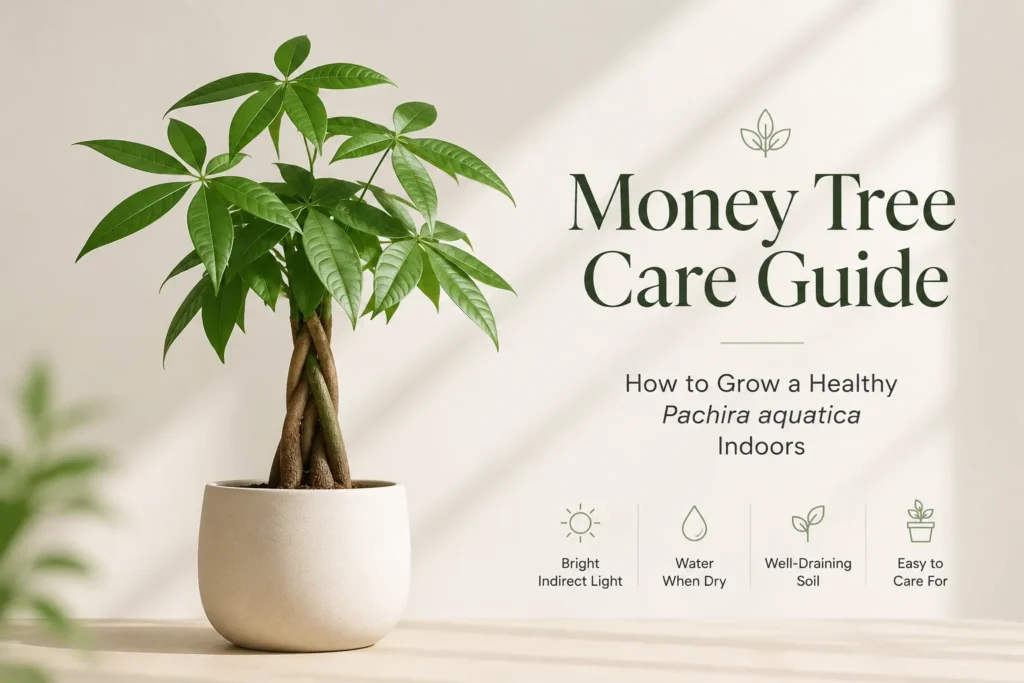
Money Trees (Pachira aquatica) are one of the easiest indoor plants to grow. Their braided trunks, glossy green leaves, and low-maintenance nature make them a favorite for homes and offices. Many people also believe they bring luck, prosperity, and positive energy, making them a popular choice in Feng Shui.
Although Money Trees are beginner-friendly, they still need the right balance of light, water, humidity, and care to stay healthy. Overwatering, poor drainage, and incorrect lighting are the most common reasons these plants develop yellow leaves or stop growing. Learning a few simple care practices can help your Money Tree thrive for years.
This complete guide explains everything you need to know about Money Tree care. You’ll learn how to provide the right growing conditions, water correctly, choose the best soil, prune and repot your plant, solve common problems, and keep it looking lush throughout the year.
What Is a Money Tree?
The Money Tree, scientifically known as Pachira aquatica, is a tropical evergreen tree native to the wetlands of Central and South America. In its natural habitat, it can grow over 60 feet tall. As an indoor plant, however, it usually reaches between 3 and 8 feet, making it ideal for homes, apartments, and offices.
Its most recognizable feature is the braided trunk, which is created by weaving several young stems together while they are still flexible. Above the trunk, the plant produces hand-shaped clusters of bright green leaves that give it a fresh and elegant appearance.
Because of its attractive foliage and easy-care nature, the Money Tree has become one of the most popular indoor houseplants around the world.
Botanical Name
- Scientific Name: Pachira aquatica
- Plant Family: Malvaceae
- Plant Type: Tropical evergreen tree
- Native Region: Central and South America
Common Names
Depending on the region, this plant may also be called:
- Money Tree
- Malabar Chestnut
- Guiana Chestnut
- Provision Tree
- Saba Nut
Appearance
A healthy Money Tree has several distinctive characteristics:
- Glossy, bright green leaves
- Braided or twisted trunk
- Upright growth habit
- Dense, bushy canopy
- Smooth gray-brown bark
Its lush foliage makes it an excellent decorative plant for living rooms, bedrooms, offices, and entryways.
Symbolism and Feng Shui
The Money Tree is widely associated with good fortune and prosperity. In Feng Shui, it is believed to attract wealth, success, and positive energy. Many businesses and homeowners place a Money Tree near entrances, workspaces, or living areas as a symbol of financial growth and balance.
While these beliefs are cultural traditions rather than scientific facts, they have contributed to the plant’s popularity as a meaningful gift for housewarmings, birthdays, and business openings.
Is the Money Tree Safe for Pets?
Yes. The Money Tree is generally considered non-toxic to both cats and dogs, making it a safer choice than many other popular houseplants. Even so, it is best to discourage pets from chewing on the leaves, as eating large amounts of any plant material may cause mild stomach upset.
Benefits of Growing a Money Tree Indoors
A Money Tree is more than just a decorative houseplant. It brings natural beauty to indoor spaces while requiring minimal care. Whether you’re a first-time plant owner or an experienced gardener, this tropical plant offers several practical and aesthetic benefits
Brightens Any Indoor Space
The Money Tree has glossy green leaves and a distinctive braided trunk that create an elegant focal point in any room. Its upright growth habit adds height and texture, making it suitable for:
- Living rooms
- Bedrooms
- Home offices
- Apartments
- Reception areas
- Workspaces
Its timeless appearance complements modern, minimalist, Scandinavian, and traditional interior styles.
Easy to Care For
One of the biggest advantages of a Money Tree is its low-maintenance nature. It adapts well to typical indoor conditions and doesn’t require constant attention.
With proper care, you only need to:
- Water when the top 1–2 inches of soil feel dry.
- Place it in bright, indirect light.
- Feed it monthly during the growing season.
- Repot every 2–3 years.
This simple routine makes it an excellent choice for beginners and busy professionals
Helps Improve Indoor Air Quality
Like many indoor plants, the Money Tree contributes to a healthier indoor environment by supporting natural air exchange. Its large leaves can also help trap dust particles, keeping foliage and surrounding areas fresher when cleaned regularly.
While no single houseplant can significantly purify indoor air on its own, adding greenery can make living spaces feel fresher and more inviting.
Supports a Relaxing Environment
Indoor plants create a calming atmosphere by introducing natural elements into your home or workspace. A healthy Money Tree can make a room feel more vibrant and welcoming, helping transform empty corners into attractive green spaces.
Its lush foliage and balanced shape also make it a popular choice for creating peaceful reading areas, workstations, and meditation corners.
Symbolizes Good Luck and Prosperity
The Money Tree is widely known as a symbol of wealth, good fortune, and prosperity. According to Feng Shui traditions, its braided trunk represents unity and strength, while its five-lobed leaves are believed to symbolize the five natural elements.
Many people place a Money Tree in:
- Home entrances
- Living rooms
- Offices
- Business reception areas
- Study rooms
Although these beliefs are based on cultural traditions rather than scientific evidence, they have made the Money Tree a meaningful gift for housewarmings, new businesses, weddings, and special occasions.
Safe for Families and Pet Owners
The Money Tree is generally considered non-toxic to cats and dogs, making it a suitable choice for households with pets. It is also safe to display in homes with children, though it’s always best to discourage anyone from chewing on the leaves.
This added peace of mind makes it a popular indoor plant for family homes.
Fits Almost Any Indoor Lifestyle
Whether you live in a compact apartment or a spacious home, a Money Tree adapts well to indoor environments. It grows comfortably in containers and thrives with consistent care.
Its versatility makes it ideal for:
- First-time plant owners
- Apartment living
- Home offices
- Busy lifestyles
- Indoor plant collections
- Minimalist interiors
With the right care, a Money Tree can remain healthy and attractive for many years, making it a rewarding addition to your indoor garden.
Transition: Now that you know why the Money Tree is such a popular houseplant, let’s explore the essential care requirements that will help it grow healthy and lush indoors.
Money Tree Care Requirements
A Money Tree grows best when its basic care needs are met consistently. It prefers bright, indirect light, moderate watering, warm temperatures, and well-draining soil. Small adjustments to your care routine can make a big difference in keeping the plant healthy and preventing common issues like yellow leaves, root rot, or stunted growth.
Here’s everything you need to know about caring for a Money Tree indoors.
Light Requirements
Money Trees thrive in bright, indirect light. Place your plant near an east- or west-facing window where it receives plenty of filtered sunlight throughout the day. If positioned near a south-facing window, use a sheer curtain to soften the direct rays.
Too much direct sunlight can scorch the leaves, causing brown patches or crispy edges. On the other hand, insufficient light may result in slow growth, smaller leaves, and a leggy appearance.
Light tips:
- Place near bright, indirect sunlight.
- Rotate the pot every few weeks for even growth.
- Avoid harsh afternoon sun.
- Use a grow light if natural light is limited.
Signs of incorrect lighting:
| Too Much Light | Too Little Light |
| Brown, scorched leaves | Leggy stems |
| Dry leaf edges | Slow growth |
| Faded foliage | Smaller leaves |
| Crispy leaf tips | Sparse canopy |
Watering Guide
Watering correctly is the most important part of Money Tree care. Instead of watering on a fixed schedule, check the soil first. Water only when the top 1–2 inches (2.5–5 cm) of soil feels dry.
When watering, pour slowly until excess water drains from the bottom of the pot. Empty the saucer afterward to prevent the roots from sitting in water.
Overwatering is far more harmful than underwatering and is the leading cause of root rot.
Watering tips:
- Check soil moisture before watering.
- Water thoroughly but infrequently.
- Always empty excess water from the saucer.
- Reduce watering during winter when growth slows.
Signs of overwatering:
- Yellow leaves
- Soft trunk
- Mushy roots
- Persistent wet soil
- Musty smell from the pot
Signs of underwatering:
- Dry, curling leaves
- Crispy brown edges
- Drooping foliage
- Dry soil pulling away from the pot
Humidity Requirements
As a tropical plant, the Money Tree enjoys moderate to high humidity. A humidity level of 50–60% is ideal for healthy growth.
In dry indoor environments, especially during winter when heating systems are running, the leaf edges may turn brown.
You can increase humidity by:
- Grouping plants together.
- Using a pebble tray filled with water.
- Running a humidifier nearby.
- Occasionally misting the leaves if your indoor air is very dry.
Avoid excessive misting, as constantly wet leaves can encourage fungal problems.
Temperature Needs
Money Trees grow best in warm indoor temperatures between 18–30°C (65–85°F).
Protect the plant from sudden temperature changes caused by:
- Air conditioners
- Heating vents
- Cold drafts
- Open windows during winter
Temperatures below 10°C (50°F) may stress the plant and slow its growth.
Best Soil for a Money Tree
A well-draining potting mix is essential for healthy roots. The soil should retain enough moisture for the plant while allowing excess water to drain quickly.
A suitable mix includes:
- High-quality indoor potting soil
- Perlite for drainage
- Coco coir or peat moss for moisture retention
- Compost or organic matter for nutrients
Avoid heavy garden soil, as it compacts easily and increases the risk of root rot.
Ideal soil characteristics:
- Well-draining
- Loose and airy
- Rich in organic matter
- Slightly acidic to neutral (pH 6.0–7.0)
Choosing the Right Pot
The right pot supports healthy root development and prevents waterlogging.
Choose a pot that:
- Has drainage holes.
- Is only 1–2 inches wider than the root ball.
- Is made from breathable materials like terracotta if you tend to overwater.
- Is stable enough to support the plant as it grows.
Avoid oversized pots, as they hold excess moisture and increase the risk of root rot.
Why Drainage Matters
Proper drainage is just as important as watering. Even if you water correctly, poor drainage can leave the roots sitting in water, leading to fungal diseases and root decay.
To improve drainage:
- Use pots with drainage holes.
- Empty decorative cachepots after watering.
- Avoid compacted soil.
- Refresh old potting mix every few years.
Healthy roots are the foundation of a healthy Money Tree.
Fertilizing Schedule
Money Trees benefit from regular feeding during their active growing season.
Use a balanced liquid houseplant fertilizer every 4–6 weeks during spring and summer. Follow the label instructions and avoid overfertilizing, as too much fertilizer can burn the roots and damage the leaves.
Reduce or stop fertilizing during autumn and winter when growth naturally slows.
Fertilizing tips:
- Feed only during active growth.
- Water the plant before applying fertilizer.
- Avoid fertilizing a stressed or newly repotted plant.
- Flush the soil occasionally to prevent salt buildup.
Quick Care Summary
| Care Factor | Recommendation |
| Light | Bright, indirect light |
| Water | Water when the top 1–2 inches of soil are dry |
| Humidity | 50–60% |
| Temperature | 18–30°C (65–85°F) |
| Soil | Well-draining, nutrient-rich potting mix |
| Pot | Container with drainage holes |
| Fertilizer | Balanced liquid fertilizer every 4–6 weeks in spring and summer |
| Repotting | Every 2–3 years or when root-bound |
By providing the right balance of light, water, humidity, and nutrients, your Money Tree can remain healthy, lush, and vibrant for many years.
How to Prune a Money Tree
Pruning helps your Money Tree stay healthy, maintain its shape, and produce fuller foliage. While Pachira aquatica naturally grows upright, regular pruning encourages bushier growth by directing the plant’s energy toward healthy new shoots.
You don’t need to prune often. Light pruning once or twice a year is usually enough to keep an indoor Money Tree looking its best.
When to Prune a Money Tree
The best time to prune a Money Tree is during its active growing season, which typically runs from spring through early summer. During this period, the plant recovers quickly and produces fresh growth.
Avoid heavy pruning during late autumn and winter, as the plant grows more slowly and may take longer to heal.
You should prune your Money Tree if you notice:
- Long, leggy stems
- Dead or damaged branches
- Yellow or diseased leaves
- Uneven or crowded growth
- A plant that has become too tall for its space
Regular maintenance pruning also improves airflow through the canopy, reducing the risk of pests and fungal problems.
Tools You’ll Need
Using clean, sharp tools helps make smooth cuts and reduces the risk of spreading diseases.
Before you begin, gather:
- Clean pruning shears or sharp scissors
- Rubbing alcohol to disinfect the blades
- Gardening gloves (optional)
Always sterilize your tools before and after pruning, especially if you’re removing diseased growth.
How to Prune a Money Tree
Follow these simple steps for healthy pruning:
- Inspect the plant and identify dead, damaged, or overgrown stems.
- Remove yellow, brown, or diseased leaves first.
- Cut leggy stems just above a leaf node, where new growth can emerge.
- Trim no more than 20–25% of the plant at one time to avoid stressing it.
- Wipe the blades clean after each cut if removing diseased sections.
Making clean cuts encourages quicker healing and healthier new growth.
How to Encourage Bushier Growth
If your Money Tree looks tall and sparse, strategic pruning can help create a fuller appearance.
To encourage bushier growth:
- Trim the tallest stems back slightly.
- Cut just above a healthy leaf node.
- Rotate the pot every few weeks so all sides receive equal light.
- Provide bright, indirect light to support new growth.
- Feed the plant during spring and summer with a balanced fertilizer.
Over time, new shoots will emerge below the pruning cuts, giving the plant a denser, more balanced shape.
Caring for a Braided Trunk
The braided trunk is one of the Money Tree’s most distinctive features. This braid is created when the stems are young and flexible.
If your plant already has a braided trunk:
- Do not cut into the braid.
- Remove only the leafy stems above the braided section.
- Keep ties loose if they are still present.
- Check regularly to ensure the stems are not being constricted.
If your Money Tree has multiple young stems that are not yet braided, you can gently weave them together while they are still soft and flexible. Never force mature or woody stems into a braid, as they can crack or break.
Common Pruning Mistakes to Avoid
Avoid these common mistakes to keep your Money Tree healthy:
- Pruning during winter unless removing dead or diseased growth.
- Removing too much foliage at once.
- Using dull or dirty pruning tools.
- Cutting below a leaf node instead of above it.
- Pruning a stressed or recently repotted plant.
Taking a gentle approach helps your Money Tree recover quickly and continue growing vigorously.
Aftercare Following Pruning
Your Money Tree needs a little extra care after pruning to support healthy regrowth.
After pruning:
- Place the plant in bright, indirect light.
- Water only when the top layer of soil feels dry.
- Avoid fertilizing immediately after heavy pruning; wait until you see new growth.
- Monitor the plant for signs of stress, such as excessive leaf drop or wilting.
With proper aftercare, your Money Tree will soon produce fresh leaves and develop a fuller, healthier canopy.
Pruning Checklist
| Task | Recommendation |
| Best Time | Spring to early summer |
| Frequency | Once or twice a year |
| Tools | Clean, sharp pruning shears |
| Maximum Removal | No more than 20–25% of the foliage |
| Cut Location | Just above a healthy leaf node |
| Aftercare | Bright indirect light and moderate watering |
Regular pruning not only keeps your Money Tree looking neat but also encourages stronger growth, improves airflow, and helps prevent common plant problems.
How to Repot a Money Tree
Repotting gives your Money Tree fresh soil, more room for root growth, and access to new nutrients. Although Pachira aquatica doesn’t need frequent repotting, doing it at the right time helps prevent root-bound growth and keeps the plant healthy.
Most indoor Money Trees only need repotting every 2–3 years, depending on their growth rate and pot size.
Signs Your Money Tree Needs Repotting
A Money Tree will usually show clear signs when it has outgrown its container.
Look for these indicators:
- Roots growing through the drainage holes.
- Roots circling the inside of the pot.
- Water draining too quickly after watering.
- Soil drying out much faster than usual.
- Slower growth despite proper care.
- The plant becoming top-heavy or unstable.
- Soil becoming compacted and difficult to wet.
If you notice several of these signs, it’s time to move your Money Tree into a slightly larger pot.
Best Time to Repot
The ideal time to repot a Money Tree is during spring or early summer, when the plant is actively growing. At this stage, it can establish new roots more quickly and recover from transplant stress.
Avoid repotting during winter unless it’s absolutely necessary, such as when dealing with severe root rot or damaged soil.
Choosing the Right Pot
Selecting the correct pot is just as important as choosing the right soil.
Choose a pot that:
- Is 1–2 inches (2.5–5 cm) wider than the current pot.
- Has one or more drainage holes.
- Provides enough depth for healthy root growth.
- Is made from durable materials such as terracotta, ceramic, or plastic.
Avoid moving your Money Tree into a pot that is much larger than its current one. Oversized pots hold excess moisture, increasing the risk of overwatering and root rot.
Best Soil for Repotting
Fresh, well-draining soil helps roots receive oxygen while retaining enough moisture for healthy growth.
A good potting mix should contain:
- High-quality indoor potting soil
- Perlite for improved drainage
- Coco coir or peat moss for moisture retention
- Compost or organic matter for added nutrients
Avoid using heavy garden soil because it compacts easily and slows drainage.
Step-by-Step Guide to Repotting a Money Tree
Follow these simple steps to repot your Money Tree safely:
Step 1: Water the Plant
Water your Money Tree one day before repotting. Slightly moist soil helps protect the roots and makes the plant easier to remove from its pot.
Step 2: Prepare the New Pot
Add a layer of fresh potting mix to the bottom of the new container. This creates a stable base for the root ball.
Step 3: Remove the Plant Carefully
Gently tilt the pot and support the base of the plant. Slide it out slowly without pulling on the trunk.
If the roots are tightly packed, loosen them gently with your fingers.
Step 4: Inspect the Roots
Healthy roots should appear firm and light-colored.
Trim away any roots that are:
- Black
- Soft
- Mushy
- Rotten
- Damaged
Always use clean, sterilized pruning shears.
Step 5: Place the Plant in the New Pot
Position the Money Tree so the top of the root ball sits at the same height as it did in the previous pot.
Fill around the roots with fresh soil and gently press it down to remove large air pockets. Do not pack the soil too tightly.
Step 6: Water Thoroughly
Water the plant until excess water drains from the bottom of the pot.
Allow all excess water to drain completely before returning the plant to its decorative planter or saucer.
Caring for Your Money Tree After Repotting
Repotting can temporarily stress your plant, so gentle aftercare is important.
For the first few weeks:
- Place the plant in bright, indirect light.
- Avoid direct sunlight.
- Water only when the top layer of soil becomes dry.
- Do not fertilize for 4–6 weeks.
- Keep the plant in a warm, draft-free location.
Some minor leaf drop after repotting is normal and usually temporary as the plant adjusts to its new environment.
Common Repotting Mistakes to Avoid
Avoid these common mistakes to reduce transplant shock:
- Choosing a pot that is too large.
- Using soil with poor drainage.
- Repotting during winter without a valid reason.
- Overwatering immediately after repotting.
- Packing the soil too tightly around the roots.
- Pulling the plant by its braided trunk instead of supporting the root ball.
Taking your time during repotting helps protect the roots and encourages faster recovery.
Repotting Checklist
| Task | Recommendation |
| Repotting Frequency | Every 2–3 years |
| Best Season | Spring or early summer |
| Pot Size | 1–2 inches larger than the current pot |
| Pot Type | Container with drainage holes |
| Soil | Well-draining indoor potting mix |
| Fertilizer After Repotting | Wait 4–6 weeks |
| Watering | Water thoroughly, then allow the top soil to dry before watering again |
Repotting at the right time gives your Money Tree the space and nutrients it needs to continue growing strong. Fresh soil, proper drainage, and careful handling will help your plant recover quickly and thrive in its new container.
Conclusion
A Money Tree (Pachira aquatica) is a beautiful, low-maintenance houseplant that brings life and greenery to any indoor space. With its braided trunk, lush green foliage, and reputation as a symbol of prosperity, it’s a popular choice for homes and offices alike.
Caring for a Money Tree is simple when you understand its basic needs. Place it in bright, indirect light, water only when the top layer of soil dries out, use a well-draining potting mix, and provide moderate humidity. Regular pruning, occasional repotting, and seasonal fertilizing will help your plant stay healthy and encourage steady growth.
If your Money Tree develops yellow leaves, brown tips, or leaf drop, don’t panic. Most issues are caused by overwatering, poor drainage, or incorrect lighting and can be resolved with a few simple adjustments. Monitoring your plant regularly allows you to spot problems early and keep it thriving.
With consistent care and the right growing conditions, a Money Tree can remain healthy for many years, becoming a lasting part of your indoor plant collection. Whether you’re a first-time plant parent or an experienced gardener, this elegant tropical plant is a rewarding addition to your home.