
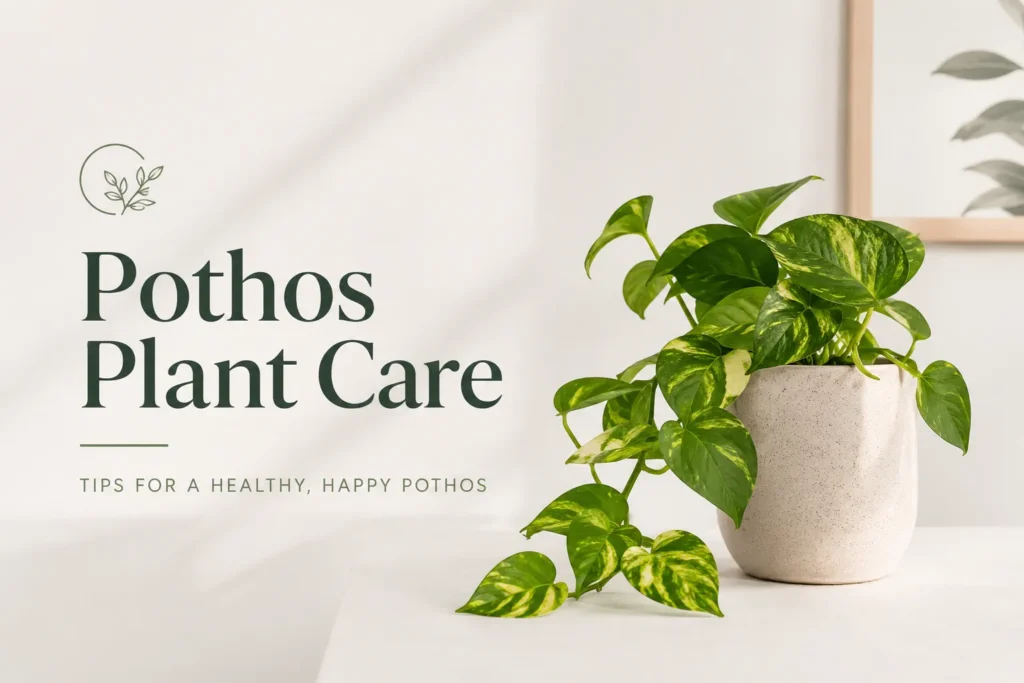
Pothos is one of the easiest indoor plants to grow. It is beautiful, fast-growing, and perfect for beginners. Whether you live in an apartment, work from home, or simply want more greenery indoors, pothos is a great choice.
Its trailing vines and heart-shaped leaves make any room feel fresh and inviting. Even better, pothos can adapt to different indoor conditions and requires very little maintenance.
In this complete pothos care guide, you’ll learn everything you need to know. We’ll cover popular varieties, light and watering needs, soil, fertilizer, pruning, propagation, common problems, pests, and safety tips. By the end, you’ll know exactly how to keep your pothos healthy and thriving.
What Is a Pothos Plant?
Pothos (Epipremnum aureum), also known as Devil’s Ivy, is a popular tropical houseplant loved for its attractive foliage and easy care. It naturally grows as a climbing or trailing vine and can quickly add a lush, green look to your home or office.
The plant is native to the tropical forests of Southeast Asia and the Pacific Islands. Indoors, it grows well in hanging baskets, shelves, plant stands, or climbing supports like moss poles.
One of the biggest reasons people choose pothos is its adaptability. It tolerates different lighting conditions, forgives occasional missed watering, and grows well with minimal attention. This makes it an excellent choice for both beginners and experienced plant owners.
Why Is Pothos So Popular?
Pothos has remained one of the most popular indoor plants because it is both beautiful and easy to maintain.
Key reasons include:
- Beginner-friendly and easy to grow
- Attractive trailing vines
- Beautiful green and variegated leaves
- Grows well indoors year-round
- Adapts to low-light conditions
- Fast-growing with proper care
- Easy to propagate from cuttings
- Suitable for homes and offices
Benefits of Growing Pothos Indoors
Beyond its decorative appeal, pothos offers several practical benefits that make it a favorite indoor plant.
Some of the key benefits include:
- Adds natural beauty to any room
- Creates a calm and relaxing atmosphere
- Requires very little maintenance
- Fits well in small apartments and offices
- Can be displayed in hanging baskets, shelves, or pots
- Easy to multiply through propagation
- Great plant for first-time plant owners
Quick Tip: While pothos is often described as an air-purifying plant, its real-world effect inside homes is limited. It’s best appreciated for its beauty, ease of care, and ability to bring greenery indoors.
Popular Pothos Varieties
Pothos comes in many beautiful varieties, each with unique leaf colors and patterns. While they all have similar care requirements, some varieties need slightly more light to maintain their vibrant variegation. Choosing the right type depends on your space, lighting, and personal style.
Golden Pothos
Golden Pothos is the most common and beginner-friendly variety. Its heart-shaped green leaves are splashed with golden-yellow variegation, making it a classic choice for homes and offices.
It grows quickly, adapts to different light conditions, and requires very little maintenance.
Key Features
- Bright green leaves with golden variegation
- Fast-growing trailing vine
- Ideal for beginners
- Tolerates low light
Best For: First-time plant owners and indoor spaces with moderate light.
Marble Queen Pothos
Marble Queen is known for its stunning white and green marbled foliage. Because it has more white on its leaves, it needs brighter indirect light than Golden Pothos to keep its variegation vibrant.
Its slower growth is balanced by its elegant appearance.
Key Features
- White and green marbled leaves
- Slower growth
- Prefers bright indirect light
- Elegant decorative plant
Best For: Bright living rooms and modern interiors.
Neon Pothos
Neon Pothos stands out with its vibrant lime-green leaves. Unlike other varieties, it has solid-colored foliage without variegation, adding a bold pop of color to indoor spaces.
It grows well in bright indirect light but can also tolerate lower light conditions.
Key Features
- Bright lime-green leaves
- No variegation
- Fast-growing
- Easy to maintain
Best For: Adding vibrant color to home or office décor.
Jade Pothos
Jade Pothos features deep green leaves with little or no variegation. It is one of the toughest pothos varieties and performs especially well in lower-light environments.
Its rich foliage creates a calm, natural look.
Key Features
- Solid dark green leaves
- Excellent low-light tolerance
- Low-maintenance
- Strong and resilient
Best For: Offices, bedrooms, and shaded indoor areas.
Silver Satin Pothos
Despite its common name, Silver Satin is technically a close relative rather than a true pothos. It is loved for its velvety green leaves decorated with shimmering silver spots.
This variety grows slightly slower but offers a premium, sophisticated appearance.
Key Features
- Soft green leaves with silver markings
- Velvety texture
- Moderate growth
- Prefers bright indirect light
Best For: Contemporary and minimalist interiors.
N’Joy Pothos
N’Joy Pothos has compact growth and beautiful white and green variegated leaves. Its shorter vines make it perfect for desks, shelves, and small apartments.
Bright indirect light helps maintain its crisp white patterns.
Key Features
- Compact growth
- White and green variegation
- Decorative foliage
- Suitable for small spaces
Best For: Apartments, workspaces, and tabletops.
Manjula Pothos
Manjula Pothos is prized for its large, wavy leaves with creamy white, green, and light yellow variegation. Every leaf has a unique pattern, making each plant one of a kind.
Although it grows more slowly, its striking appearance makes it highly desirable among plant enthusiasts.
Pothos Care Requirements
Pothos is one of the easiest houseplants to care for because it can adapt to different indoor conditions. However, providing the right balance of light, water, temperature, and nutrients will help your plant grow faster, produce healthier leaves, and maintain its vibrant color.
Let’s look at each care requirement in detail.
Light Requirements
Light plays an important role in keeping your pothos healthy. While this plant can survive in low-light conditions, it grows best when placed in bright, indirect sunlight.
Avoid exposing your pothos to strong afternoon sun, as direct sunlight can scorch the leaves and fade their natural color.
Best Light Conditions
- Bright, indirect sunlight is ideal.
- Tolerates low-light indoor spaces.
- Keep away from harsh direct afternoon sun.
- Rotate the pot every few weeks for even growth.
Signs Your Pothos Needs More Light
- Slower growth
- Smaller new leaves
- Long, leggy vines
- Loss of variegation in patterned varieties
Signs of Too Much Light
- Brown or crispy leaf edges
- Faded leaf color
- Sunburn spots on leaves
Pro Tip: Place your pothos near an east-facing window or a few feet away from a south- or west-facing window with sheer curtains for the best results.
Watering
Proper watering is one of the most important parts of pothos care. Instead of watering on a fixed schedule, check the soil before adding water. Pothos prefers the soil to dry slightly between waterings.
Overwatering is much more harmful than underwatering and can lead to root rot.
Watering Guidelines
- Water every 1–2 weeks in most indoor conditions.
- Allow the top 1–2 inches of soil to dry before watering.
- Water thoroughly until excess water drains from the pot.
- Empty the saucer after watering to prevent standing water.
- Reduce watering during winter when growth slows.
Signs of Overwatering
- Yellow leaves
- Soft stems
- Wet soil for several days
- Root rot
- Fungus gnats
Signs of Underwatering
- Drooping leaves
- Dry soil
- Crispy leaf edges
- Curling leaves
Quick Tip: Always check the soil with your finger before watering. If it feels dry about an inch below the surface, it’s time to water.
Temperature & Humidity
Since pothos is a tropical plant, it grows best in warm indoor temperatures with moderate humidity. It can tolerate normal household conditions but should be protected from sudden temperature changes.
Keep your plant away from air conditioners, heaters, and cold drafts.
Ideal Environment
- Temperature: 65–85°F (18–29°C)
- Humidity: 40–60%
- Good air circulation
- Stable indoor temperatures
How to Increase Humidity
- Group plants together.
- Use a humidifier.
- Place the pot on a pebble tray with water.
- Keep the plant away from heating vents.
Soil & Fertilizer
Healthy roots need loose, well-draining soil that allows excess water to escape. Heavy or compact soil can trap moisture and increase the risk of root rot.
During the growing season, pothos benefits from regular feeding to support healthy leaves and vigorous growth.
Best Soil Mix
Choose a light and airy potting mix that drains well.
A good mix includes:
- Quality indoor potting soil
- Perlite
- Coco peat or peat moss
- Orchid bark (optional)
Fertilizer Schedule
Feed your pothos with a balanced liquid fertilizer during spring and summer.
Fertilizing Tips
- Fertilize once a month during active growth.
- Use a balanced liquid fertilizer at half strength.
- Do not fertilize in winter.
- Water the plant before applying fertilizer to protect the roots.
Signs of Nutrient Deficiency
- Slow growth
- Pale green leaves
- Small new leaves
- Weak vines
Pothos Maintenance
Regular maintenance helps your pothos stay healthy, full, and attractive throughout the year. Simple tasks like pruning, repotting, and cleaning the leaves can encourage faster growth, prevent common problems, and improve the plant’s overall appearance.
Fortunately, pothos requires very little maintenance, making it an ideal houseplant for beginners.
Pruning
Pruning helps your pothos grow fuller and prevents long, leggy vines. It also removes damaged or unhealthy leaves, allowing the plant to focus its energy on producing new growth.
The best time to prune is during the spring and summer growing season, but light pruning can be done anytime.
Benefits of Pruning
- Encourages bushier growth
- Removes dead or yellow leaves
- Controls long vines
- Improves the plant’s appearance
- Promotes healthy new shoots
How to Prune a Pothos
- Use clean, sharp pruning scissors.
- Identify long or leggy vines.
- Cut just above a leaf node.
- Remove yellow or damaged leaves.
- Save healthy cuttings for propagation.
Pro Tip: Pinching the growing tips regularly encourages side shoots, making your pothos look fuller and bushier.
Repotting
As your pothos grows, its roots will eventually fill the pot. This is known as being root-bound, which can slow growth and reduce the plant’s ability to absorb water and nutrients.
Repotting gives the roots more space and refreshes the soil, helping the plant continue growing.
When Should You Repot?
Most pothos plants need repotting every 1–2 years, depending on their growth rate.
Signs Your Pothos Needs Repotting
- Roots growing through drainage holes
- Water drains too quickly
- Slower growth
- Soil dries out very fast
- Plant becomes top-heavy
How to Repot
- Choose a pot that is 1–2 inches larger than the current one.
- Use fresh, well-draining potting mix.
- Gently remove the plant from its old pot.
- Loosen tightly packed roots.
- Place the plant in the new pot and fill with fresh soil.
- Water thoroughly after repotting.
Tip: Avoid choosing a pot that is much larger than the current one. Excess soil can hold too much moisture and increase the risk of root rot.
Cleaning the Leaves
Dust naturally collects on pothos leaves over time. A layer of dust blocks sunlight, making it harder for the plant to photosynthesize efficiently.
Cleaning the leaves regularly keeps them shiny, healthy, and better able to absorb light.
How to Clean Pothos Leaves
- Wipe each leaf gently with a soft, damp cloth.
- Support the leaf with one hand while cleaning.
- Use plain water instead of commercial leaf shine products.
- Clean the leaves every few weeks or whenever dust builds up.
Benefits of Cleaning
- Improves photosynthesis
- Removes dust and dirt
- Helps detect pests early
- Keeps leaves glossy and healthy
- Enhances the plant’s appearance
Maintenance Checklist
| Task | Frequency | |
| Prune vines | Every 1–2 months or as needed | |
| Remove dead leaves | As needed | |
| Clean leaves | Every 2–4 weeks | |
| Check for pests | Weekly | |
| Repot | Every 1–2 years |
Common Maintenance Mistakes to Avoid
Avoid these mistakes to keep your pothos thriving:
- Pruning too much at once
- Using dirty pruning tools
- Repotting into an oversized pot
- Ignoring root-bound plants
- Letting dust build up on leaves
- Forgetting to inspect for pests
How to Propagate Pothos
Propagating pothos is one of the easiest ways to grow new plants without buying another one. With just a healthy stem cutting, you can create multiple new pothos plants for your home or share them with friends and family.
The best time to propagate pothos is during the spring and summer, when the plant is actively growing. However, indoor pothos can also be propagated successfully at other times of the year with proper care.
Stem Cuttings
Stem cuttings are the most common and reliable way to propagate pothos. A healthy cutting with at least one leaf node can quickly develop new roots under the right conditions.
How to Take a Healthy Stem Cutting
Follow these simple steps:
- Choose a healthy vine with several leaves.
- Find a leaf node on the stem.
- Cut about ¼ inch below the node using clean, sharp scissors.
- Ensure each cutting has at least one node and 2–4 healthy leaves.
- Remove the bottom leaf if it will sit in water or soil.
Pro Tip: Always use clean pruning tools to reduce the risk of spreading diseases to your plant.
Understanding Leaf Nodes
A leaf node is the small bump on the stem where leaves and aerial roots grow. This is the point from which new roots will develop during propagation.
Without a node, a pothos cutting cannot produce roots, no matter how healthy the leaf looks.
How to Identify a Leaf Node
Look for:
- A small bump on the stem
- A leaf growing from the bump
- Tiny aerial roots near the node
- Slightly thicker stem section
Important: Always include at least one healthy node in every cutting.
Water Propagation
Water propagation is the easiest and most popular method for beginners. Watching the roots develop in clear water is both simple and rewarding.
Steps for Water Propagation
- Fill a clean glass or jar with room-temperature water.
- Place the node underwater while keeping the leaves above the waterline.
- Put the container in bright, indirect light.
- Change the water every 5–7 days.
- Wait for roots to grow to about 2–3 inches (5–7 cm) before transplanting into soil.
Advantages of Water Propagation
- Easy for beginners
- Roots are visible as they grow
- Simple to monitor root health
- High success rate
Things to Avoid
- Submerging leaves in water
- Using dirty containers
- Leaving old water unchanged
- Placing the jar in direct sunlight
Soil Propagation
Instead of rooting in water, you can place the cutting directly into moist potting mix. This allows the roots to adapt to soil from the beginning.
Although you can’t see the roots developing, soil propagation often reduces transplant shock later.
Steps for Soil Propagation
- Fill a small pot with well-draining potting mix.
- Make a small hole in the soil.
- Insert the node below the soil surface.
- Gently press the soil around the cutting.
- Water lightly to keep the soil evenly moist.
- Place the pot in bright, indirect light.
Soil Propagation Tips
- Keep the soil slightly moist, not soggy.
- Avoid overwatering.
- Maintain warm temperatures.
- New growth usually appears within 3–6 weeks.
Common Propagation Mistakes
Avoid these common mistakes to improve your success rate:
- Taking cuttings without a leaf node
- Using unhealthy or damaged vines
- Leaving leaves underwater
- Forgetting to change the water
- Overwatering soil-propagated cuttings
- Placing cuttings in direct sunlight
- Expecting roots to appear within a few days
How Long Does Propagation Take?
Under the right conditions, pothos cuttings develop roots fairly quickly.
Typical timeline:
- Week 1: Cutting remains healthy.
- Week 2–3: Small white roots begin to appear.
- Week 4–6: Roots become stronger and longer.
- After 6 weeks: Ready to transplant into a pot if rooted in water.
Growth speed may vary depending on light, temperature, and overall plant health.
Common Pothos Problems
Even though pothos is a hardy and low-maintenance plant, it can still develop problems if its growing conditions are not ideal. Most issues are caused by improper watering, poor lighting, low humidity, or pests.
The good news is that these problems are usually easy to identify and fix when caught early.
Yellow Leaves
Yellow leaves are one of the most common issues with pothos. While it’s normal for an older leaf to turn yellow occasionally, multiple yellow leaves often indicate a care problem.
Common Causes
- Overwatering
- Poor drainage
- Root rot
- Natural aging of older leaves
- Lack of nutrients
How to Fix Yellow Leaves
- Check the soil before watering.
- Let the top 1–2 inches of soil dry between waterings.
- Ensure the pot has drainage holes.
- Remove yellow leaves to encourage new growth.
- Repot the plant if the soil stays soggy.
Tip: If only one or two older leaves turn yellow while the rest of the plant looks healthy, it’s usually part of the natural aging process.
Drooping Leaves
Drooping leaves are often the first sign that your pothos is stressed. Both underwatering and overwatering can cause the leaves to lose their firmness.
Common Causes
- Dry soil
- Overwatered roots
- Sudden temperature changes
- Root damage after repotting
How to Fix Drooping Leaves
- Check the soil moisture first.
- Water thoroughly if the soil is dry.
- Allow wet soil to dry before watering again.
- Keep the plant in a stable indoor environment.
- Avoid placing it near heaters or air conditioners.
Brown Leaf Tips
Brown tips usually appear when the air is too dry or the plant is exposed to inconsistent watering. In some cases, excess fertilizer can also cause leaf tip burn.
Common Causes
- Low humidity
- Underwatering
- Excess fertilizer
- Mineral buildup from tap water
How to Fix Brown Tips
- Increase indoor humidity.
- Water consistently.
- Flush the soil occasionally to remove salt buildup.
- Trim brown tips with clean scissors if needed.
Loss of Variegation
Variegated pothos varieties like Marble Queen, N’Joy, and Manjula may lose their white or yellow patterns if they don’t receive enough light.
The leaves gradually become greener because the plant produces more chlorophyll to capture available light.
Common Causes
- Insufficient light
- Long-term placement in dark areas
How to Fix It
- Move the plant to bright, indirect light.
- Rotate the pot regularly for even growth.
- Avoid direct afternoon sunlight.
Note: New leaves will regain better variegation, but older green leaves usually remain green.
Root Rot
Root rot is one of the most serious problems affecting pothos. It occurs when the roots remain in wet soil for too long, allowing fungi to develop.
If left untreated, root rot can kill the entire plant.
Signs of Root Rot
- Yellow leaves
- Wilting despite wet soil
- Soft, black roots
- Foul smell from the pot
- Mushy stems
How to Treat Root Rot
- Remove the plant from its pot.
- Cut away black or mushy roots.
- Sterilize your pruning tools.
- Repot the plant in fresh, well-draining soil.
- Water only when the soil begins to dry.
Quick Troubleshooting Table
| Problem | Possible Cause | Solution |
| Yellow leaves | Overwatering | Let the soil dry and improve drainage |
| Drooping leaves | Too much or too little water | Check soil moisture before watering |
| Brown leaf tips | Low humidity or inconsistent watering | Increase humidity and water regularly |
| Loss of variegation | Low light | Move to bright, indirect light |
| Root rot | Waterlogged soil | Trim damaged roots and repot |
Preventing Common Problems
A few simple habits can prevent most pothos issues before they start.
Best Practices
- Water only when the top 1–2 inches of soil are dry.
- Use a pot with drainage holes.
- Provide bright, indirect light.
- Keep the plant in a warm, stable environment.
- Inspect leaves and stems weekly.
- Remove dead or damaged foliage promptly.
- Avoid overfertilizing.
Conclusion
Pothos is one of the easiest and most rewarding indoor plants to grow. Its beautiful trailing vines, low-maintenance nature, and ability to adapt to different indoor environments make it a favorite among beginners and experienced plant owners alike.
With the right balance of bright, indirect light, proper watering, well-draining soil, and occasional pruning, your pothos can thrive for many years. Regular maintenance, timely propagation, and early detection of common problems will keep your plant healthy and encourage lush, vibrant growth.
Whether you place it in your living room, bedroom, office, or balcony, a healthy pothos adds natural beauty to any space. By following the tips in this complete care guide, you’ll have the confidence to grow a thriving pothos plant and enjoy its greenery year-round.
Frequently Asked Questions (FAQs)
1. How often should I water my pothos?
Water your pothos when the top 1–2 inches (2.5–5 cm) of soil feel dry. In most homes, this means watering every 1–2 weeks, depending on the season, light, and humidity.
2. Can pothos grow in low light?
Yes. Pothos can tolerate low-light conditions, making it a great choice for homes and offices. However, it grows faster and produces healthier foliage in bright, indirect light.
3. Why are my pothos leaves turning yellow?
Yellow leaves are usually caused by overwatering or poor drainage. Occasionally, older leaves may turn yellow naturally as part of the plant’s growth cycle.
4. How do I make my pothos bushier?
Prune long vines just above a leaf node to encourage new side shoots. Regular pruning, proper lighting, and adequate fertilization will help your pothos develop a fuller, bushier appearance.
5. Can I grow pothos in water?
Yes. Pothos grows well in water as long as the roots remain submerged and the water is changed every 5–7 days. If grown permanently in water, add a liquid fertilizer occasionally to provide essential nutrients.
6. How long does it take for pothos cuttings to root?
Healthy cuttings usually begin developing roots within 2–4 weeks. They are generally ready to transplant into soil once the roots reach about 2–3 inches (5–7 cm) in length.
7. Does pothos need fertilizer?
Pothos benefits from a balanced liquid fertilizer once a month during spring and summer, when it is actively growing. Avoid fertilizing during winter.
8. When should I repot my pothos?
Repot your pothos every 1–2 years or whenever it becomes root-bound. Signs include roots growing out of the drainage holes, slow growth, and soil that dries out very quickly.
9. Is pothos safe for pets?
No. Pothos contains calcium oxalate crystals, which are toxic to cats and dogs if ingested. Keep the plant out of reach of pets and consult a veterinarian immediately if you suspect your pet has eaten it.
10. Can pothos improve indoor air quality?
Pothos is often recognized for its air-purifying qualities, but its effect in a typical home is limited. Its greatest benefits are adding greenery, enhancing home décor, and creating a more relaxing indoor environment.
11. What is the best soil for pothos?
Pothos grows best in a well-draining potting mix. A blend of potting soil, perlite, and coco peat or peat moss provides good drainage while retaining enough moisture for healthy root growth.
12. Why is my pothos not growing?
Slow growth can result from insufficient light, lack of nutrients, cold temperatures, or a root-bound pot. Providing bright, indirect light and regular care usually encourages healthy new growth.