
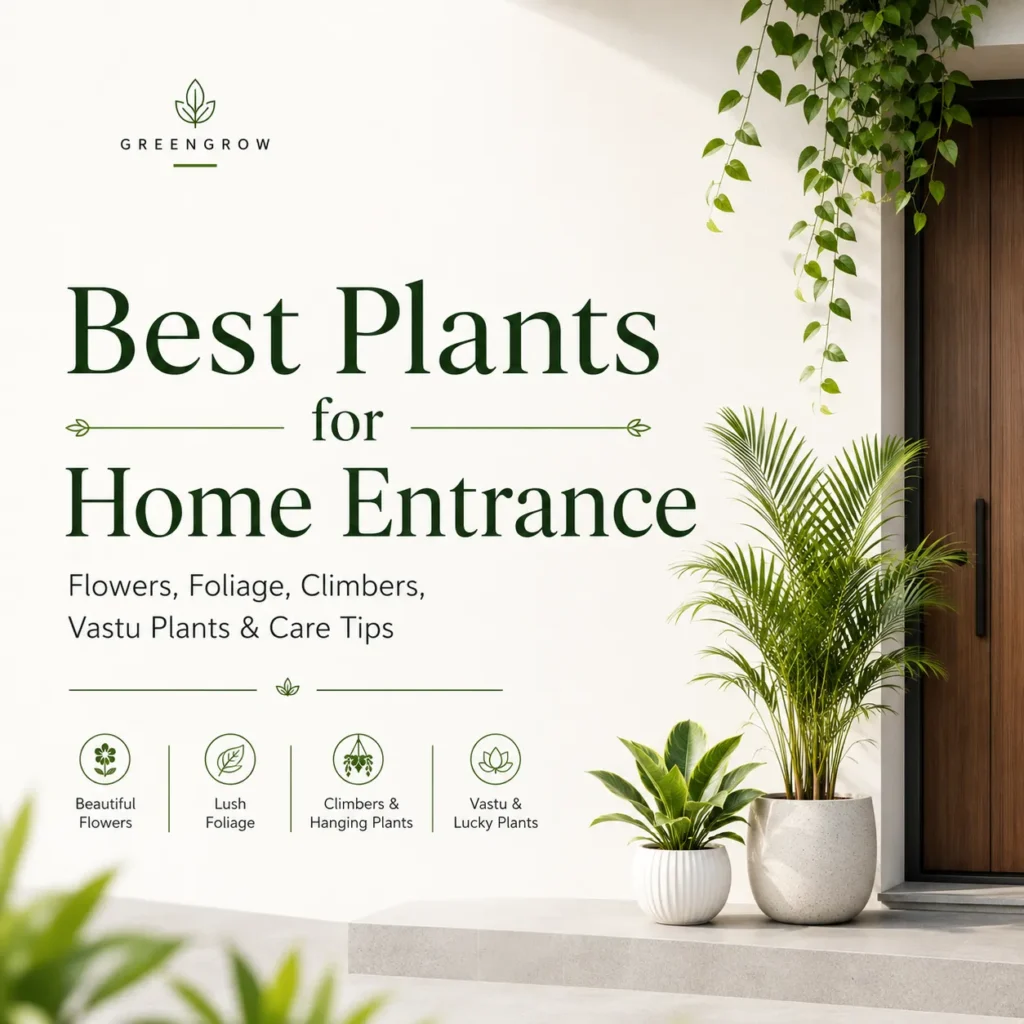
Many homeowners also choose plants for home entrance because they believe greenery attracts positive energy. In addition, according to Vastu Shastra and Feng Shui, certain plants symbolize prosperity, happiness, and good health. Although these beliefs are rooted in tradition, healthy plants can genuinely improve your mood and make any space feel calmer and more peaceful. As a result, they become a meaningful addition to both modern and traditional homes.
Furthermore, the right entrance plants help purify the air and soften the appearance of walls, pathways, and doors. Whether you live in a villa, an apartment, or an independent house, there are suitable plants for every type of entrance. For example, you can choose flowering plants for vibrant colors, foliage plants for lush greenery, or fragrant plants to create a warm and refreshing welcome. In this way, your entrance becomes both attractive and inviting.
However, not every plant is suitable for the main entrance. Before making your choice, consider factors such as sunlight, available space, maintenance requirements, and your local climate. After all, these factors determine which plants will grow well and stay healthy throughout the year. Therefore, selecting plants that match your home’s conditions makes maintenance easier while ensuring long-lasting beauty.
In this guide, you’ll discover the best plants for entrance door decoration, learn about entrance plants as per Vastu, explore lucky plants for home entrance, and find simple care tips to keep them healthy all year. Additionally, you’ll learn how to choose plants based on sunlight, maintenance, and placement. By the end of this guide, you’ll have the knowledge and confidence to create an attractive, welcoming, and thriving entrance for your home.
Best Flowering Plants for Home Entrance
Flowering plants are one of the best ways to make your entrance bright and inviting. Their colorful blooms create a cheerful atmosphere and improve your home’s curb appeal. Whether you prefer bold flowers or elegant blooms, there is a plant for every entrance style.
When choosing flowering plants for entrance, consider sunlight, watering needs, and available space. Healthy flowering plants not only beautify your entrance but also attract butterflies and pollinators, making your home feel closer to nature.
Hibiscus
Hibiscus is one of the best home entrance plants for tropical climates. Its large, colorful flowers bloom throughout the year with proper care. Available in red, pink, yellow, orange, and white, Hibiscus adds a vibrant touch to any entrance.
Why Choose Hibiscus?
It creates an eye-catching display that instantly enhances your home’s appearance. It also attracts butterflies and bees, adding life to your garden.
Sunlight Requirement: Full sun (6–8 hours daily)
Watering: Water regularly and keep the soil slightly moist.
Maintenance Level: Moderate
Best Placement: Near the front gate, entrance pathway, or in large decorative pots beside the main door.
Bougainvillea
Bougainvillea is famous for its colorful bracts that bloom almost all year in warm climates. It is an excellent choice for house entrance landscaping because it grows beautifully on walls, fences, arches, and gates.
Why Choose Bougainvillea?
This plant produces stunning shades of pink, purple, white, orange, and red while requiring very little maintenance once established.
Sunlight Requirement: Full sun
Watering: Water only when the soil becomes dry.
Maintenance Level: Low
Best Placement: Entrance gates, boundary walls, pergolas, or trellises.
Rose
Roses are timeless plants for home entrance that symbolize beauty, love, and elegance. Their colorful flowers and pleasant fragrance make them a favorite for both traditional and modern homes.
Why Choose Rose?
These plants create a luxurious appearance while adding natural fragrance to your entrance. They are available in climbing, shrub, and miniature varieties.
Sunlight Requirement: At least 6 hours of direct sunlight
Watering: Water deeply two to three times a week, depending on the weather.
Maintenance Level: Moderate
Best Placement: Decorative pots, flower beds, or along the entrance walkway.
Peace Lily
Peace Lily is one of the best indoor entrance plants for homes with limited sunlight. Its glossy green leaves and elegant white flowers create a clean and sophisticated look.
Why Choose Peace Lily?
Besides its beautiful flowers, Peace Lily is well known for its air-purifying qualities. It is perfect for apartment entrances and covered porches.
Sunlight Requirement: Bright, indirect light
Watering: Water when the top layer of soil feels dry.
Maintenance Level: Low
Best Placement: Indoor entrances, covered balconies, shaded verandas, or near the foyer.
Hydrangea
Hydrangeas produce large clusters of flowers that instantly brighten any entrance. Their blooms come in shades of blue, pink, purple, and white, depending on the soil conditions.
Why Choose Hydrangea?
These plants create a soft and elegant landscape, making them ideal for spacious front yards and garden entrances.
Sunlight Requirement: Morning sunlight with afternoon shade
Watering: Keep the soil consistently moist but not waterlogged.
Maintenance Level: Moderate
Best Placement: Garden borders, entrance pathways, or decorative containers.
Orchids
Orchids bring elegance and sophistication to your entrance. Their long-lasting flowers and unique shapes make them popular among homeowners who prefer a premium look.
Why Choose Orchids?
These plants are perfect for modern homes because they bloom for several weeks with proper care. They also require less watering than many flowering plants.
Sunlight Requirement: Bright, indirect sunlight
Watering: Once a week or when the growing medium begins to dry.
Maintenance Level: Moderate
Best Placement: Indoor entrances, covered patios, balconies, or decorative shelves near the front door.
Best Foliage Plants for Home Entrance
Foliage plants are an excellent choice if you want year-round greenery with minimal maintenance. Unlike flowering plants, they stay attractive in every season and add a fresh, elegant look to your entrance. Many air purifying entrance plants also have beautiful foliage, making them ideal for both decoration and better air quality.
Whether you have a spacious front yard or a compact apartment entrance, these best home entrance plants can enhance your space with lush green leaves and easy care.
Areca Palm
Areca Palm is one of the most popular plants for home entrance because of its graceful, feathery leaves. It creates a tropical look and makes the entrance feel fresh and welcoming.
Why Choose Areca Palm?
This plant grows well in pots and is known for its excellent air-purifying properties. It also adds height and fills empty corners beautifully.
Air Purification Benefits: Helps improve indoor air quality and increases humidity.
Decorative Value: Creates a lush, tropical appearance.
Indoor/Outdoor Suitability: Suitable for both indoor entrances and covered outdoor spaces.
Care Requirements:
- Sunlight: Bright, indirect light or partial shade
- Watering: Water when the topsoil becomes dry
- Maintenance Level: Low to moderate
Best Placement: Place it beside the main door, entrance hallway, or covered porch.
Snake Plant
Snake Plant is one of the easiest low-maintenance entrance plants to grow. Its upright, sword-shaped leaves give a modern and elegant look to any entrance.
Why Choose Snake Plant?
It requires very little care and can tolerate low light, making it perfect for busy homeowners.
Air Purification Benefits: Filters common indoor pollutants and releases oxygen.
Decorative Value: Adds a clean, contemporary style.
Indoor/Outdoor Suitability: Suitable for indoor entrances, balconies, and shaded outdoor areas.
Care Requirements:
- Sunlight: Bright indirect light to partial shade
- Watering: Water every two to three weeks
- Maintenance Level: Very low
Best Placement: Decorative pots near the front door or entrance corners.
Rubber Plant
Rubber Plant is admired for its large, glossy green leaves that create a bold statement. It is one of the best plants for entrance door decoration in modern homes.
Why Choose Rubber Plant?
Its thick foliage gives the entrance a premium look while helping improve indoor air quality.
Air Purification Benefits: Helps remove airborne toxins.
Decorative Value: Large shiny leaves create a luxurious appearance.
Indoor/Outdoor Suitability: Best suited for indoor entrances or covered verandas.
Care Requirements:
- Sunlight: Bright, indirect sunlight
- Watering: Water when the soil feels dry
- Maintenance Level: Low
Best Placement: Large decorative pots beside the entrance.
ZZ Plant
ZZ Plant is famous for surviving with very little attention. It is perfect for homeowners looking for stylish greenery without frequent maintenance.
Why Choose ZZ Plant?
Its glossy leaves remain attractive throughout the year, even in low-light conditions.
Air Purification Benefits: Helps improve indoor air quality.
Decorative Value: Compact shape with shiny dark green leaves.
Indoor/Outdoor Suitability: Best for indoor entrances and shaded patios.
Care Requirements:
- Sunlight: Low to bright indirect light
- Watering: Water every two to three weeks
- Maintenance Level: Very low
Best Placement: Entry tables, covered entrance corners, or apartment foyers.
Spider Plant
Spider Plant is a favorite among beginners because it grows quickly and is easy to maintain. Its long, arching leaves add softness and movement to your entrance.
Why Choose Spider Plant?
It is one of the best air purifying entrance plants and also produces small baby plants that can be propagated easily.
Air Purification Benefits: Removes common indoor pollutants and improves air freshness.
Decorative Value: Cascading foliage creates a lively and natural look.
Indoor/Outdoor Suitability: Suitable for indoor spaces, hanging baskets, and shaded balconies.
Care Requirements:
- Sunlight: Bright, indirect light
- Watering: Water once the topsoil becomes dry
- Maintenance Level: Low
Best Placement: Hanging baskets, shelves, or decorative pots near the entrance.
Monstera
Monstera is well known for its large, split leaves that create a bold tropical appearance. It has become one of the most popular home entrance decoration plants for contemporary homes.
Why Choose Monstera?
Its unique foliage adds character and makes any entrance look stylish and inviting.
Air Purification Benefits: Contributes to cleaner indoor air.
Decorative Value: Large, dramatic leaves create a premium tropical aesthetic.
Indoor/Outdoor Suitability: Best suited for indoor entrances and covered outdoor areas.
Care Requirements:
- Sunlight: Bright, indirect sunlight
- Watering: Water when the top few centimeters of soil feel dry
- Maintenance Level: Moderate
Best Placement: Large planters near the entrance or beside the main doorway.
Best Fragrant Plants for Home Entrance
Fragrant plants do more than beautify your entrance—they create a pleasant and memorable experience for everyone who visits your home. Their natural aroma makes the surroundings feel calm, fresh, and welcoming. Many homeowners also choose fragrant plants because they help create a relaxing atmosphere after a busy day.
When selecting plants for home entrance, choose varieties that suit your local climate and the amount of sunlight your entrance receives. With proper care, these plants will reward you with beautiful blooms and delightful fragrance throughout the year.
Mogra (Jasmine)
Mogra, also known as Arabian Jasmine, is one of the most popular lucky plants for home entrance in India. Its small white flowers release a rich fragrance, especially during the evening.
Why Choose Mogra?
It fills your entrance with a sweet scent and creates a peaceful atmosphere. It is also commonly used in traditional gardens and is valued in many Indian households for its beauty and cultural significance.
Blooming Season: Spring to autumn, with regular blooming in warm climates
Fragrance Intensity: Strong, especially during the evening and night
Sunlight Requirement: Full sun to partial shade
Watering: Water regularly, but allow the topsoil to dry slightly between watering.
Maintenance Level: Low to moderate
Best Growing Conditions: Warm climate with well-drained soil
Best Placement: Decorative pots near the main entrance, pathways, or balconies.
Lavender
Lavender is admired for its calming fragrance and elegant purple flowers. Although it grows best in cooler and dry climates, it can also thrive in many parts of India with proper care and good drainage.
Why Choose Lavender?
Its pleasant aroma helps create a relaxing environment while adding soft color to your entrance. Lavender also attracts bees and butterflies, bringing more life to your garden.
Blooming Season: Late spring to summer
Fragrance Intensity: Moderate to strong
Sunlight Requirement: Full sunlight
Watering: Water only when the soil becomes dry.
Maintenance Level: Moderate
Best Growing Conditions: Well-drained soil with good air circulation
Best Placement: Sunny entrance gardens, front porches, or decorative containers.
Gardenia
Gardenia is famous for its creamy white flowers and rich fragrance. It is one of the most elegant flowering plants for entrance and instantly enhances the beauty of any home.
Why Choose Gardenia?
Its glossy green leaves remain attractive throughout the year, while the flowers provide a luxurious fragrance during the blooming season.
Blooming Season: Spring to early summer
Fragrance Intensity: Strong and sweet
Sunlight Requirement: Morning sunlight with partial afternoon shade
Watering: Keep the soil evenly moist but avoid waterlogging.
Maintenance Level: Moderate
Best Growing Conditions: Slightly acidic, well-drained soil
Best Placement: Entrance pathways, garden borders, or large decorative pots.
Parijat (Night-Flowering Jasmine)
Parijat, also known as Night-Flowering Jasmine, is cherished for its delicate white flowers with bright orange centers. The flowers bloom at night and release a soothing fragrance that fills the entrance with freshness.
Why Choose Parijat?
Parijat is valued for both its ornamental beauty and its importance in Indian traditions. The flowers naturally fall to the ground in the morning, creating a beautiful floral carpet around the plant.
Blooming Season: Monsoon to early winter
Fragrance Intensity: Strong during the night and early morning
Sunlight Requirement: Full sun to partial shade
Watering: Water regularly while ensuring proper drainage.
Maintenance Level: Low
Best Growing Conditions: Warm climate with fertile, well-drained soil
Best Placement: Near the entrance gate, garden corners, or open front yards.
Best Climbers & Hanging Plants for Home Entrance
Climbers and hanging plants are a great way to add greenery without taking up much floor space. They can cover empty walls, decorate entrance arches, and soften the look of fences and pergolas. Their cascading leaves and climbing vines create a lush, natural entrance that feels both elegant and welcoming.
If you have a small entrance, these home entrance decoration plants are an excellent choice. They maximize vertical space while making your home look greener and more inviting.
English Ivy
English Ivy is a fast-growing climbing plant with attractive evergreen leaves. It can climb walls, trellises, and fences, making it one of the best plants for entrance door landscaping.
Why Choose English Ivy?
Its dense foliage creates a rich green backdrop that adds elegance throughout the year. It is also known for its air-purifying qualities when grown in suitable conditions.
Best Features:
- Evergreen foliage
- Covers walls and fences beautifully
- Helps create a cool, natural look
Sunlight Requirement: Partial shade to bright indirect light
Watering: Keep the soil slightly moist but not soggy.
Maintenance Level: Moderate
Best Placement: Entrance walls, trellises, fences, or decorative hanging baskets.
Boston Fern
Boston Fern is loved for its soft, arching fronds that spill gracefully over hanging baskets. It adds texture and freshness to covered entrances.
Why Choose Boston Fern?
This fern creates a lush appearance and works well in shaded areas where flowering plants may struggle.
Best Features:
- Beautiful cascading foliage
- Excellent for hanging displays
- Adds a soft tropical feel
Sunlight Requirement: Bright, indirect light
Watering: Keep the soil consistently moist.
Maintenance Level: Moderate
Best Placement: Hanging baskets, covered porches, balconies, or shaded entrance corners.
Creeping Jenny
Creeping Jenny is a low-growing trailing plant with vibrant green or golden leaves. Its cascading stems make it perfect for decorative pots and hanging containers.
Why Choose Creeping Jenny?
It grows quickly and creates a flowing effect that enhances modern and traditional entrances alike.
Best Features:
- Bright green or golden foliage
- Fast-growing ground cover
- Beautiful cascading habit
Sunlight Requirement: Full sun to partial shade
Watering: Water regularly to keep the soil evenly moist.
Maintenance Level: Low
Best Placement: Hanging baskets, raised planters, retaining walls, or mixed container gardens.
Madhumalati (Rangoon Creeper)
Madhumalati is one of the most beautiful flowering climbers for Indian homes. Its fragrant flowers change color from white to pink and finally to deep red as they mature, creating a stunning display.
Why Choose Madhumalati?
It combines colorful blooms, pleasant fragrance, and vigorous growth. This makes it an excellent choice for house entrance landscaping.
Best Features:
- Color-changing flowers
- Sweet fragrance
- Fast-growing climbing vine
Sunlight Requirement: Full sun
Watering: Water regularly during the growing season.
Maintenance Level: Moderate
Best Placement: Entrance arches, pergolas, gates, boundary walls, or large trellises.
Lucky & Vastu Plants for Home Entrance
Many homeowners choose entrance plants as per Vastu because they believe certain plants attract positive energy, prosperity, and good health. According to Vastu Shastra, healthy and well-maintained plants can create a peaceful environment around the entrance. While these beliefs are based on tradition, they also encourage people to keep their surroundings green and clean.
If you follow Vastu principles, choosing the right lucky plants for home entrance and placing them in the correct direction can complement your home’s design. However, remember that healthy plant care is just as important as plant selection. A thriving plant always looks more inviting than a neglected one.
Tulsi (Holy Basil)
Tulsi is one of the most sacred Vastu plants for home. It is widely grown in Indian households and is believed to bring peace, purity, and positive energy.
Why Choose Tulsi?
Tulsi is valued for its spiritual significance, pleasant aroma, and medicinal properties. It also attracts pollinators such as bees, supporting a healthy garden.
Vastu Significance: Represents purity, harmony, and spiritual well-being.
Best Placement Direction: East or North direction near the entrance.
Care Tips:
- Place in an area with 4–6 hours of sunlight.
- Water regularly, but avoid waterlogging.
- Prune flowers and dry leaves to encourage healthy growth.
Benefits:
- Creates a peaceful atmosphere
- Adds natural fragrance
- Supports biodiversity
- Easy to maintain
Money Plant (Pothos)
Money Plant is one of the most popular positive energy plants for modern homes. Its trailing vines and heart-shaped leaves make it suitable for both indoor and outdoor entrances.
Why Choose Money Plant?
It is easy to grow, adapts well to different environments, and is often associated with wealth and prosperity in Vastu and Feng Shui.
Vastu Significance: Symbolizes financial growth and abundance.
Best Placement Direction: Southeast direction is commonly recommended.
Care Tips:
- Grow in bright, indirect light.
- Water when the topsoil feels dry.
- Trim long vines to maintain a neat appearance.
Benefits:
- Air-purifying foliage
- Low maintenance
- Ideal for hanging baskets and decorative pots
- Suitable for apartments and villas
Tip: If you grow Money Plant outdoors, keep it in a shaded area to prevent leaf burn from harsh afternoon sunlight.
Lucky Bamboo
Lucky Bamboo is a popular indoor plant that represents harmony, happiness, and success. Although it is not a true bamboo, it is widely used in homes and offices for decorative purposes.
Why Choose Lucky Bamboo?
Its elegant stems and compact size make it perfect for apartment entrances, foyers, and office reception areas.
Vastu Significance: Believed to attract good fortune and positive energy.
Best Placement Direction: East or Southeast direction.
Care Tips:
- Keep in bright, indirect light.
- Change the water every one to two weeks if grown in water.
- Use clean water to prevent root problems.
Benefits:
- Compact and decorative
- Easy to maintain
- Suitable for indoor spaces
- Adds a modern look to the entrance
Jade Plant
Jade Plant is a beautiful succulent with thick, glossy leaves. It is one of the most popular lucky plants for home entrance because it is believed to symbolize wealth and success.
Why Choose Jade Plant?
Its compact shape fits well in small entrances, balconies, and apartment doorways. It also requires very little maintenance.
Vastu Significance: Represents prosperity, growth, and financial stability.
Best Placement Direction: Southeast direction.
Care Tips:
- Place in bright sunlight or partial sun.
- Water only when the soil becomes completely dry.
- Use well-drained soil to prevent root rot.
Benefits:
- Drought tolerant
- Attractive year-round foliage
- Excellent for beginners
- Suitable for decorative ceramic pots
Aloe Vera
Aloe Vera is a practical and attractive plant that combines ornamental beauty with medicinal value. Its thick green leaves create a clean and modern appearance at the entrance.
Why Choose Aloe Vera?
Besides enhancing your entrance, Aloe Vera is widely known for the soothing gel inside its leaves, which is commonly used for minor skin care.
Vastu Significance: Believed to absorb negative energy and encourage positive vibrations.
Best Placement Direction: East or North direction.
Care Tips:
- Grow in full sun or bright indirect light.
- Water sparingly, allowing the soil to dry between watering.
- Use sandy, well-drained soil.
Benefits:
- Very low maintenance
- Drought resistant
- Useful medicinal plant
- Suitable for indoor and outdoor entrances
Quick Checklist Before Buying Entrance Plants
| Factor | What to Check |
| Sunlight | Full sun, partial shade, or indoor light |
| Available Space | Ensure enough room for mature growth |
| Watering Needs | Choose plants that match your routine |
| Pot Drainage | Use containers with drainage holes |
| Maintenance | Select low- or moderate-maintenance plants if you’re a beginner |
| Climate | Choose plants suitable for your local weather |
| Home Style | Match plant varieties and planters with your home’s design |
Choosing the right entrance plants doesn’t have to be difficult. By understanding your entrance conditions and selecting plants that match your lifestyle, you can create a beautiful, healthy, and welcoming entrance all year round. A thoughtful combination of flowering plants, lush foliage, fragrant blooms, and lucky plants will make your home’s entrance both attractive and functional.
Simple Vastu Direction Table
| Direction | Recommended Plant | Traditional Vastu Benefit |
| East | Tulsi (Holy Basil) | Positive energy, health, and peace |
| North | Tulsi (Holy Basil), Aloe Vera | Harmony, freshness, and well-being |
| Southeast | Money Plant, Jade Plant | Prosperity, abundance, and financial growth |
| Southwest | Rose | Love, harmony, and stable relationships |
Note: These recommendations are based on traditional Vastu beliefs. Choose locations that also provide the correct sunlight, airflow, and growing conditions for each plant.
General Vastu Tips for Entrance Plants
Following a few simple practices can help keep your entrance attractive while aligning with common Vastu principles.
- Keep all entrance plants healthy and well maintained.
- Remove dead, dry, or diseased plants as soon as possible.
- Avoid blocking the main entrance with oversized pots.
- Use clean, attractive planters to enhance the appearance of your home.
- Sweep fallen leaves regularly to maintain a neat and welcoming entrance.
- Ensure every pot has proper drainage to prevent waterlogging.
- Choose a balanced arrangement with matching pots on either side of the entrance for a harmonious look.
Common Mistakes to Avoid
Many homeowners unintentionally reduce the beauty of their entrance by making a few simple mistakes.
- Placing sun-loving plants in deep shade.
- Overwatering plants without proper drainage.
- Allowing climbing plants to block doors or windows.
- Using cracked or damaged pots at the entrance.
- Ignoring regular pruning and leaf cleaning.
A well-planned entrance combines healthy plants, proper care, and thoughtful placement. Whether you follow Vastu principles or simply enjoy decorating with greenery, placing plants in suitable locations will help create a beautiful, fresh, and inviting entrance for your home.
Frequently Asked Questions (FAQs)
Which plant is best for the main entrance?
Some of the best home entrance plants include Areca Palm, Hibiscus, Snake Plant, Tulsi, Money Plant, and Peace Lily. Choose a plant based on the amount of sunlight your entrance receives and the style of your home.
Which entrance plant brings good luck?
According to traditional beliefs, Tulsi, Money Plant, Lucky Bamboo, and Jade Plant are considered lucky plants for home entrances because they are associated with prosperity, harmony, and positive energy.
Can I keep a Money Plant near the entrance?
Yes. Money Plant is a popular choice for entrances because it is easy to grow and has attractive trailing vines. If you follow Vastu, it is commonly recommended for the Southeast direction.
Is Tulsi good near the main door?
Yes. Tulsi is widely grown near home entrances in India. It is valued for its cultural significance, pleasant fragrance, and medicinal properties. It also grows well in areas with morning sunlight.
Which flowering plant is best for the entrance?
Hibiscus, Rose, Bougainvillea, Gardenia, and Mogra (Jasmine) are excellent flowering plants for creating a colorful and welcoming entrance.
Which plants should be avoided near the front door?
Avoid keeping thorny cactus, dead or decaying plants, large Tamarind trees, stunted Bonsai (if following traditional Vastu beliefs), and cotton plants near the entrance.
Which low-maintenance entrance plants are best?
If you’re a beginner, consider Snake Plant, ZZ Plant, Jade Plant, Aloe Vera, or Money Plant. These plants require minimal care and stay attractive throughout the year.
Are entrance plants suitable for apartments?
Absolutely. Apartment entrances can be enhanced with compact plants like Peace Lily, Snake Plant, Lucky Bamboo, ZZ Plant, and Spider Plant. Hanging plants such as Boston Fern and Money Plant also work well in limited spaces.
Conclusion
The entrance of your home is the first thing guests notice, and the right plants can make it more beautiful, welcoming, and refreshing. Whether you prefer colorful flowers, lush green foliage, fragrant blooms, or entrance plants as per Vastu, choosing plants that match your sunlight, available space, and maintenance routine will help them thrive. As a result, your entrance will remain vibrant and attractive throughout the year.
Moreover, a balanced combination of flowering plants, foliage plants, climbers, and lucky plants for home entrance creates a landscape that is both functional and visually appealing. At the same time, avoid plants that may pose safety concerns or require more space than your entrance can provide. In addition, regular watering, pruning, cleaning, and occasional fertilizing will keep your plants healthy, fresh, and full of life.
If you follow Vastu principles, place your plants in the recommended directions while ensuring they receive the right amount of sunlight and proper care. However, remember that healthy, well-maintained plants always create a greater impact than simply choosing plants based on tradition. After all, proper care is the key to maintaining a beautiful and welcoming entrance.
Now that you know how to choose the best home entrance plants, it’s time to bring your ideas to life. Explore our collection of premium entrance plants, flowering shrubs, air-purifying plants, and Vastu-friendly varieties. Whether you’re decorating a villa, apartment, or independent house, our nursery offers healthy, carefully nurtured plants to suit every space and style. Start creating a greener, more welcoming entrance today and enjoy the beauty of nature right at your doorstep.