
Introduction
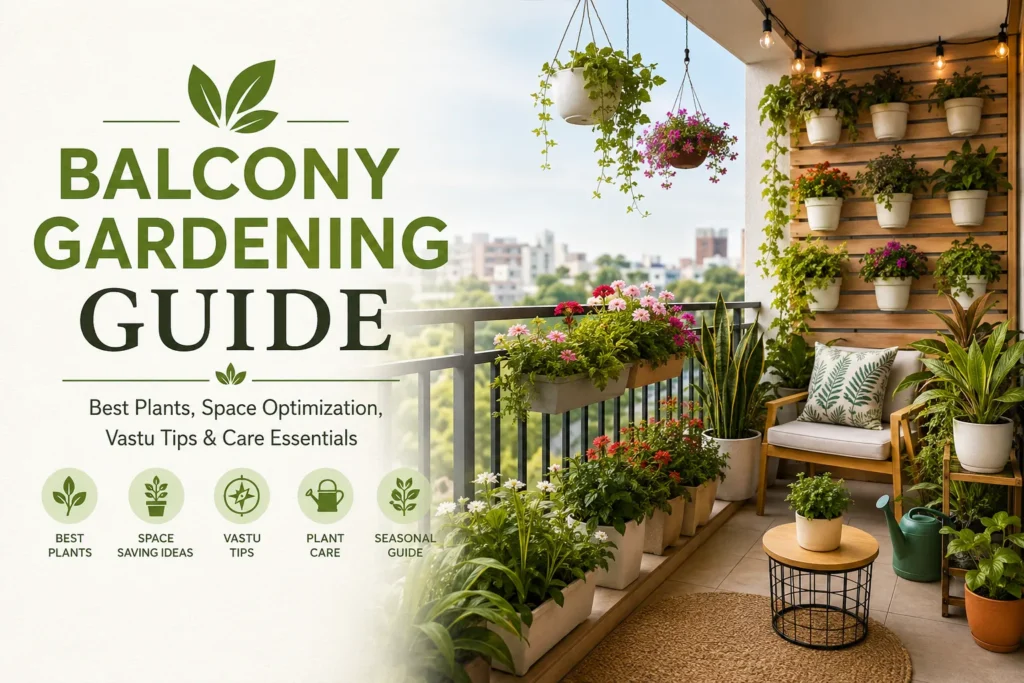
A balcony can become more than a small outdoor space. It can become your personal green corner. Today, many apartment owners and urban families enjoy balcony gardening because it brings nature closer to home.
A well-designed balcony garden improves air quality and creates a peaceful environment. It also makes your home look attractive. Even a small balcony has enough space for beautiful plants when you plan it wisely.
However, beginners often face common challenges. Limited space, harsh sunlight, strong winds, and improper watering can affect plant growth. Choosing the wrong plants can also make gardening difficult.
This Balcony Gardening Guide will help you avoid these problems. You will learn how to choose the right plants, optimize small spaces, care for your plants throughout the year, and follow Vastu principles for a healthy and beautiful balcony garden.
Best Plants for North Indian Balconies
North India experiences hot summers, cool winters, and seasonal rainfall. Therefore, balcony gardens should include plants that can adapt to changing weather conditions.
Snake Plant
Snake Plant is one of the easiest plants to grow. It survives with very little care. It also tolerates low light and dry conditions. Besides improving indoor and outdoor air quality, it adds a modern look to balconies.
Benefits
- Low maintenance
- Drought tolerant
- Air-purifying
- Ideal for beginners
Money Plant
Money Plant is a favorite choice for Indian homes. It grows quickly and looks attractive in hanging baskets or wall planters. According to Vastu, it is believed to attract prosperity and positive energy.
Benefits
- Fast-growing vine
- Suitable for vertical gardening
- Easy to propagate
- Works well in partial sunlight
Hibiscus
Hibiscus produces large colorful flowers throughout the growing season. It attracts butterflies and pollinators, making your balcony lively and vibrant.
Benefits
- Bright flowers
- Supports pollinators
- Suitable for sunny balconies
- Available in many colors
Bougainvillea
Bougainvillea grows well in Indian weather. It thrives under full sunlight and produces vibrant blooms with minimal watering.
Benefits
- Heat tolerant
- Long flowering period
- Perfect for balcony railings
- Requires little maintenance
Marigold
Marigold is one of the easiest flowering plants for beginners. It blooms for many months and naturally repels several garden pests.
Benefits
- Easy to grow
- Bright seasonal flowers
- Pest-resistant
- Suitable for containers
Aloe Vera
Aloe Vera is both decorative and useful. Its medicinal leaves make it a popular choice for Indian homes. It requires very little water and grows well in containers.
Benefits
- Medicinal plant
- Low water requirement
- Heat tolerant
- Beginner friendly
Plants That Tolerate Harsh Sunlight
Many balconies receive direct sunlight for six to eight hours every day. Instead of struggling with sensitive plants, choose varieties that enjoy full sun.
Portulaca
Portulaca produces colorful flowers throughout summer. It requires very little water and grows well in shallow containers.
Lantana
Lantana is known for its bright flower clusters. It blooms continuously and attracts butterflies to your balcony.
Crown of Thorns
This flowering succulent performs well in hot weather. It requires minimal watering and flowers almost year-round.
Jade Plant
Jade Plant stores water in its thick leaves. It survives dry conditions and is considered a lucky plant in many homes.
Areca Palm
Although it enjoys bright light, Areca Palm also tolerates heat when watered properly. It creates a tropical appearance and works well as a privacy plant.
Seasonal Flowering Plants
Seasonal flowers keep your balcony colorful throughout the year. Planting different flowers in different seasons ensures continuous blooms.
Winter Flowering Plants
Petunia
Petunia produces vibrant flowers in many shades. It blooms throughout winter with regular watering and sunlight.
Chrysanthemum
Chrysanthemums create beautiful displays during cooler months. Their long-lasting flowers brighten balconies and gardens.
Spring Flowering Plants
Canna
Canna grows large tropical leaves and colorful flowers. It needs regular watering and plenty of sunlight.
Hyacinth
Hyacinth produces fragrant flower spikes that add beauty and pleasant fragrance to balcony gardens.
Dahlia
Dahlia offers large blooms in different colors. It performs well in containers with nutrient-rich soil.
Autumn Flowering Plants
Zinnia
Zinnias bloom quickly and attract butterflies. They are easy to grow from seeds.
Amaranthus
Amaranthus adds texture and rich colors to balcony gardens. Both ornamental and edible varieties are available.
Tips for Choosing the Right Balcony Plants
Before buying plants, consider these important factors.
- Observe how many hours of sunlight your balcony receives.
- Select plants suitable for your local climate.
- Choose lightweight containers for safety.
- Mix flowering plants with foliage plants.
- Include herbs for everyday cooking.
- Grow climbers if you have vertical space.
- Avoid overcrowding your balcony.
- Leave enough room for air circulation.
Following these simple tips will make your balcony healthier, greener, and easier to maintain.
Balcony Design and Space Optimization
A beautiful balcony garden is not always about having more space. It is about using the available space wisely. Even a small balcony can hold many plants when you plan the layout properly.
Start by measuring your balcony. Then decide where you want seating, plants, and walking space. A balanced layout makes the balcony look larger and keeps it comfortable to use.
Vertical Gardening Ideas
Vertical gardening is one of the best ways to maximize space. Instead of placing every pot on the floor, use walls and railings to grow more plants.
This method also improves air circulation and creates a lush green appearance without making the balcony feel crowded.
Wall-Mounted Pots
Wall-mounted pots are perfect for compact balconies. They utilize empty wall space while keeping the floor clear.
These pots work well for herbs, flowering plants, and small foliage plants. Arrange them in different heights to create an attractive green wall.
Best plants for wall-mounted pots
- Money Plant
- Spider Plant
- Pothos
- Ferns
- Herbs
Tiered Planters
Tiered planters allow you to grow several plants in a small footprint. They are ideal for vegetables, herbs, and flowering plants.
Place taller plants on the lower levels and smaller plants on the upper shelves. This arrangement ensures every plant receives enough sunlight.
Benefits
- Saves floor space
- Organizes plants neatly
- Improves sunlight distribution
- Easy to maintain
Rail Planters
Balcony railings often remain unused. Rail planters convert this space into a productive planting area.
Grow colorful flowers, herbs, or trailing plants along the railing. However, ensure the planters are securely attached for safety.
Suitable plants
- Petunia
- Marigold
- Portulaca
- Mint
- Basil
Trellises for Climbers
Climbing plants grow upward instead of spreading across the floor. Trellises provide strong support while creating natural green walls.
They also improve privacy and reduce direct sunlight during hot afternoons.
Popular climbing plants
- Money Plant
- Jasmine
- Bougainvillea
- Morning Glory
- Ivy
Managing Balcony Microclimate
Every balcony has its own microclimate. Some receive full sunlight all day, while others remain shaded. Wind direction and nearby buildings also affect plant growth.
Understanding these conditions helps you choose the right plants and position them correctly.
Sunlight Exposure
Observe your balcony for a few days before purchasing plants.
Different plants require different light conditions.
- Full sun: 6–8 hours
- Partial sun: 3–6 hours
- Shade: Less than 3 hours
Place sun-loving plants like Bougainvillea, Hibiscus, and Portulaca in bright areas. Keep shade-loving plants in protected corners.
Wind Protection
High-rise apartments often experience strong winds. Constant wind dries the soil quickly and damages delicate leaves.
Protect your plants by:
- Installing bamboo screens
- Using trellises
- Grouping plants together
- Placing taller plants behind smaller ones
These methods reduce wind pressure while maintaining good airflow.
Heat Reflection
Concrete walls and tiled floors reflect heat during summer. As a result, plant roots become hotter than the surrounding air.
Reduce heat by:
- Using light-colored pots
- Adding mulch to the soil
- Raising containers slightly above the floor
- Watering early in the morning
These simple practices keep the soil cooler and reduce moisture loss.
Weight Distribution
Balconies have weight limits. Therefore, avoid placing many heavy pots in one area.
Instead, spread containers evenly across the balcony.
Follow these safety tips:
- Use lightweight plastic or fabric containers whenever possible.
- Place larger pots near walls for better support.
- Avoid clustering all heavy planters in one corner.
- Check your building guidelines if you plan to add many large containers.
Proper weight distribution protects both your balcony and your plants.
Simple Balcony Design Tips
A well-planned layout makes gardening easier and improves the overall appearance.
Consider these practical ideas:
- Keep the center open for easy movement.
- Place taller plants at the back.
- Arrange plants according to their sunlight needs.
- Use hanging baskets to free up floor space.
- Combine flowering and foliage plants for visual balance.
- Maintain enough spacing between pots for healthy air circulation.
- Add a small chair or bench to create a relaxing green corner.
- Keep gardening tools neatly stored in a compact storage box.
These small changes can transform even a tiny balcony into a peaceful and functional garden.
By optimizing your balcony space and choosing the right containers, you can grow more plants without making the area feel crowded.
Balcony Plant Care and Maintenance
Healthy plants need regular care. Even the best balcony garden ideas will not succeed without proper maintenance. Fortunately, caring for balcony plants is simple when you follow a routine.
Regular watering, good soil, proper drainage, and timely pruning help plants stay healthy throughout the year. In addition, seasonal care protects them from extreme weather conditions.
Smart Watering Techniques
Watering is one of the most important parts of balcony plant care. However, giving too much or too little water can damage your plants. Therefore, always water according to the plant’s needs and the weather.
Use a Lightweight Watering Can
A lightweight watering can is easy to carry around a balcony. It also helps you water plants gently without washing away the soil.
Choose a watering can with a narrow spout for better control.
Install Drip Irrigation
Drip irrigation delivers water directly to the roots. This method reduces water wastage and keeps the soil evenly moist.
It is especially useful for busy homeowners or people who travel frequently.
Benefits
- Saves water
- Reduces daily effort
- Keeps soil consistently moist
- Supports healthy root growth
Grow Drought-Tolerant Plants
Some plants require less water than others. These plants are ideal for sunny balconies and beginners.
Popular drought-tolerant plants include:
- Snake Plant
- Aloe Vera
- Jade Plant
- Portulaca
- Crown of Thorns
These plants remain healthy even if watering is occasionally delayed.
Use Overflow Trays
Place overflow trays beneath pots to collect excess water. This keeps the balcony clean and prevents water from dripping onto lower floors.
Empty the trays regularly to avoid mosquito breeding and root rot.
Seasonal Care Guide
Plant care changes with the seasons. Adjusting your gardening routine helps plants stay healthy all year.
Summer Care
High temperatures increase water loss and may cause heat stress.
Follow these tips during summer:
- Water plants early in the morning.
- Avoid watering during the hottest part of the day.
- Add mulch to retain soil moisture.
- Move sensitive plants to partial shade.
- Mist humidity-loving plants when needed.
These practices help plants stay cool and reduce water evaporation.
Monsoon Care
Rainfall is beneficial, but excessive moisture can damage roots.
Protect your plants by:
- Ensuring proper drainage holes in every pot.
- Removing standing water from trays.
- Checking plants for fungal diseases.
- Pruning damaged leaves and stems.
- Reducing watering during rainy days.
Good drainage is the key to healthy plants during the monsoon season.
Winter Care
Many plants grow more slowly during winter. As a result, they need less water and fertilizer.
For healthy winter plants:
- Water only when the topsoil feels dry.
- Reduce fertilizer application.
- Place sun-loving plants in brighter locations.
- Protect delicate plants from cold winds.
These simple steps prevent overwatering and support healthy growth.
Common Balcony Gardening Mistakes to Avoid
Many beginners make simple mistakes that affect plant growth. Avoid these common problems:
- Overwatering plants.
- Using pots without drainage holes.
- Choosing plants unsuitable for your climate.
- Overcrowding the balcony with too many containers.
- Ignoring sunlight requirements.
- Applying excessive fertilizer.
- Forgetting to prune dead leaves.
By avoiding these mistakes, your plants will stay healthier and require less maintenance.
Proper balcony plant care ensures that your garden remains lush, colorful, and productive throughout the year. A consistent care routine, combined with seasonal adjustments, will help your plants thrive in any balcony setting.
Balcony Gardening According to Vastu
Many homeowners follow Vastu Shastra while designing their homes. The same principles can also be applied to a balcony garden. According to Vastu, the right placement of plants may help create a peaceful and positive environment.
While these guidelines are based on traditional beliefs rather than scientific evidence, many people find them useful when planning their gardens. You can combine Vastu principles with practical gardening methods to create a balanced and beautiful balcony.
Best Directions for Balcony Plants
The direction of your balcony affects the amount of sunlight it receives. Vastu also associates each direction with different types of energy.
North Direction
The north direction is considered favorable for greenery. It usually receives gentle sunlight, making it suitable for many foliage plants.
Recommended plants
- Money Plant
- Ferns
- Spider Plant
- Peace Lily
Keep this area neat and avoid placing large or heavy pots that block the flow of space.
East Direction
The east receives soft morning sunlight. This light is ideal for many flowering plants and herbs.
Plants placed here receive enough sunlight without facing the intense afternoon heat.
Best plants
- Tulsi (Holy Basil)
- Jasmine
- Marigold
- Mint
- Basil
Morning sunlight also encourages healthy plant growth and flowering.
North-East Direction (Ideal)
According to Vastu, the north-east is the most auspicious direction for a balcony garden. It is believed to attract positive energy and create a calm atmosphere.
Keep this area open, clean, and filled with healthy green plants.
Suitable choices include:
- Tulsi
- Lucky Bamboo
- Peace Lily
- Small flowering plants
Avoid placing heavy furniture or oversized planters in this direction.
Specialized Plant Categories
A balcony garden can do much more than add greenery to your home. It can provide fresh herbs for cooking, delicious fruits, natural privacy, and fragrant flowers that attract butterflies and bees.
Choose plants based on your needs and the available space. Mixing different plant categories also creates a balanced and vibrant balcony garden.
Balcony Herb Garden
Growing herbs is one of the easiest ways to start balcony gardening. Most herbs need little space and can thrive in containers with regular sunlight and watering.
Fresh herbs are also useful for everyday cooking and add a pleasant aroma to your balcony.
Basil
Basil grows quickly in warm weather and needs at least four to six hours of sunlight each day.
Growing Tips
- Water when the topsoil feels dry.
- Pinch off flower buds to encourage leafy growth.
- Harvest leaves regularly.
Mint
Mint is a fast-growing herb that spreads rapidly. Grow it in a separate container to prevent it from taking over other plants.
Growing Tips
- Keep the soil evenly moist.
- Place in partial sunlight.
- Trim regularly to encourage fresh growth.
Rosemary
Rosemary is a fragrant herb with needle-like leaves. It thrives in bright sunlight and well-draining soil.
Growing Tips
- Avoid overwatering.
- Use sandy, well-drained soil.
- Prune lightly to maintain its shape.
Fruit Plants for Balconies
Many fruit plants grow well in containers, making them perfect for apartment balconies. With proper care, they can produce fresh fruits even in limited space.
Strawberry
Strawberries are compact plants that grow well in hanging baskets and shallow containers.
Care Tips
- Provide six hours of sunlight daily.
- Keep the soil moist but not soggy.
- Harvest ripe fruits regularly.
Dwarf Citrus
Dwarf varieties of lemon and orange trees are excellent choices for balcony gardening. They remain compact while producing fresh fruits.
Care Tips
- Place in full sunlight.
- Water deeply when the soil dries.
- Feed with a citrus fertilizer during the growing season.
Plants for Privacy Screening
Privacy plants create a natural green barrier and make your balcony feel more peaceful. They also reduce dust, noise, and direct sunlight.
Bamboo
Bamboo grows quickly and provides excellent privacy. Choose clumping varieties that grow well in containers.
Benefits
- Fast-growing
- Natural privacy screen
- Modern appearance
- Wind protection
Bay Trees
Bay trees have dense green foliage that creates an attractive privacy wall. Their aromatic leaves are also useful in cooking.
Care Tips
- Place in bright sunlight.
- Prune regularly to control size.
- Use well-draining soil.
Boxwood Hedges
Boxwood is a compact shrub that can be shaped into neat hedges. It adds structure and elegance to balcony gardens.
Benefits
- Dense foliage
- Easy to shape
- Evergreen appearance
- Suitable for decorative containers
Fragrant and Pollinator Plants
Fragrant flowers make your balcony more inviting while attracting butterflies, bees, and other beneficial pollinators.
These plants also improve biodiversity in urban environments.
Jasmine
Jasmine produces beautiful white flowers with a sweet fragrance. It grows well in sunny locations with proper support.
Growing Tips
- Provide a trellis for climbing.
- Water regularly during summer.
- Prune after flowering.
Lavender
Lavender is known for its calming fragrance and attractive purple flowers. It prefers full sunlight and well-drained soil.
Benefits
- Pleasant aroma
- Attracts bees
- Drought tolerant
- Low maintenance
Honeysuckle
Honeysuckle is a fast-growing climber with fragrant flowers. It creates a natural green wall and attracts butterflies.
Growing Tips
- Grow on a trellis or fence.
- Water regularly during dry weather.
- Prune after flowering.
Rose
Roses remain one of the most popular flowering plants for balconies. Modern compact varieties grow well in containers and bloom throughout the season.
Care Tips
- Provide at least six hours of sunlight.
- Remove faded flowers regularly.
- Feed with a balanced fertilizer during the growing season.
- Start your gardening journey with simple tips and essential techniques.
Frequently Asked Questions
Which plants are best for balcony gardening?
Some of the best plants for balcony gardening include Snake Plant, Money Plant, Hibiscus, Bougainvillea, Marigold, Aloe Vera, Tulsi, Jasmine, Lavender, and Mint. Choose plants based on your local climate and the amount of sunlight your balcony receives.
How can I create a garden in a small balcony?
Use vertical gardening methods such as wall-mounted pots, rail planters, and hanging baskets to save space. Select compact plants, use lightweight containers, and avoid overcrowding to create an organized and attractive balcony garden.
What are the best Vastu plants for balconies?
Popular Vastu plants include Tulsi (Holy Basil), Lucky Bamboo, Peace Lily, and Jade Plant. According to Vastu, placing these plants in the north, east, or north-east direction is considered favorable.
Which plants can survive direct sunlight?
Plants such as Portulaca, Lantana, Bougainvillea, Aloe Vera, Jade Plant, Crown of Thorns, and Marigold thrive in full sunlight and are ideal for sunny balconies.
How often should balcony plants be watered?
The watering schedule depends on the season, plant type, and weather. During summer, most plants need watering once a day or when the topsoil feels dry. In winter and the monsoon season, water less frequently to prevent overwatering.
Which containers are best for balcony gardens?
Plastic pots, terracotta containers, fabric grow bags, ceramic pots, and self-watering planters are all suitable choices. Select containers with proper drainage holes and choose lightweight options for apartment balconies.
Conclusion
A well-planned balcony garden can transform even the smallest outdoor space into a relaxing green retreat. By selecting climate-friendly plants, optimizing vertical space, using suitable containers, and following proper balcony plant care practices, you can create a healthy and beautiful garden with ease.
Whether you want fresh herbs, colorful flowers, fragrant plants, or a private green corner, this Balcony Gardening Guide provides everything you need to get started. Begin with a few easy-to-grow plants, care for them consistently, and expand your collection as your confidence grows.
With the right planning and regular maintenance, your balcony can become a vibrant space that brings beauty, fresh air, and a closer connection to nature throughout the year.