
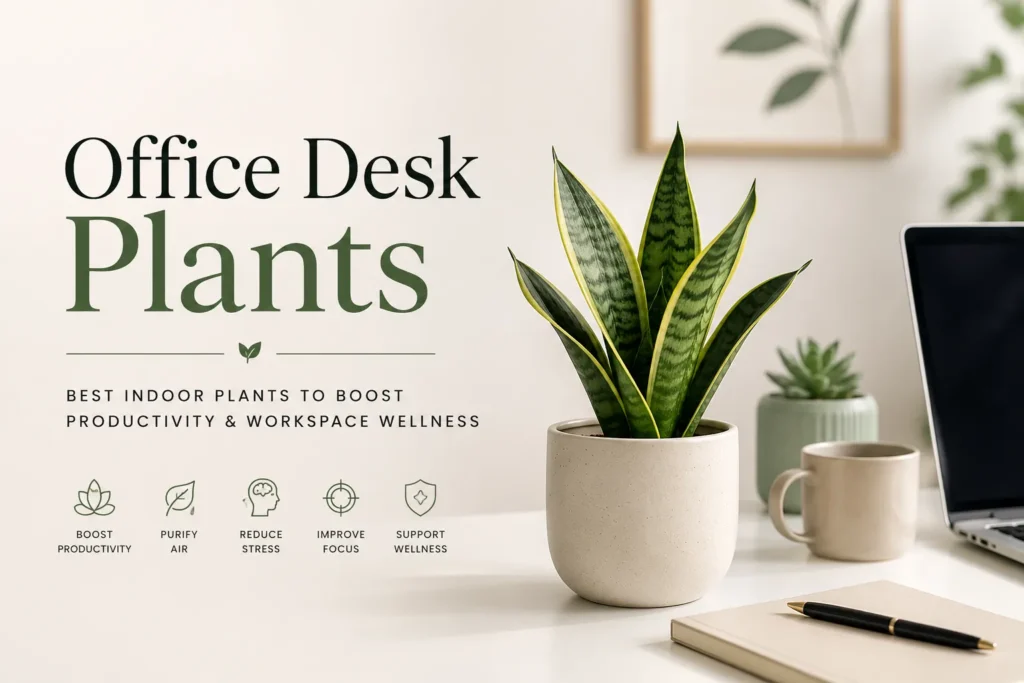
Have you ever noticed how a simple plant can make your workspace feel fresh and inviting? Office desk plants do more than improve your desk’s appearance. They also help create a healthier and more enjoyable work environment. Whether you work in a corporate office, a home office, or a small study space, adding greenery can make a noticeable difference.
Many people choose indoor desk plants because they require little care and fit easily into small spaces. In addition, the right plant can improve focus, reduce stress, and bring a touch of nature indoors. Even offices with limited sunlight can support many low maintenance office plants that thrive with minimal attention.
However, not every plant is suitable for every workspace. Some plants grow well in low light, while others need bright indirect sunlight. Likewise, certain plants are better for small desks, while others are ideal for shelves or larger workstations. Choosing the right plant helps it stay healthy and keeps your workspace looking organized.
In this guide, you’ll discover the best office desk plants for different office conditions. You’ll also learn their care requirements, placement tips, and the benefits they offer. By the end, you’ll know exactly which plants for office desks fit your workspace and lifestyle.
What Are Office Desk Plants?
Office desk plants are small indoor plants that are specifically chosen to grow on office desks, workstations, study tables, and home office setups. They are compact, attractive, and easy to maintain. Unlike large floor plants, they fit comfortably beside a computer, notebook, or office supplies without taking up too much space.
These small office plants are designed to thrive indoors. Many varieties grow well under artificial lighting or indirect sunlight. Therefore, they are perfect for offices where natural light is limited. Some can even survive in air-conditioned environments with very little maintenance.
Office desk plants are popular because they combine beauty with function. Besides adding greenery, they create a more comfortable workspace. Studies have shown that indoor plants can improve mood, reduce stress, and help people stay focused during long working hours. As a result, many businesses now include indoor office plants as part of their workplace design.
It is also important to understand the difference between desk plants and large office plants. Desk plants are compact and lightweight, making them ideal for personal workspaces. On the other hand, large office plants are used to decorate meeting rooms, reception areas, hallways, or office corners. They need more space and often require more regular care.
Office desk plants work well in many environments, including:
- Corporate office desks
- Home office workstations
- Student study tables
- Reception counters
- Co-working spaces
- Small business offices
- Cubicles and shared workspaces
Whether you need office plants for low light, easy office plants, or air purifying office plants, there is a perfect option for every workspace. Choosing the right plant depends on your available light, desk size, and maintenance preferences.
Benefits of Office Desk Plants
Adding office desk plants is one of the easiest ways to improve your workspace. While they make your desk look more attractive, their benefits go far beyond decoration. Many indoor office plants help create a healthier, calmer, and more productive environment. Whether you work from home or in a corporate office, the right plant can positively affect your daily routine.
Let’s explore the biggest benefits of plants for office desks.
Boost Productivity
A pleasant workspace helps people work better. Office desk greenery creates a refreshing atmosphere that makes long work hours feel less tiring. Seeing natural greenery during the day can help you stay motivated and energized.
Many offices include best office desk plants because they encourage a positive working environment. As a result, employees often feel more engaged and complete tasks more efficiently.
Some productivity benefits include:
- Encourages better concentration
- Creates a pleasant workspace
- Improves motivation
- Supports creative thinking
- Makes workstations feel welcoming
Improve Air Quality
Many air purifying office plants naturally filter indoor air. Their leaves absorb certain airborne pollutants while releasing oxygen. Although a few plants cannot completely clean indoor air, they still contribute to a fresher and more comfortable environment.
This is especially helpful in offices where windows stay closed or air conditioning runs throughout the day.
Plants commonly known for improving indoor air include:
- Snake Plant
- Peace Lily
- Money Plant (Pothos)
- English Ivy
- Rubber Plant
Cleaner air can make your workspace feel fresher and more enjoyable throughout the day.
Reduce Stress
Busy work schedules can increase stress and mental fatigue. Fortunately, indoor desk plants introduce a calming natural element into your workspace.
Looking at greenery for a few moments during breaks can help your mind relax. Caring for a small plant can also become a simple, enjoyable habit that adds balance to your workday.
Some stress-reducing benefits include:
- Creates a peaceful environment
- Encourages relaxation
- Makes work feel less overwhelming
- Improves overall mood
- Brings nature indoors
Therefore, many people choose low maintenance office plants to create a more comfortable workspace without adding extra responsibilities.
Increase Focus
Distractions are common in both offices and home workspaces. A well-organized desk with a healthy plant can help create a cleaner and more focused environment.
Studies suggest that natural elements in workspaces may support attention and mental performance. While plants are not a replacement for good work habits, they can make your desk feel more inviting and help you stay engaged.
If you spend several hours at a computer each day, adding small indoor plants for office spaces can make your workstation feel more balanced.
Reduce Sick Days
Healthy workplaces often support healthier employees. While office table plants cannot prevent illness, they can contribute to a more pleasant indoor environment by adding humidity and improving overall comfort.
A cleaner and more enjoyable workspace may encourage better well-being, especially in offices with dry, air-conditioned air.
Combined with good ventilation, regular cleaning, and healthy workplace habits, office desk plants can become part of a healthier office environment.
Why Office Desk Plants Matter
The benefits of office desk plants go beyond their appearance. They help create workspaces that feel calm, organized, and welcoming. Whether you choose small office plants, office plants for low light, or easy office plants, adding greenery is a simple way to enhance your daily work experience.
By selecting the right plant and providing basic care, you can enjoy a healthier and more productive workspace throughout the year.
Best Office Desk Plants
Not every office has the same lighting or workspace. Some desks sit near bright windows, while others stay under artificial lights all day. Therefore, choosing the right office desk plants is important for healthy growth and easy maintenance.
The best office desk plants are compact, attractive, and simple to care for. Many can tolerate indoor conditions, making them perfect for offices, home workspaces, and study desks. Below are some of the best options based on different office environments.
Low-Light Office Desk Plants
If your workspace receives little natural sunlight, don’t worry. Many office plants for low light thrive under fluorescent or LED office lighting. These plants require minimal care and are ideal for busy professionals.
Snake Plant (Sansevieria)
The Snake Plant is one of the most popular indoor desk plants because it is extremely hardy and easy to maintain.
Light Requirement
- Low to bright indirect light
- Tolerates artificial office lighting
Watering
- Water every 2–4 weeks
- Allow the soil to dry completely
Maintenance
- Very low maintenance
- Rarely affected by neglect
Best Placement
- Office desks
- Cubicles
- Meeting rooms
- Reception counters
ZZ Plant (Zamioculcas zamiifolia)
The ZZ Plant is famous for surviving in low-light offices. Its glossy green leaves add a modern and elegant look to any workspace.
Light Requirement
- Low to medium indirect light
- Handles artificial lighting well
Watering
- Every 2–3 weeks
- Avoid overwatering
Maintenance
- Extremely easy to grow
- Drought tolerant
Best Placement
- Work desks
- Office shelves
- Home office corners
Cast Iron Plant (Aspidistra elatior)
As the name suggests, the Cast Iron Plant is incredibly tough. It tolerates neglect, making it perfect for busy offices.
Light Requirement
- Low to medium light
- Avoid direct sunlight
Watering
- Water when the topsoil feels dry
Maintenance
- Slow-growing
- Very durable
Best Placement
- Low-light offices
- Hallways
- Shared workspaces
Chinese Evergreen (Aglaonema)
Chinese Evergreen is known for its beautiful patterned leaves. It adds color without requiring constant attention.
Light Requirement
- Low to medium indirect light
Watering
- Keep soil lightly moist
- Do not let it stay soggy
Maintenance
- Easy to care for
- Suitable for beginners
Best Placement
- Office desks
- Reception areas
- Home offices
Flowering Office Plants
Flowering plants add color and freshness to your workspace. They brighten dull office interiors and create a welcoming atmosphere. With proper care, these plants bloom throughout the year or during specific seasons.
Peace Lily (Spathiphyllum)
The Peace Lily is one of the best air purifying office plants. Its elegant white flowers make it a favorite for modern offices.
Flower Color
- White
Care Needs
- Medium to low light
- Keep soil slightly moist
Bloom Duration
- Blooms several times a year with proper care
Office Suitability
- Excellent for desks
- Reception counters
- Conference rooms
African Violet (Saintpaulia)
African Violets bring vibrant blooms to small workspaces without taking up much room.
Flower Colors
- Purple
- Pink
- White
- Blue
Care Needs
- Bright indirect light
- Moderate watering
Bloom Duration
- Can bloom throughout the year
Office Suitability
- Small desks
- Window-side workstations
Anthurium
Anthuriums are known for their glossy leaves and long-lasting flowers. They add a premium look to office interiors.
Flower Colors
- Red
- Pink
- White
Care Needs
- Bright indirect light
- Moderate watering
Bloom Duration
- Flowers last several weeks
Office Suitability
- Executive desks
- Reception areas
- Home offices
Rex Begonia
Rex Begonia is grown mainly for its colorful foliage, though some varieties also produce small flowers.
Flower Colors
- Pink
- White
Care Needs
- Bright indirect light
- Moderate humidity
Bloom Duration
- Seasonal blooms
Office Suitability
- Decorative office desks
- Creative workspaces
Trailing & Vining Desk Plants
Trailing plants create a soft, natural look. They are perfect for shelves, hanging planters, or desks with extra space. Many also help improve indoor air quality.
Money Plant (Pothos)
Money Plant is one of the easiest low maintenance office plants to grow.
Best Features
- Fast-growing vines
- Attractive heart-shaped leaves
- Easy propagation
Best Placement
- Desk edges
- Floating shelves
- Hanging planters
Air-Purifying Benefits
- Helps improve indoor air quality
- Adds lush greenery to workspaces
English Ivy
English Ivy creates elegant cascading vines that look beautiful in offices.
Best Features
- Compact trailing growth
- Attractive green foliage
Best Placement
- High shelves
- Hanging baskets
Air-Purifying Benefits
- Popular indoor air-filtering plant
Philodendron
Philodendrons are adaptable, easy to grow, and ideal for indoor offices.
Best Features
- Decorative heart-shaped leaves
- Fast-growing vines
Best Placement
- Office shelves
- Desk corners
- Hanging containers
Air-Purifying Benefits
- Adds fresh greenery to indoor spaces
Succulents & Cacti
Succulents are perfect for busy professionals because they need very little care. They store water in their leaves, making them highly drought tolerant.
Aloe Vera
Light Requirement
- Bright indirect sunlight
Watering
- Every 2–3 weeks
Maintenance
- Very low maintenance
Best For
- Sunny office desks
- Home offices
Jade Plant
Jade Plant is a popular succulent that symbolizes prosperity in many cultures.
Light Requirement
- Bright light
Watering
- Water only when soil dries
Maintenance
- Easy to grow
Best For
- Window desks
- Executive offices
Haworthia
Haworthia is a compact succulent that fits perfectly on small desks.
Light Requirement
- Bright indirect light
Watering
- Every 2–3 weeks
Maintenance
- Minimal care
Best For
- Small workstations
- Study tables
Small Cactus
Mini cacti are excellent choices for people who often forget to water plants.
Light Requirement
- Bright sunlight
Watering
- Once every few weeks
Maintenance
- Extremely easy
Best For
- Sunny desks
- Minimalist office setups
Lucky & Tropical Plants
These plants are popular because they combine attractive foliage with symbolic meaning. They also enhance office décor and create a welcoming atmosphere.
Lucky Bamboo
Decorative Value
- Elegant vertical stems
- Compact design
Feng Shui Popularity
- Believed to attract luck and positive energy
Office Décor Appeal
- Perfect for desks and reception counters
Money Tree
Money Tree is a favorite in offices because of its braided trunk and lush green leaves.
Decorative Value
- Stylish appearance
Feng Shui Popularity
- Associated with prosperity and success
Office Décor Appeal
- Great for executive offices and meeting rooms
Rubber Plant
Rubber Plant adds bold, glossy foliage to professional workspaces.
Decorative Value
- Modern appearance
Feng Shui Popularity
- Considered a symbol of abundance
Office Décor Appeal
- Best for larger desks or office corners
Parlor Palm
Parlor Palm brings a tropical feel without requiring much maintenance.
Decorative Value
- Soft, feathery foliage
Feng Shui Popularity
- Represents growth and harmony
Office Décor Appeal
- Suitable for home offices, waiting areas, and spacious desks
Choosing the right office desk plants depends on your workspace, lighting conditions, and available time for care. Whether you prefer small office plants, flowering varieties, trailing vines, or tropical greenery, there is an option for every office. By selecting plants that match your environment, you can enjoy a healthier, more productive, and visually appealing workspace.
How to Choose the Best Office Desk Plant
Choosing the right office desk plant is just as important as caring for it. A plant that matches your workspace will stay healthier and require less maintenance. Before buying a plant, consider your office environment, available light, and daily routine.
Here are the most important factors to help you choose the best office desk plants.
Available Light
Light is the first thing to consider. Different indoor office plants have different lighting needs. Placing a plant in the wrong location can slow its growth or damage its leaves.
If your desk is near a window, you can choose plants that enjoy bright, indirect sunlight. However, if your office has little natural light, select office plants for low light that can thrive under artificial lighting.
Bright Indirect Light
- Aloe Vera
- Jade Plant
- African Violet
- Anthurium
Low-Light Offices
- Snake Plant
- ZZ Plant
- Chinese Evergreen
- Cast Iron Plant
Matching the plant to your lighting conditions will help it grow well with minimal effort.
Watering Schedule
Think about how often you can water your plant. If you travel frequently or have a busy work schedule, choose low maintenance office plants that can tolerate occasional neglect.
Some plants need watering only every few weeks, while others prefer consistently moist soil.
Best Plants for Busy Professionals
- Snake Plant
- ZZ Plant
- Haworthia
- Small Cactus
- Jade Plant
Plants That Need More Regular Watering
- Peace Lily
- African Violet
- Rex Begonia
Choosing a plant that fits your routine makes long-term care much easier.
Desk Size
Your available desk space also matters. A crowded desk can feel cluttered if the plant is too large. Instead, select a plant that complements your workspace without blocking your computer screen or work materials.
For compact desks, choose small office plants such as:
- Haworthia
- Small Cactus
- Lucky Bamboo
- African Violet
- Mini Snake Plant
If you have a larger workstation, you can also consider:
- Rubber Plant
- Money Tree
- Parlor Palm
- Chinese Evergreen
A well-sized plant enhances your workspace while keeping it organized.
Air Conditioning & Ventilation
Most offices use air conditioning throughout the day. While many office desk plants adapt well to indoor environments, constant cold air or dry airflow can affect their health.
To protect your plants:
- Keep them away from direct AC vents.
- Avoid placing them near heaters.
- Ensure they receive enough indirect light.
- Maintain moderate humidity when possible.
Plants like Snake Plant, ZZ Plant, and Cast Iron Plant handle air-conditioned offices better than many tropical varieties.
Pet & Child Safety
If you work from home or bring your pet to the office, plant safety becomes important. Some indoor desk plants can be toxic if chewed by cats, dogs, or young children.
Whenever possible, choose non-toxic plants or place potentially harmful plants out of reach.
Generally Pet-Friendly Options
- Parlor Palm
- Haworthia
- African Violet
Plants That May Be Toxic to Pets
- Peace Lily
- Snake Plant
- ZZ Plant
- Money Plant (Pothos)
- Philodendron
Always check the safety of a plant before bringing it into a home or office where pets or children are present.
Quick Checklist Before Buying
Before purchasing an office table plant, ask yourself these questions:
- Does my desk receive enough light?
- How often can I water the plant?
- Do I have enough desk space?
- Is my office heavily air-conditioned?
- Do I need a pet-safe plant?
- Do I want a flowering plant or foliage plant?
- Am I looking for an air-purifying or decorative plant?
Answering these questions will help you choose the best desk plants for productivity and long-term success.
The right office desk greenery should fit naturally into your daily routine. By considering light, watering needs, desk size, and safety, you can enjoy healthy indoor desk plants that enhance both your workspace and well-being.
Office Desk Plant Care Tips
Even the easiest office desk plants need basic care to stay healthy and attractive. Fortunately, most low maintenance office plants require only a few minutes of attention each week. Following these simple care tips will help your plants thrive in both corporate and home office environments.
Rotate for Even Growth
Plants naturally grow toward their light source. If they stay in the same position for weeks, one side may become taller while the other remains sparse.
Rotate your plant about a quarter turn every one or two weeks. This encourages balanced growth and keeps the plant looking full from every angle.
Water Properly
Overwatering is the most common reason indoor office plants fail. Before watering, check whether the top inch of soil feels dry. If it is still moist, wait a few more days.
General watering tips:
- Water thoroughly until excess water drains out.
- Empty the saucer after watering.
- Never let roots sit in standing water.
- Adjust watering during cooler months.
Plants like Snake Plant, ZZ Plant, and succulents need far less water than Peace Lilies or African Violets.
Clean Dust from Leaves
Dust builds up quickly in office environments, especially near computers and air-conditioning vents. Dusty leaves cannot absorb light as efficiently, which may slow plant growth.
Gently wipe leaves with a soft, damp cloth every few weeks. This also improves the plant’s appearance and helps you spot pests early.
Trim Dead Leaves
Remove yellow, brown, or damaged leaves as soon as you notice them. Regular pruning keeps your plant looking neat and allows it to direct energy toward healthy new growth.
Always use clean, sharp scissors or pruning shears to avoid damaging the plant.
Maintain Humidity
Air-conditioned offices often have dry air, which can affect tropical plants. While hardy plants adapt well, species like Peace Lily, Anthurium, and Parlor Palm appreciate slightly higher humidity.
To increase humidity:
- Group plants together.
- Use a small pebble tray with water.
- Place a humidifier nearby if possible.
- Keep plants away from direct AC airflow.
Maintaining the right humidity helps leaves stay vibrant and healthy.
With these simple care practices, your office desk plants will remain healthy, attractive, and productive companions throughout the year.
Frequently Asked Questions
Which plant is best for an office desk?
The best office desk plants depend on your workspace and lighting conditions. For most offices, Snake Plant, ZZ Plant, Lucky Bamboo, and Pothos are excellent choices because they are compact, attractive, and easy to maintain. If your desk receives bright indirect light, you can also choose Peace Lily or Anthurium for added color.
What plants survive in offices with no windows?
Many office plants for low light can grow well under artificial lighting. Some of the best options include:
- Snake Plant
- ZZ Plant
- Chinese Evergreen
- Cast Iron Plant
- Lucky Bamboo
These plants tolerate low-light conditions and require very little maintenance, making them ideal for offices without windows.
Which office plants improve productivity?
Although plants alone cannot increase productivity, they can create a more comfortable and pleasant work environment. Many people find that office desk greenery helps reduce stress and improves focus during long working hours.
Some popular choices include:
- Snake Plant
- Peace Lily
- Pothos (Money Plant)
- Rubber Plant
- Parlor Palm
These plants also enhance the overall appearance of your workspace.
Are desk plants good for air quality?
Yes, many air purifying office plants can contribute to better indoor air quality. Plants such as Snake Plant, Peace Lily, English Ivy, and Rubber Plant help create a fresher indoor environment. While a few plants cannot completely purify indoor air, they can improve humidity and make your office feel more comfortable.
How often should office desk plants be watered?
Watering depends on the type of plant, the season, and your office conditions. As a general rule, check the soil before watering.
- Snake Plant: Every 2–4 weeks
- ZZ Plant: Every 2–3 weeks
- Succulents: Every 2–3 weeks
- Peace Lily: About once a week
- African Violet: Keep the soil lightly moist
Always allow excess water to drain from the pot to prevent root rot.
Which office plants need the least maintenance?
If you want low maintenance office plants, choose varieties that tolerate occasional neglect and require less frequent watering.
Some of the easiest plants include:
- Snake Plant
- ZZ Plant
- Haworthia
- Small Cactus
- Jade Plant
- Cast Iron Plant
These plants are perfect for busy professionals and beginners.
Are office desk plants pet-safe?
Some indoor office plants are safe for pets, while others can be harmful if eaten.
Generally Pet-Friendly Plants
- Parlor Palm
- Haworthia
- African Violet
Plants That May Be Toxic to Pets
- Peace Lily
- Snake Plant
- ZZ Plant
- Money Plant (Pothos)
- Philodendron
If you have pets at home or in the office, always check a plant’s safety before purchasing it.
Conclusion
Adding office desk plants is a simple way to create a healthier, more attractive, and productive workspace. Whether you work in a busy corporate office, a home office, or a shared co-working space, the right plant can make your desk feel more welcoming and comfortable.
From low maintenance office plants like the Snake Plant and ZZ Plant to colorful flowering varieties such as the Peace Lily and Anthurium, there is a plant for every workspace and lifestyle. By considering factors like light, watering needs, desk size, and placement, you can choose a plant that thrives with minimal effort.
Regular care, including proper watering, cleaning leaves, and providing the right amount of light, will keep your indoor desk plants healthy throughout the year. Avoid common mistakes like overwatering and poor placement, and your plants will reward you with lasting beauty and vibrant growth.
Whether your goal is to improve focus, refresh your office décor, or simply bring a touch of nature indoors, office desk plants are a worthwhile addition to any workspace. Start with one easy-care plant, and you’ll soon discover how a little greenery can transform your work environment into a more enjoyable and inspiring place.