
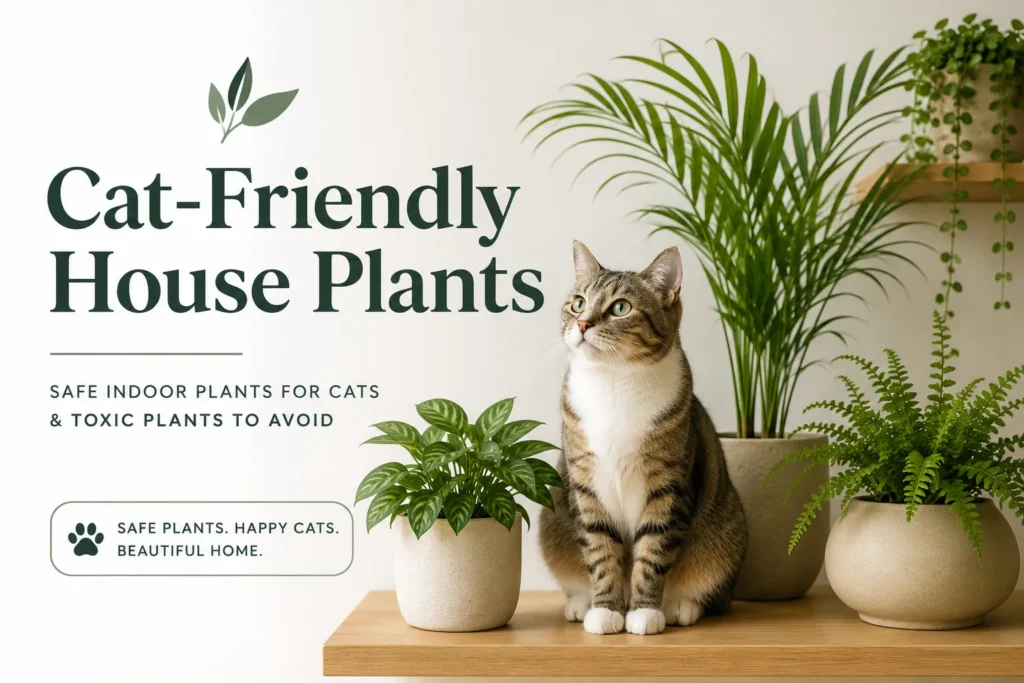
Cats are naturally curious animals. Therefore, they often sniff, chew, or play with indoor plants. While this behavior may seem harmless, some houseplants can cause serious health problems. Moreover, many popular indoor plants contain toxins that may affect your cat if eaten.
However, you do not have to choose between having beautiful greenery and keeping your pet safe. Many cat-friendly house plants are both attractive and non-toxic. In addition, these plants can brighten your home, improve indoor air quality, and create a calm living space without putting your furry friend at risk.
Choosing safe house plants for cats also gives you peace of mind. As a result, your cat can explore your home more safely, and you can enjoy your indoor garden with confidence. Meanwhile, learning which plants to avoid helps prevent accidents before they happen.
In this guide, you will discover the best cat-friendly indoor plants, learn about toxic plants for cats, and explore practical tips for creating a pet-safe indoor garden. By the end, you will know exactly which plants belong in a cat-friendly home and which ones should stay out.
Why Choose Cat-Friendly House Plants?
A home filled with plants feels fresh, peaceful, and inviting. However, if you share your home with a cat, choosing the right plants becomes even more important. Pet-safe indoor plants allow you to enjoy nature indoors without worrying about your curious companion.
They Keep Your Cat Safe
Cats love exploring new things. Sometimes they nibble on leaves simply because they are bored or curious. Therefore, choosing safe plants for cats reduces the risk of poisoning and emergency vet visits.
Although no plant should become a regular snack, non-toxic plants are much safer if your cat takes an occasional bite.
They Create a Beautiful Living Space
Many people think safe plants are limited. However, that is not true. You can find cat-safe foliage plants, flowering plants, palms, ferns, and even succulents that look stunning indoors.
As a result, you can decorate every room while protecting your pet.
They Improve Indoor Air Quality
Many indoor plants help increase humidity and support healthier indoor environments. Moreover, they add a natural touch that makes your home feel more relaxing.
Although air-purifying claims vary by plant and real-world conditions, healthy indoor plants can still contribute to a fresher and more enjoyable living space.
They Help Reduce Stress
Research suggests that spending time around plants may help reduce stress and improve mood. Likewise, watching your cat safely explore a green environment can make your home feel even more peaceful.
Therefore, indoor plants safe for pets benefit both you and your furry companion.
They Give You Peace of Mind
Perhaps the biggest benefit is confidence. Instead of worrying every time your cat walks near a plant, you can relax knowing you’ve chosen house plants safe for kittens and adult cats.
Moreover, visitors with pets can also enjoy your home without unnecessary risks.
Best Cat-Friendly House Plants
Fortunately, there are many beautiful non-toxic houseplants for cats that suit every home and lifestyle. Some offer lush green leaves, while others produce colorful flowers. In addition, many of these plants are easy to grow, making them perfect for beginners.
Let’s start with one of the most popular categories.
Cat-Safe Palms
Palms add a tropical feel to any room. Fortunately, several varieties are considered safe house plants for cats. They feature graceful leaves, require simple care, and fit well in homes, apartments, and offices.
Areca Palm
The Areca Palm is one of the most popular cat-safe palms. Its soft, feathery fronds create a bright and elegant appearance.
Light: Bright, indirect sunlight
Water: Water when the top inch of soil feels dry.
Care Tips:
- Keep soil slightly moist.
- Avoid direct afternoon sunlight.
- Mist occasionally in dry weather.
Why it’s safe for cats:
The Areca Palm is non-toxic, so curious cats can explore around it more safely.
Parlor Palm
The Parlor Palm has been a favorite indoor plant for generations. It grows slowly and adapts well to lower light conditions.
Light: Low to medium indirect light
Water: Water when the soil begins to dry.
Care Tips:
- Avoid overwatering.
- Keep away from cold drafts.
- Feed monthly during spring and summer.
Why it’s safe for cats:
Its leaves are non-toxic, making it one of the best pet-safe indoor plants for homes with cats.
Kentia Palm
The Kentia Palm offers tall, arching leaves that bring elegance to living rooms and offices.
Light: Medium to bright indirect light
Water: Allow the soil surface to dry slightly before watering.
Care Tips:
- Do not let roots sit in water.
- Rotate the plant regularly for even growth.
- Wipe leaves to remove dust.
Why it’s safe for cats:
It is considered a cat-friendly palm and is suitable for pet-loving households.
Ponytail Palm
Although called a palm, the Ponytail Palm is actually a succulent. It features a thick trunk with long, curly leaves that resemble a ponytail.
Light: Bright indirect light with some direct morning sun
Water: Water sparingly after the soil dries completely.
Care Tips:
- Avoid frequent watering.
- Use well-draining soil.
- Great for busy plant owners.
Why it’s safe for cats:
This unique plant is non-toxic and safe around curious cats.
Bamboo Palm
The Bamboo Palm produces slender green stems with graceful foliage that creates a tropical atmosphere indoors.
Light: Bright, filtered light
Water: Keep soil lightly moist but never soggy.
Care Tips:
- Increase humidity if possible.
- Remove yellow leaves regularly.
- Feed with balanced fertilizer during the growing season.
Why it’s safe for cats:
The Bamboo Palm is another excellent indoor plant safe for pets, allowing your cat to roam safely around your home.
Cat-Safe Ferns
Ferns bring soft texture and rich greenery to indoor spaces. Fortunately, several fern varieties are cat-friendly house plants that are safe for curious pets. Moreover, they thrive in humid environments, making them excellent choices for bathrooms, kitchens, and shaded living rooms.
Although most ferns enjoy similar care, each variety has its own unique appearance. Therefore, choose one that matches both your home and your lifestyle.
Boston Fern
The Boston Fern is one of the most popular cat-safe ferns. Its long, arching fronds create a lush and elegant display in hanging baskets or decorative pots.
Light: Bright, indirect light
Water: Keep the soil consistently moist but not soggy.
Care Tips
- Enjoys high humidity.
- Mist the leaves regularly.
- Remove dry fronds to encourage fresh growth.
Why it’s safe for cats
The Boston Fern is non-toxic, making it one of the best safe house plants for cats.
Maidenhair Fern
The Maidenhair Fern stands out with its delicate leaves and thin black stems. It adds a graceful touch to any indoor garden.
Light: Medium to bright indirect light
Water: Keep the soil evenly moist at all times.
Care Tips
- Avoid letting the soil dry out.
- Place it in a humid room.
- Keep it away from hot air vents.
Why it’s safe for cats
This beautiful fern is safe for cats, so you can enjoy its elegant foliage without worry.
Staghorn Fern
The Staghorn Fern grows differently from traditional ferns. Instead of growing in soil, it is often mounted on wood or displayed in hanging planters.
Light: Bright, filtered light
Water: Water when the growing medium begins to dry.
Care Tips
- Soak the root ball occasionally.
- Ensure good air circulation.
- Avoid direct afternoon sunlight.
Why it’s safe for cats
The Staghorn Fern is considered one of the safest indoor plants safe for pets.
Bird’s Nest Fern
The Bird’s Nest Fern has broad, wavy green leaves that grow from the center, creating a rosette shape.
Light: Low to medium indirect light
Water: Water the soil directly and avoid pouring water into the center of the plant.
Care Tips
- Maintain moderate humidity.
- Clean leaves with a damp cloth.
- Protect from direct sunlight.
Why it’s safe for cats
Its non-toxic leaves make it a wonderful addition to cat-friendly homes.
Golden Polypody
The Golden Polypody is less common but highly valued for its soft blue-green leaves and unique appearance.
Light: Bright, indirect light
Water: Keep the soil lightly moist.
Care Tips
- Prefers consistent humidity.
- Avoid waterlogged soil.
- Feed lightly during the growing season.
Why it’s safe for cats
Golden Polypody is another excellent non-toxic houseplant for cats.
Cat-Safe Foliage Plants
If you love colorful leaves and interesting textures, foliage plants are an excellent choice. Fortunately, many cat-safe foliage plants offer beautiful patterns without posing a danger to your pet. In addition, most of these plants are easy to care for and adapt well to indoor conditions.
Spider Plant
The Spider Plant is one of the easiest best cat-friendly indoor plants for beginners. Its long, striped leaves and baby plantlets make it attractive in hanging baskets.
Light: Bright, indirect light
Water: Water when the top inch of soil feels dry.
Care Tips
- Avoid overwatering.
- Trim brown leaf tips.
- Repot when crowded.
Why it’s safe for cats
Spider Plants are non-toxic. However, some cats enjoy chewing their leaves, so occasional supervision is still helpful.
Calathea
Calathea plants are famous for their beautifully patterned leaves that move slightly throughout the day.
Light: Medium to bright indirect light
Water: Keep the soil evenly moist.
Care Tips
- Loves humidity.
- Use filtered or rainwater if possible.
- Keep away from direct sunlight.
Why it’s safe for cats
Calatheas are completely pet-friendly and ideal for indoor homes.
Prayer Plant
The Prayer Plant gets its name because its leaves fold upward at night.
Light: Bright, indirect light
Water: Water when the top layer of soil starts drying.
Care Tips
- Prefers warm temperatures.
- Mist occasionally.
- Avoid cold drafts.
Why it’s safe for cats
It is a beautiful safe plant for cats that also adds vibrant leaf patterns to your home.
Fittonia (Nerve Plant)
The Fittonia, also called the Nerve Plant, features colorful leaf veins in shades of pink, white, or red.
Light: Low to medium indirect light
Water: Keep the soil slightly moist.
Care Tips
- Enjoys high humidity.
- Avoid dry soil.
- Perfect for terrariums.
Why it’s safe for cats
Fittonia is completely non-toxic for cats.
Peperomia
Peperomia plants come in many shapes and colors, making them popular decorative houseplants.
Light: Bright, indirect light
Water: Allow the top soil to dry before watering.
Care Tips
- Avoid excessive watering.
- Use well-draining soil.
- Rotate regularly for balanced growth.
Why it’s safe for cats
Peperomia varieties are considered safe for both cats and dogs.
Chinese Money Plant
The Chinese Money Plant is loved for its round, coin-shaped leaves and compact growth.
Light: Bright, indirect light
Water: Water once the soil begins to dry.
Care Tips
- Rotate weekly.
- Remove older yellow leaves.
- Repot when offsets appear.
Why it’s safe for cats
This charming plant is a great addition to a pet-friendly home.
Cast Iron Plant
The Cast Iron Plant lives up to its name by tolerating neglect, making it perfect for busy plant owners.
Light: Low to medium indirect light
Water: Water when the soil is mostly dry.
Care Tips
- Handles low light well.
- Requires little maintenance.
- Dust leaves occasionally.
Why it’s safe for cats
Its sturdy leaves are non-toxic, making it a reliable pet-safe indoor plant.
Polka Dot Plant
The Polka Dot Plant brightens rooms with colorful spotted leaves.
Light: Bright, indirect light
Water: Keep soil lightly moist.
Care Tips
- Pinch stems to encourage bushier growth.
- Avoid prolonged dryness.
- Maintain moderate humidity.
Why it’s safe for cats
It is safe for curious cats and easy to grow indoors.
Swedish Ivy
Despite its name, Swedish Ivy is not a true ivy. It produces cascading stems that look beautiful in hanging baskets.
Light: Bright, indirect light
Water: Water when the topsoil feels dry.
Care Tips
- Trim regularly.
- Encourage trailing growth.
- Fertilize monthly during spring.
Why it’s safe for cats
Unlike many true ivy species, Swedish Ivy is considered non-toxic for cats.
Baby’s Tears
Baby’s Tears creates a soft green carpet of tiny leaves that works well in terrariums and decorative containers.
Light: Bright, filtered light
Water: Keep the soil consistently moist.
Care Tips
- Likes humidity.
- Trim regularly to maintain shape.
- Avoid direct sunlight.
Why it’s safe for cats
Its delicate foliage is safe around cats.
Friendship Plant
The Friendship Plant features textured green leaves with attractive silver patterns.
Light: Medium, indirect light
Water: Water when the soil begins to dry.
Care Tips
- Enjoys moderate humidity.
- Pinch growing tips for fuller growth.
- Keep away from harsh sunlight.
Why it’s safe for cats
The Friendship Plant is another excellent house plant safe for kittens and adult cats.
Safe Flowering & Exotic Plants
Many cat owners assume flowering plants are dangerous. However, several beautiful blooms are completely safe for curious pets. These cat-friendly flowering plants add color and elegance to your home without putting your cat at risk. In addition, most of them are compact enough for apartments and small indoor spaces.
African Violet
The African Violet is a classic indoor flowering plant with soft leaves and colorful blooms.
Light: Bright, indirect light
Water: Water from the bottom when the soil feels slightly dry.
Care Tips
- Avoid getting water on the leaves.
- Keep in a warm room.
- Remove spent flowers regularly.
Why it’s safe for cats
African Violets are non-toxic and one of the easiest flowering plants for pet owners.
Orchid
Orchids look exotic, yet they are surprisingly easy to grow indoors.
Light: Bright, filtered light
Water: Water once the potting mix begins to dry.
Care Tips
- Use orchid bark or a specialized orchid mix.
- Ensure good air circulation.
- Avoid direct midday sun.
Why it’s safe for cats
Most common orchids are considered safe for cats, making them excellent decorative plants.
Hoya (Wax Plant)
The Hoya, also called the Wax Plant, produces clusters of star-shaped flowers and thick, glossy leaves.
Light: Bright, indirect light
Water: Allow the soil to dry slightly between waterings.
Care Tips
- Prefers well-draining soil.
- Enjoys occasional feeding.
- Can trail beautifully from shelves.
Why it’s safe for cats
Hoyas are non-toxic and work well in hanging baskets where cats may be less tempted to chew them.
Christmas Cactus
The Christmas Cactus blooms during the holiday season with pink, red, or white flowers.
Light: Bright, indirect light
Water: Water when the top inch of soil becomes dry.
Care Tips
- Reduce watering after flowering.
- Keep in a cool room during bud formation.
- Avoid overwatering.
Why it’s safe for cats
Unlike many cactus species, the Christmas Cactus is considered pet-safe.
Bromeliads
Bromeliads add a tropical touch with their colorful central bracts and unique leaf rosettes.
Light: Bright, indirect light
Water: Keep a small amount of water in the central cup and water the soil lightly.
Care Tips
- Use well-draining soil.
- Flush the central cup occasionally.
- Avoid cold temperatures.
Why it’s safe for cats
Bromeliads are non-toxic and make excellent pet-safe indoor plants.
Gloxinia
Gloxinia produces large, velvety flowers in shades of purple, pink, red, and white.
Light: Bright, indirect light
Water: Keep the soil evenly moist during active growth.
Care Tips
- Avoid wetting the leaves.
- Provide moderate humidity.
- Allow the plant to rest after flowering.
Why it’s safe for cats
This colorful flowering plant is safe for cats and adds a cheerful touch to indoor spaces.
Pineapple Plant
The Pineapple Plant is an unusual but attractive houseplant with a small ornamental fruit.
Light: Bright light with some direct morning sun
Water: Water when the soil begins to dry.
Care Tips
- Use well-draining soil.
- Avoid standing water.
- Provide warmth for best growth.
Why it’s safe for cats
The plant is generally considered non-toxic, although the spiky leaves may irritate sensitive cats if chewed.
Safe Succulents & Unique Plants
Succulents are popular because they need very little care. Fortunately, several varieties are also safe house plants for cats. These plants are perfect for beginners, busy households, and sunny windowsills.
Haworthia
Haworthia is one of the best cat-safe succulents. Its compact rosette shape and striped leaves make it highly decorative.
Light: Bright, indirect light
Water: Water only after the soil dries completely.
Care Tips
- Use cactus soil.
- Avoid overwatering.
- Excellent for desks and shelves.
Why it’s safe for cats
Haworthia is non-toxic and a much safer alternative to Aloe Vera.
Burro’s Tail
Burro’s Tail features trailing stems covered with plump, blue-green leaves.
Light: Bright, indirect light
Water: Water sparingly.
Care Tips
- Handle gently because leaves fall off easily.
- Use a hanging basket.
- Ensure excellent drainage.
Why it’s safe for cats
This attractive succulent is safe for curious pets.
Venus Flytrap
The Venus Flytrap is a fascinating carnivorous plant that catches small insects.
Light: Bright light with several hours of direct sun
Water: Keep the soil moist using distilled or rainwater.
Care Tips
- Avoid fertilizing.
- Do not trigger the traps unnecessarily.
- Use a peat-based growing medium.
Why it’s safe for cats
It is non-toxic, although cats may enjoy batting at the moving traps.
Money Tree (Pachira)
The Money Tree has braided stems and lush green leaves, making it a popular indoor tree.
Light: Bright, indirect light
Water: Water when the top few inches of soil feel dry.
Care Tips
- Rotate regularly for even growth.
- Avoid overwatering.
- Wipe leaves occasionally.
Why it’s safe for cats
This plant is considered pet-safe and is often recommended for cat-friendly homes.
Air Plants
Air Plants grow without soil and can be displayed in creative ways.
Light: Bright, indirect light
Water: Soak in water for 20–30 minutes once a week.
Care Tips
- Shake off excess water after soaking.
- Provide good air circulation.
- Avoid prolonged direct sunlight.
Why it’s safe for cats
Air Plants are non-toxic and ideal for homes where floor space is limited.
Toxic Plants Cats Should Avoid
While many plants are safe, others can be extremely dangerous. Therefore, it is important to identify toxic plants for cats before bringing them home. Some cause mild stomach upset, while others may lead to serious organ damage or even death.
Why Toxic Plants Are Dangerous
When a cat chews or swallows a toxic plant, harmful chemicals enter the body. As a result, symptoms may appear within minutes or several hours. Common signs include:
- Vomiting
- Drooling
- Loss of appetite
- Lethargy
- Diarrhea
- Difficulty breathing
- Tremors
If you suspect poisoning, contact your veterinarian immediately. Moreover, try to identify the plant and keep a sample if possible.
Toxic Indoor Plants
| Plant | Toxic Part | Common Symptoms | Severity |
| Money Plant (Pothos) | All parts | Mouth irritation, drooling, vomiting | Moderate |
| Snake Plant | Leaves | Nausea, vomiting, diarrhea | Moderate |
| Peace Lily | All parts | Oral pain, swelling, drooling | Moderate |
| ZZ Plant | All parts | Mouth irritation, vomiting | Moderate |
| Aloe Vera | Leaves and latex | Vomiting, diarrhea, lethargy | Moderate |
| Sago Palm | Especially seeds | Liver failure, seizures | Severe |
| Rubber Plant | Sap | Skin irritation, vomiting | Mild–Moderate |
| Jade Plant | Leaves | Vomiting, coordination problems | Moderate |
| Dieffenbachia | All parts | Severe mouth irritation, swelling | Moderate |
| Oleander | All parts | Heart problems, severe poisoning | Severe |
Emergency Steps if Your Cat Eats a Toxic Plant
- Remove any plant material from your cat’s mouth.
- Rinse the mouth gently with water.
- Do not induce vomiting unless your veterinarian instructs you to do so.
- Contact your veterinarian or an emergency animal hospital immediately.
- Take a photo or sample of the plant for identification.
Quick action can make a significant difference in treatment and recovery.
Pet-Friendly Gardening Tips
Creating a beautiful indoor garden does not mean compromising your cat’s safety. With a few smart choices, you can enjoy healthy plants while allowing your cat to explore comfortably. Moreover, these simple habits help protect both your plants and your pet.
Safe Plant Placement
Where you place your plants is just as important as the plants you choose. Although you should only buy cat-friendly house plants, placing them thoughtfully can prevent unnecessary chewing and damage.
Here are some safe placement ideas:
- Hang plants in baskets to keep trailing vines out of reach.
- Install floating shelves for smaller pots.
- Use sturdy plant stands that are difficult to tip over.
- Place plants on high cabinets where your cat cannot easily jump.
- Keep fragile plants away from climbing furniture such as bookshelves or cat trees.
However, remember that many cats are skilled climbers. Therefore, always observe your cat’s behavior before assuming a plant is completely out of reach.
Natural Deterrents
Some cats lose interest in houseplants with gentle training and safe alternatives. Instead of scolding your pet, encourage better habits through positive reinforcement.
Try these simple methods:
- Grow cat grass or catnip to give your cat a safe plant to chew.
- Apply pet-safe bitter sprays to discourage chewing on decorative plants.
- Reward your cat with treats or praise when it ignores your houseplants.
- Provide scratching posts and interactive toys to reduce boredom.
- Rotate toys regularly to keep your cat mentally stimulated.
As a result, your cat is less likely to view your indoor plants as entertainment.
Physical Safety
A few extra precautions can make your indoor garden much safer.
Follow these practical tips:
- Choose heavy ceramic or concrete pots that are difficult to knock over.
- Add decorative stones or pebbles on top of the soil to discourage digging.
- Remove fallen leaves and flowers as soon as possible.
- Check plants regularly for damaged stems or loose leaves.
- Keep fertilizers, pesticides, and plant care products locked away from pets.
- Supervise your cat when introducing a new plant into your home.
Furthermore, inspect your indoor garden every few weeks. This simple routine helps you spot potential hazards before they become serious problems.
Trusted Resources for Plant Safety
Although this guide covers many popular safe house plants for cats, plant safety information can occasionally change as new research becomes available. Therefore, it is always wise to verify unfamiliar plants before bringing them home.
Here are some trusted resources:
- ASPCA Toxic and Non-Toxic Plant List – One of the most reliable databases for checking whether a plant is safe for cats, dogs, and horses.
- Cats Protection – Offers practical advice on keeping cats safe around common household plants.
- Pet Poison Helpline – Provides emergency guidance if your pet has eaten a potentially harmful plant.
- Your Veterinarian – Always the best source of advice if you suspect plant poisoning or have concerns about a specific species.
Whenever you purchase a new plant, check its scientific name instead of relying only on its common name. This helps avoid confusion because many plants share similar names.
Frequently Asked Questions
What house plants are completely safe for cats?
Many cat-friendly house plants are considered non-toxic, including Spider Plants, Calatheas, Prayer Plants, Boston Ferns, Areca Palms, Orchids, African Violets, Peperomias, Haworthias, and Air Plants. However, even non-toxic plants can cause mild stomach upset if your cat eats a large amount.
Are Spider Plants safe for cats?
Yes. Spider Plants are non-toxic and are among the best safe house plants for cats. However, some cats enjoy chewing their long leaves, so it is still a good idea to place the plant where excessive chewing is less likely.
Is Aloe Vera toxic to cats?
Yes. Although Aloe Vera offers many benefits for humans, it is toxic to cats. Eating the leaves can cause vomiting, diarrhea, loss of appetite, and lethargy. Therefore, keep Aloe Vera out of homes with curious pets or place it in an inaccessible location.
Are Orchids safe around cats?
Yes. Most common Orchid varieties are considered safe for cats. They are excellent pet-safe indoor plants that add elegant flowers without posing a significant poisoning risk.
Can cats eat cat-safe plants?
Cats may occasionally nibble on non-toxic plants without serious harm. However, houseplants should not replace a balanced diet. Growing cat grass is a safer option if your cat enjoys chewing greenery.
Which palm trees are safe for cats?
Several palms are safe, including:
- Areca Palm
- Parlor Palm
- Kentia Palm
- Bamboo Palm
- Ponytail Palm
These are popular cat-safe palms that work well in pet-friendly homes.
What happens if a cat eats a toxic plant?
Symptoms vary depending on the plant but often include drooling, vomiting, diarrhea, mouth irritation, loss of appetite, difficulty breathing, weakness, or tremors. Some highly toxic plants, such as Sago Palm and Oleander, can be life-threatening. Contact your veterinarian immediately if you suspect poisoning.
How can I stop my cat from chewing plants?
Provide cat grass, use pet-safe bitter sprays, offer interactive toys, and reward good behavior. In addition, placing plants on high shelves or in hanging baskets can reduce temptation.
Are succulents safe for cats?
Some succulents are safe, while others are toxic. Haworthia and Burro’s Tail are good pet-safe choices. However, Aloe Vera and some Euphorbia species should be avoided.
Where should I place indoor plants if I own cats?
Place plants on sturdy shelves, hanging baskets, tall plant stands, or high cabinets whenever possible. Moreover, choose stable pots that cannot be easily tipped over, and avoid placing toxic plants anywhere your cat can reach.
Conclusion
Living with cats does not mean giving up your love of indoor plants. By choosing cat-friendly house plants, you can enjoy a vibrant indoor garden while keeping your furry companion safe. Moreover, many safe house plants for cats are just as beautiful and easy to care for as their toxic counterparts.
Before bringing home a new plant, always check whether it is non-toxic to cats. Likewise, remove or replace any toxic plants for cats that could put your pet at risk. Small changes, such as using hanging baskets, sturdy plant stands, and cat grass, can also make your home safer and more enjoyable.
Finally, remember that every cat is different. Some may ignore houseplants completely, while others love to nibble on leaves. Therefore, regular observation and thoughtful plant selection are the keys to a successful pet-friendly indoor garden.
At GreenGrow, we believe you should never have to choose between a beautiful home and a happy, healthy pet. With the right pet-safe indoor plants, you can create a space where both your plants and your cat can thrive together.