
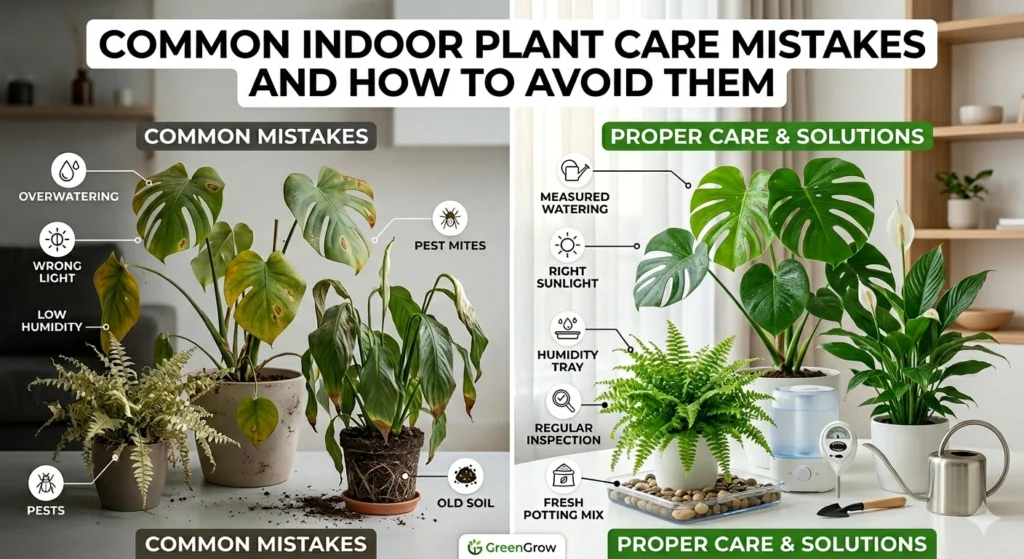
Indoor plants improve home decoration. They add beauty and fresh energy. Many people place plants indoors. Healthy plants create attractive spaces. Proper care helps plants thrive.
Many plant owners make mistakes. These mistakes affect plant growth. Leaves may turn yellow quickly. Plants may stop growing well. Some plants may even die.
Understanding common care mistakes helps. Small changes improve plant health. Healthy plants enhance home decoration. They also improve indoor comfort. Good care delivers lasting results.
Why Proper Plant Care Matters
Indoor plants need proper attention. Each plant has unique needs. Water, light, and soil matter. Temperature also affects plant health. Balanced care supports healthy growth.
Healthy plants improve home decoration. They make rooms look vibrant. Green leaves create visual appeal. Well-maintained plants attract attention. They enhance every indoor space.
In this guide, you will learn. We cover seven common mistakes. We explain simple solutions clearly. These tips help beginners succeed. Your plants will grow better
1. Watering Issues
Watering mistakes harm indoor plants. Many plant owners overwater plants. Others forget regular watering schedules. Both mistakes affect plant health. Proper watering supports healthy growth.
Overwatering and Root Rot
Overwatering is a common mistake. Wet soil blocks root airflow. Roots start rotting underground. Leaves may turn yellow. Plant growth becomes very slow.
Always check soil moisture first. Insert your finger gently. Water only when needed. Use pots with drainage holes. This prevents excess water buildup.
Underwatering and Dehydration
Plants also suffer dehydration. Dry soil stresses roots. Leaves become dry quickly. Edges may turn brown. Plants lose their healthy appearance.
Check soil regularly each week. Water deeply when required. Follow plant-specific watering needs. Consistent care improves growth. Healthy roots support strong plants.
Variable Watering Frequency
Irregular watering creates plant stress. Plants prefer consistent care. Frequent changes affect growth. Leaves may start dropping. Growth becomes weak and uneven.
Create a simple watering routine. Observe plant soil conditions. Adjust watering by season. Reduce watering during winter. Maintain a regular schedule.
2. Lighting Conditions
Light plays a vital role. Indoor plants need proper light. Wrong lighting affects plant growth. Leaves may lose color. Plants may become unhealthy.
Wrong Sunlight Exposure
Some plants need bright light. Others prefer shaded areas. Wrong placement causes problems. Excess sunlight burns leaves. Low light reduces growth.
Learn your plant’s needs. Check plant care labels. Place plants accordingly. Monitor leaf condition regularly. Adjust locations when necessary.
Direct vs. Indirect Light
Direct sunlight hits plants directly. It creates strong heat. Some plants enjoy this exposure. Many indoor plants prefer indirect light. Filtered light protects delicate leaves.
Place sensitive plants near windows. Use curtains for filtering. Avoid harsh afternoon sunlight. Observe plant responses carefully. Healthy leaves show proper placement.
Stunted Growth and Pale Leaves
Poor lighting slows plant growth. Plants stretch toward light. Stems become weak and thin. Leaves appear pale green. Overall appearance looks unhealthy.
Move plants closer to light. Rotate pots every week. Clean dusty leaves regularly. Maximize available indoor light. Healthy growth soon returns.
3. Humidity Preferences
Humidity affects plant health greatly. Many indoor plants need moisture. Dry air creates plant stress. Leaves may lose freshness. Proper humidity supports healthy growth.
Tropical High Humidity Needs
Many tropical plants love humidity. They grow in moist climates. Dry indoor air harms them. Leaves may curl inward. Growth may slow significantly.
Place plants near each other. Use a humidity tray. Mist leaves when needed. Keep moisture levels balanced. Plants will look healthier.
Dry Climate Adaptations
Some plants tolerate dry air. Succulents adapt very well. Cacti also prefer dryness. These plants need less moisture. Excess humidity may cause problems.
Choose plants carefully indoors. Match plants with conditions. Avoid unnecessary misting practices. Provide proper air circulation. Plants will thrive better.
Browning Leaves Symptoms
Brown leaf edges signal problems. Low humidity causes browning often. Dry air removes moisture. Plants struggle to stay healthy. Their appearance becomes unattractive.
Increase humidity around plants. Use a room humidifier. Group plants together carefully. Monitor leaf changes regularly. Healthy leaves should return.
4. Temperature Needs
Temperature affects plant growth daily. Indoor plants need stable conditions. Extreme temperatures create plant stress. Healthy temperatures support strong growth. Proper placement prevents many issues.
Ideal Temperature Range
Most indoor plants grow best. They prefer moderate temperatures. Very hot conditions cause stress. Very cold conditions cause damage. Stable temperatures encourage healthy growth.
Keep plants in comfortable rooms. Avoid extreme indoor conditions. Monitor seasonal temperature changes. Protect plants during weather shifts. Consistency helps plants thrive.
Heating and Cooling Vents
Air vents affect plant health. Hot air dries leaves. Cold air shocks roots. Constant airflow creates stress. Plants may lose healthy foliage.
Keep plants away from vents. Choose protected indoor locations. Check nearby air sources. Move plants when necessary. Proper placement improves growth.
Sudden Temperature Changes
Sudden changes stress indoor plants. Plants need stable environments. Rapid shifts affect growth. Leaves may wilt quickly. Plants become less attractive.
Avoid moving plants frequently. Protect plants from drafts. Close windows during extremes. Monitor room conditions regularly. Stable temperatures support healthy plants.
5. Pests and Diseases
Pests damage indoor plants quickly. Diseases also affect plant health. Early detection prevents major problems. Regular inspection protects your plants. Healthy plants improve home decoration.
Common Indoor Plant Pests
Several pests attack indoor plants. Spider mites appear frequently. Mealybugs damage leaves and stems. Aphids feed on plant sap. These pests weaken plant growth.
Inspect plants every week. Check leaf undersides carefully. Look for unusual spots. Remove pests immediately. Early action limits damage.
Early Warning Signs
Plants show warning signs early. Leaves may develop spots. Growth may slow down. Sticky residue may appear. Some leaves may curl.
Watch plants regularly indoors. Notice any unusual changes. Compare current plant condition. Identify problems very early. Quick action saves plants.
Prevention and Treatment Tips
Prevention works better always. Keep plants clean regularly. Remove dead leaves quickly. Avoid overcrowding plant containers. Good airflow reduces problems.
Use natural treatments first. Wash leaves with water. Isolate infected plants immediately. Monitor recovery every week. Healthy plants recover faster.
6. Incorrect Soil
Soil supports plant growth. Healthy roots need proper soil. Wrong soil creates many problems. Plants struggle to absorb nutrients. Growth becomes weak and slow.
Poor Drainage Problems
Poor drainage harms plant roots. Water stays in soil longer. Roots may start rotting. Leaves often turn yellow. Plants become unhealthy quickly.
Use well-draining potting soil. Choose pots with holes. Remove excess water promptly. Check soil condition regularly. Healthy roots need airflow.
Choosing the Right Potting Mix
Different plants need different soil. Succulents prefer sandy mixes. Tropical plants need moisture retention. Generic soil may not work. Proper soil improves growth.
Read plant care instructions. Select suitable potting mixes. Consider plant requirements carefully. Replace unsuitable soil promptly. Healthy plants grow stronger.
Soil Replacement Tips
Old soil loses nutrients. Compacted soil limits airflow. Plants may stop growing. Water may drain poorly. Fresh soil restores plant health.
Replace soil when needed. Refresh top soil annually. Repot plants carefully. Avoid damaging healthy roots. New soil supports growth.
7. Repotting Neglect
Repotting keeps plants healthy. Roots need growing space. Small pots restrict growth. Plants become weak over time. Timely repotting prevents problems.
Root-Bound Plants
Roots fill the entire pot. They wrap around themselves. Water drains very quickly. Growth becomes much slower. Plants need larger containers.
Signs Your Plant Needs Repotting
Roots emerge from holes. Soil dries too fast. Growth slows noticeably. Leaves appear unhealthy. These signs indicate repotting.
Benefits of Timely Repotting
Fresh soil adds nutrients. Larger pots support roots. Water retention improves greatly. Plants grow stronger leaves. Overall health improves.
Conclusion
Indoor plants improve home decoration. Proper care keeps them healthy. Avoid these common mistakes. Follow simple care practices. Your plants will thrive indoors.
Contact GreenGrow
Need help with indoor plants? Want better home decoration ideas? Our team can guide you. Contact GreenGrow today. Create a greener living space.