
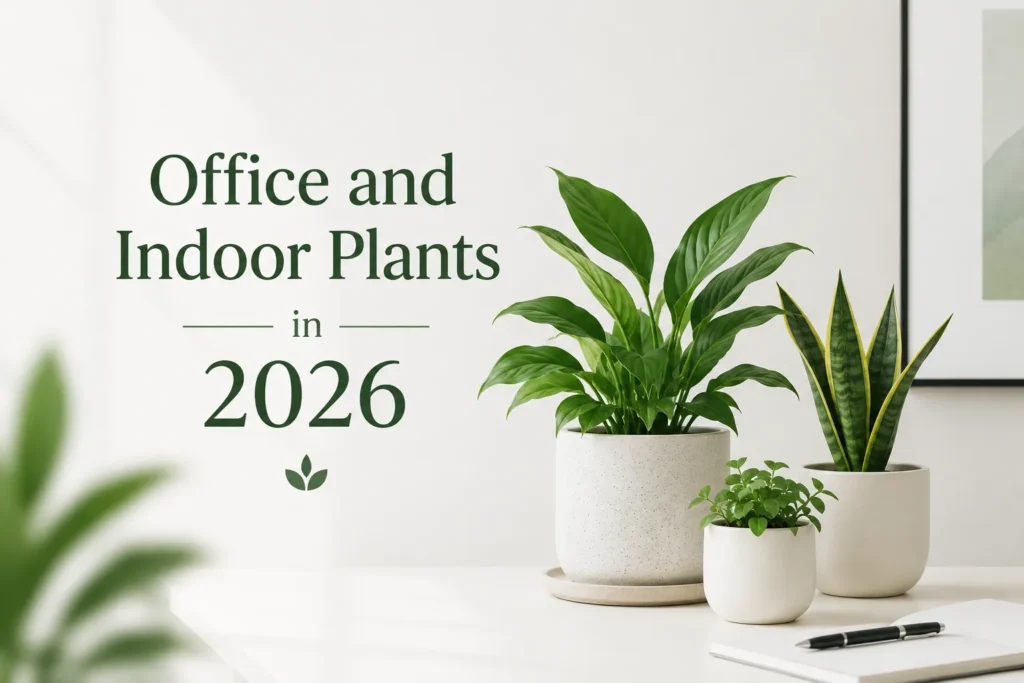
Office and indoor plants continue growing in popularity. They add natural beauty to indoor spaces. Many homeowners use plants for decoration. Businesses use plants to improve workplaces. Indoor greenery creates healthier environments.
Modern homes and offices need balance. Plants help create calm surroundings. They make spaces feel fresh. Green foliage adds visual appeal. Indoor plants suit every design style.
In 2026, plant trends continue evolving. People want beautiful low-maintenance plants. Many buyers seek air-purifying varieties. Others focus on Vastu and Feng Shui. Indoor plants now offer multiple benefits.
From compact desk plants to statement trees, there are options for every space. The right plant can improve productivity, reduce stress, and enhance interior design. Whether you work from home or manage an office, indoor plants can transform your environment.
This guide explores the best office and indoor plants for 2026. You will learn their benefits, ideal placements, care requirements, latest trends, and buying considerations. By the end, you can confidently choose the right plants for your home or workplace.
Benefits of Office and Indoor Plants
Indoor plants offer more than decoration. They improve indoor environments naturally. Many people choose plants for health benefits. Businesses use plants to enhance workplaces. Healthy plants create better living spaces.
Air Purification Benefits
Many indoor plants help improve air quality. Their leaves absorb certain pollutants. Plants also release fresh oxygen. Cleaner air creates comfortable spaces. This benefit supports daily wellbeing.
Snake Plant, Peace Lily, and Pothos are popular choices. These plants perform well indoors. They require minimal maintenance. Healthy plants contribute to fresher environments. They also enhance home decoration.
Stress Reduction and Mental Wellbeing
Green plants create a calming atmosphere. Natural elements reduce mental fatigue. Looking at greenery feels relaxing. Plants help create peaceful surroundings. Many people feel happier around plants.
Indoor plants support work-life balance. They make offices feel welcoming. Home offices become more enjoyable. Green spaces encourage relaxation. This improves overall wellbeing.
Humidity Regulation
Indoor air often becomes dry. Air conditioners increase dryness further. Plants release moisture naturally. This process helps balance humidity. Comfortable humidity supports healthier indoor spaces.
Proper humidity benefits people and plants. It helps reduce excessive dryness. Indoor environments feel more pleasant. Plants contribute naturally to this balance. Healthy humidity improves comfort.
Acoustic Softening
Plants can soften indoor noise. Their leaves absorb sound waves. This reduces echo in rooms. Offices feel quieter and calmer. Comfortable spaces improve concentration.
Large plants work especially well. Grouped plants increase effectiveness. They create natural sound barriers. This benefit supports productive environments. Many offices use plants for this reason.
Improved Productivity and Focus
Plants make workspaces more inviting. Greenery helps reduce visual stress. Employees often feel more comfortable. Pleasant surroundings improve focus. Productivity may increase naturally.
Desk plants are especially popular. Small plants require little space. They add color to work areas. Healthy environments support better performance. This makes plants valuable office additions.
Best Office and Indoor Plants for 2026
Choosing the right indoor plants makes maintenance easier. Some plants require very little attention. Others add flowers and decorative value. Tall plants create strong visual impact. Selecting suitable plants improves both homes and offices.
Low-Maintenance Indoor Plants
These plants are ideal for beginners. They tolerate occasional neglect. Most adapt well indoors. They need minimal maintenance. Busy plant owners love them.
Snake Plant
Snake Plant is highly durable. It tolerates low light conditions. It requires less watering. Its upright leaves look modern. It suits homes and offices.
ZZ Plant
ZZ Plant grows in low light. It stores water efficiently. Its glossy leaves look attractive. This plant requires little care. It works well in offices.
Pothos (Money Plant)
Pothos grows quickly indoors. It adapts to many conditions. Trailing vines enhance decoration. It tolerates occasional watering mistakes. Beginners often choose this plant.
Flowering and Decorative Plants
Flowering plants add color indoors. Decorative plants increase visual appeal. These plants become focal points. They improve interior aesthetics. Proper care encourages healthy blooms.
Peace Lily
Peace Lily produces elegant white flowers. It grows well indoors. The plant prefers indirect light. Its foliage remains attractive year-round. It is popular in offices.
Orchids
Orchids offer beautiful flowers. They create a premium appearance. Many varieties bloom indoors. Proper lighting supports flowering. They elevate home decoration.
Desert Rose
Desert Rose produces vibrant flowers. It enjoys bright sunlight. Thick stems add character. This plant creates visual interest. It suits sunny indoor locations.
Indoor Trees and Tall Plants
Tall plants create strong impact. They fill empty corners beautifully. Large plants improve room design. They add structure indoors. Many suit modern interiors.
Rubber Plant
Rubber Plant has glossy leaves. It grows into a statement plant. It prefers bright indirect light. Regular care supports healthy growth. It suits offices and homes.
Money Tree (Pachira)
Money Tree is highly popular. Many associate it with prosperity. Its braided trunk looks unique. It adapts well indoors. It enhances workspace decoration.
Dracaena
Dracaena offers striking foliage. It tolerates indoor conditions well. Different varieties provide unique appearances. It requires moderate maintenance. It works well in offices.
Vastu and Feng Shui Plants for Office
Many people choose plants for positive energy. Vastu and Feng Shui encourage balanced spaces. Proper plant placement supports harmony. Suitable plants enhance office environments. They also improve visual appeal.
Best Vastu Directions
Plant placement matters greatly. Different directions support different goals. Choosing the right location improves balance. It also enhances workspace design.
Southeast for Wealth
The southeast direction represents prosperity. Many people place money-related plants here. This area supports abundance. Jade Plant is a popular choice. Keep plants healthy and vibrant.
East for Growth
The east direction symbolizes growth. Plants placed here represent progress. This location suits offices and homes. Healthy greenery strengthens positive energy. Many Vastu followers prefer this placement.
North for Creativity
The north direction encourages creativity. Indoor plants help energize workspaces. Greenery supports fresh thinking. This area works well for desks. Creative professionals often use this placement.
Southwest for Protection
The southwest direction represents stability. Plants here promote balance. This placement supports strong foundations. Healthy plants enhance positive surroundings. Choose low-maintenance varieties when possible.
Popular Vastu and Feng Shui Plants
Certain plants hold symbolic meaning. These plants are commonly recommended. They combine beauty and positive energy. Many work well indoors.
Jade Plant
Jade Plant symbolizes prosperity. Its thick leaves store water. The plant requires minimal care. Many people place it near entrances. It remains a popular Vastu plant.
Lucky Bamboo
Lucky Bamboo symbolizes good fortune. It grows well indoors. The plant adapts easily. It suits desks and workspaces. Many Feng Shui enthusiasts prefer it.
Holy Basil
Holy Basil is highly respected. Many households grow this plant. It symbolizes purity and positivity. The plant prefers sunlight. Regular care supports healthy growth.
Indoor Plant Trends in 2026
Indoor plant trends continue evolving. People want stylish and functional plants. Modern spaces now include more greenery. Plants have become design elements. They support both wellbeing and decoration.
Year of the Ficus
Ficus varieties are gaining attention. Their bold foliage creates impact. Many homeowners prefer them. They suit modern interiors well. Ficus plants are expected to dominate 2026.
Popular varieties include Fiddle Leaf Fig. Rubber Plant remains in demand. These plants create statement displays. They work in homes and offices. Their presence adds elegance.
Biophilic Design
Biophilic design connects people with nature. Indoor plants play a major role. Designers use greenery extensively. Plants create calming environments. Natural elements improve indoor experiences.
Many offices now adopt biophilic spaces. Homes follow similar trends. Green walls and plant corners are popular. Natural interiors feel more inviting. This trend continues growing.
Sculptural Statement Trees
Large indoor trees are trending. They act as focal points. Their shapes add visual interest. Empty corners become attractive displays. These plants enhance room design.
Rubber Plant and Dracaena remain favorites. Ficus varieties are also popular. Large plants create a premium look. They complement modern interiors. Statement plants are highly sought after.
Textured Moody Foliage
Plant lovers want unique foliage. Dark green leaves are trending. Textured plants add depth. Their appearance creates visual contrast. Interiors feel more sophisticated.
Many decorative plants fit this trend. Large-leaf varieties remain popular. Rich foliage attracts attention. These plants elevate home decoration. Their demand continues increasing.
Hybrid Workspace Plants
Hybrid work remains common. People now decorate home offices. Indoor plants improve work environments. Small spaces benefit from greenery. Plants make work areas comfortable.
Desk plants remain highly popular. Low-maintenance plants lead demand. Snake Plant and ZZ Plant fit well. Compact plants suit workstations. They support productive environments.
Indoor Plant Care Tips
Proper care keeps plants healthy. Good maintenance supports steady growth. Healthy plants look more attractive. Small care habits prevent problems. Consistent attention delivers better results.
Lighting Requirements
Light is essential for growth. Different plants need different light levels. Understanding light requirements improves plant health. Proper placement prevents common issues.
Bright Indirect Light
Many indoor plants prefer bright indirect light. This light supports healthy growth. It prevents leaf damage. Place plants near bright windows. Avoid harsh afternoon sunlight.
Low-Light Tolerance
Some plants grow well in low light. Snake Plant is a good example. ZZ Plant also adapts easily. These plants suit offices. They require minimal attention.
Artificial Light Adaptation
Many offices have limited sunlight. Artificial grow lights help plants grow. LED grow lights work effectively. They support healthy foliage. This option suits indoor workspaces.
Essential Maintenance Tips
Simple maintenance improves plant health. Regular care prevents many issues. Healthy plants require ongoing attention. Small efforts create lasting results.
Check Soil Moisture
Always check soil before watering. Moist soil may not need water. Overwatering causes root problems. Use your finger to test soil. Water only when necessary.
Clean Leaves Regularly
Dust collects on leaves. Dirty leaves absorb less light. Wipe leaves gently. Clean foliage looks healthier. This improves plant appearance.
Avoid Overwatering
Overwatering is a common mistake. Roots need oxygen to survive. Excess water causes root rot. Follow plant-specific watering needs. Drain excess water properly.
Monitor AC Airflow
Air conditioners affect plant health. Constant airflow dries leaves. Plants may lose moisture quickly. Keep plants away from vents. Choose stable indoor locations.
Choosing the Right Indoor Plant
Selecting the right plant is important. Every space has different needs. Some plants need more care. Others grow with little attention. Choose plants based on your environment.
Plants for Beginners
Beginners should choose easy-care plants. These plants tolerate small mistakes. They require less maintenance. Growth remains steady with basic care. They are ideal for new plant owners.
Best Beginner-Friendly Plants
- Snake Plant
- ZZ Plant
- Pothos (Money Plant)
- Spider Plant
These plants adapt easily. They survive in various conditions. Simple care keeps them healthy.
Plants for Small Spaces
Small homes need compact plants. These plants fit shelves and desks. They add greenery without taking space. Compact plants improve decoration. They work well in apartments.
Best Plants for Small Spaces
- Pothos
- Lucky Bamboo
- Peace Lily
- Spider Plant
These plants remain manageable. They suit modern interiors. Their compact size offers flexibility.
Pet-Safe Indoor Plants
Pet owners must choose carefully. Some indoor plants are toxic. Pet-safe plants reduce risks. They allow safe indoor gardening. Always research plant safety first.
Popular Pet-Safe Plants
- Spider Plant
- Areca Palm
- Calathea
- Boston Fern
These plants are commonly recommended. They provide beauty and peace of mind.
Plants for Low-Light Offices
Many offices receive limited sunlight. Low-light plants adapt well. They maintain healthy foliage. These plants require minimal effort. They are perfect for workplaces.
Best Low-Light Office Plants
- Snake Plant
- ZZ Plant
- Dracaena
- Pothos
These plants perform well indoors. They tolerate artificial lighting. They remain popular office choices.
Common Indoor Plant Problems
Even healthy plants face problems. Early detection prevents serious damage. Regular monitoring helps identify issues. Quick action improves recovery. Understanding common problems supports plant health.
Yellow Leaves
Yellow leaves are common. Overwatering often causes this issue. Poor drainage may also contribute. Nutrient deficiencies affect leaf color. Identifying the cause is important.
How to Fix Yellow Leaves
- Check soil moisture regularly
- Improve drainage if needed
- Remove damaged leaves
- Adjust watering schedule
Healthy care habits prevent yellowing. Consistent monitoring supports recovery.
Root Rot
Root rot develops in wet soil. Excess water damages roots. Affected roots become soft. Plants lose vigor quickly. Severe cases can kill plants.
H4: How to Prevent Root Rot
- Use well-draining soil
- Avoid overwatering
- Choose pots with drainage holes
- Empty excess water immediately
Prevention is easier than treatment. Proper watering protects roots.
Pest Infestations
Indoor plants attract pests occasionally. Spider mites are common. Mealybugs and aphids also appear. Pests weaken plant health. Early detection reduces damage.
Signs of Pest Problems
- Sticky leaves
- White cotton-like spots
- Small insects on stems
- Damaged foliage
Inspect plants weekly. Early action prevents larger infestations.
Drooping Plants
Drooping leaves indicate stress. Underwatering is a common cause. Overwatering may also contribute. Temperature changes affect plant health. Poor lighting can create problems.
How to Revive Drooping Plants
- Check soil moisture
- Review lighting conditions
- Maintain stable temperatures
- Remove damaged foliage
Healthy plants recover faster. Consistent care improves growth.
Office Plant Placement Ideas
Proper plant placement improves appearance. It also supports healthy growth. Different office areas need different plants. Choosing the right location matters. Well-placed plants create better environments.
Desk Plants
Desk plants add freshness. They improve workspace aesthetics. Small plants fit easily. They require little space. Many employees prefer compact varieties.
Best Desk Plants
- Snake Plant
- Lucky Bamboo
- Pothos
- ZZ Plant
These plants are low maintenance. They adapt well indoors. They are perfect for desks.
Reception Area Plants
Reception areas create first impressions. Large plants enhance visual appeal. Greenery makes visitors feel welcome. Attractive plants improve office design. Healthy plants add professionalism.
Best Reception Area Plants
- Rubber Plant
- Dracaena
- Money Tree
- Peace Lily
These plants create impact. They fill empty spaces beautifully. They improve reception aesthetics.
Conference Room Plants
Conference rooms benefit from greenery. Plants reduce visual stress. They make spaces feel comfortable. Green environments support discussions. They improve room appearance.
Best Conference Room Plants
- Rubber Plant
- Snake Plant
- Peace Lily
- Dracaena
These plants require minimal care. They suit professional spaces. They remain attractive year-round.
Home Office Plants
Home offices need balance. Plants create productive environments. Greenery helps reduce stress. They improve focus during work. Many remote workers use plants.
H4: Best Home Office Plants
- Pothos
- Snake Plant
- ZZ Plant
- Peace Lily
These plants fit small spaces. They tolerate indoor conditions. They help create inspiring workspaces.
Buying Guide for Office and Indoor Plants
Buying the right plant matters. A healthy plant grows better. Proper selection prevents future problems. Consider your space and needs. Choose plants carefully before purchasing.
Choosing the Right Pot
The right pot supports growth. Pots should have drainage holes. Proper drainage prevents root rot. Pot size should match plant size. Good pots improve plant health.
Pot Selection Tips
- Choose pots with drainage holes
- Avoid oversized containers
- Match pot size to roots
- Use quality potting soil
A suitable pot encourages healthy growth. It also improves plant appearance.
Selecting Plant Size
Plant size affects placement. Small plants suit desks. Medium plants fit shelves. Large plants fill empty corners. Choose according to available space.
Plant Size Guide
- Small plants for desks
- Medium plants for tables
- Large plants for corners
- Tall plants for open areas
Proper sizing improves decoration. It also prevents overcrowding.
Budget Considerations
Indoor plants fit many budgets. Small plants cost less. Larger plants cost more. Decorative pots add expense. Plan your budget beforehand.
Budget Tips
- Start with easy plants
- Buy healthy plants first
- Invest in quality pots
- Avoid impulse purchases
Smart buying saves money. Healthy plants offer better value.
Where to Buy Healthy Plants
Buy plants from trusted sellers. Healthy plants adapt better. Check leaves and roots carefully. Avoid plants showing damage. Quality plants grow stronger.
What to Check Before Buying
- Healthy green leaves
- No pest infestation
- Strong stems
- Well-draining soil
- Good root condition
Choosing healthy plants reduces problems. It also improves success rates.
Why Choose GreenGrow
GreenGrow offers healthy indoor plants. Our plants are carefully selected. We focus on quality and customer satisfaction. Every plant receives proper care. We help customers grow confidently.
Benefits of Choosing GreenGrow
- Healthy quality plants
- Expert plant guidance
- Wide plant selection
- Secure plant delivery
- Ongoing customer support
Whether you need desk plants, decorative plants, or large indoor trees, GreenGrow can help you find the right option.
Conclusion
Office and indoor plants offer many benefits. They improve wellbeing and decoration. The right plants enhance homes and workplaces. Proper care keeps plants healthy. Choosing suitable plants ensures long-term success.
From low-maintenance varieties to decorative statement plants, there is an option for every space. By following proper care practices and placement guidelines, you can enjoy healthy indoor greenery throughout 2026 and beyond.
Contact GreenGrow
Looking for the best office and indoor plants? Need help choosing the right plants for your home or workplace? Contact GreenGrow today. Our team is ready to help you create a healthier, greener, and more beautiful indoor space