
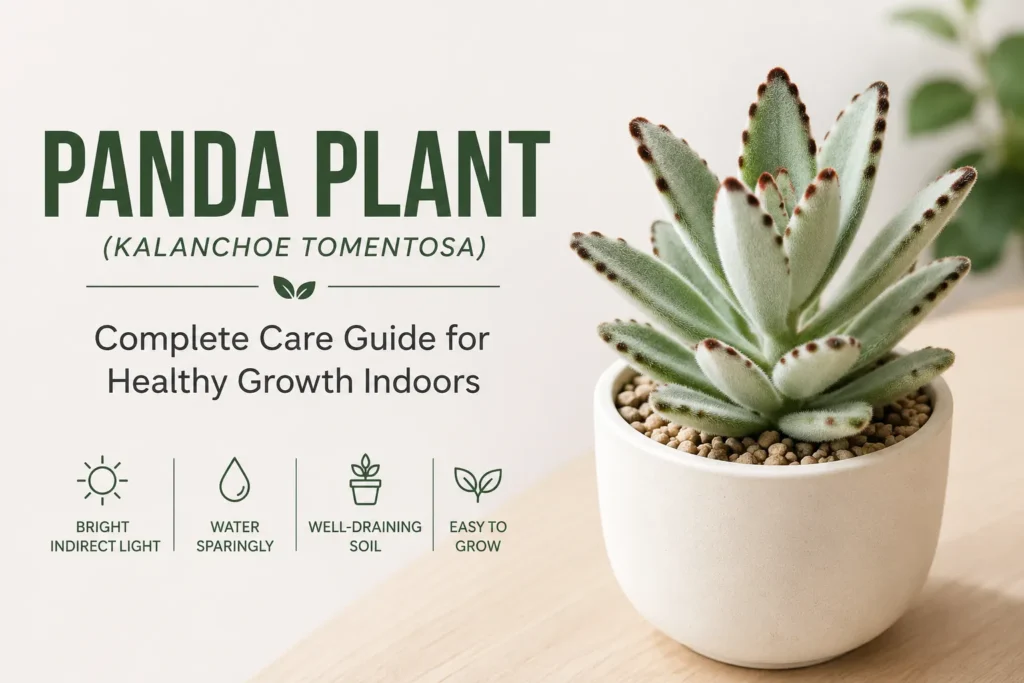
If you want a beautiful succulent that needs very little care, the Panda Plant is an excellent choice. Its soft, fuzzy leaves and unique appearance make it one of the most loved indoor succulent plants. Whether you are new to gardening or already have a collection of houseplants, this plant is easy to grow and rewarding to maintain.
This complete Panda Plant Care Guide explains everything you need to know. You will learn about watering, light, soil, propagation, pruning, common problems, and expert tips for healthy indoor growth. By following these simple care practices, your Kalanchoe tomentosa can stay healthy for many years.
What is a Panda Plant?
The Panda Plant (Kalanchoe tomentosa) is a slow-growing succulent native to Madagascar. It belongs to the Crassulaceae family, which includes many drought-tolerant succulent species.
Unlike flowering houseplants, the Panda Plant is mainly grown for its attractive leaves. Each leaf is covered with tiny white hairs that create a soft, velvety texture. The leaf edges have chocolate-brown markings, giving the plant its famous “panda” appearance.
Because it stores water inside its thick leaves, the Panda Plant survives dry conditions much better than many other indoor plants. As a result, it is considered one of the best indoor succulent plants for beginners.
Although mature plants can produce tubular flowers outdoors, flowering is uncommon when grown indoors. Most people grow it for its decorative foliage rather than its blooms.
Today, the Panda Plant is a popular choice for homes, apartments, offices, and desks because it is compact, low maintenance, and visually attractive.
Panda Plant Overview
| Feature | Details |
| Botanical Name | Kalanchoe tomentosa |
| Common Name | Panda Plant |
| Family | Crassulaceae |
| Plant Type | Succulent |
| Native Region | Madagascar |
| Mature Height | 1–3 feet |
| Growth Rate | Slow |
| Light Requirement | Bright indirect light |
| Water Requirement | Low |
| Soil Type | Well-draining succulent soil |
| Humidity | Average indoor humidity |
| Difficulty Level | Easy |
| Toxicity | Toxic to cats, dogs, and humans if ingested |
Common Names of Panda Plant
The Panda Plant is known by several names across different regions. While the appearance remains the same, gardeners may use different names depending on their location.
Some of the most common names include:
- Panda Plant
- Chocolate Soldier
- Pussy Ears
- Velvet Leaf Kalanchoe
- Stitch Plant
If you search online using any of these names, you are usually referring to Kalanchoe tomentosa or one of its close varieties.
Panda Plant Characteristics
The Panda Plant stands out because of its unique leaves and compact growth habit. Understanding these characteristics helps you identify the plant and provide better care.
Thick, Velvety Leaves
The leaves are the most attractive feature of the Panda Plant.
They are:
- Thick and fleshy
- Covered with soft white hairs
- Silver-green in color
- Oval-shaped
- Decorated with dark brown or chocolate-colored edges
These fuzzy hairs protect the leaves from strong sunlight and reduce water loss. Therefore, the plant can tolerate dry indoor conditions very well.
Strong Woody Stems
As the plant matures, its stems become thicker and slightly woody.
Healthy stems usually:
- Support multiple branches
- Hold water efficiently
- Produce new leaves regularly
- Become stronger with age
Older plants often develop a small shrub-like appearance.
Flowers
Although Panda Plants can bloom, flowering indoors is uncommon.
When flowers appear, they are:
- Small and tubular
- Yellowish-green to orange in color
- Produced mainly on mature outdoor plants
- More common during spring under ideal conditions
Most indoor gardeners rarely see flowers because the plant focuses on producing healthy foliage.
Slow Growth Habit
Unlike many fast-growing houseplants, the Panda Plant grows slowly.
However, this slow growth offers several benefits:
- Requires less pruning
- Needs less frequent repotting
- Maintains a compact shape
- Fits perfectly on desks, shelves, and windowsills
Because of its manageable size, it is one of the easiest succulents to grow indoors.
Natural Drought Tolerance
The Panda Plant stores water inside its thick leaves.
Therefore, it can survive longer without watering compared to tropical houseplants.
This natural adaptation makes it ideal for:
- Busy homeowners
- Office spaces
- Apartment living
- Beginner gardeners
- Frequent travelers
However, overwatering remains the biggest threat to this succulent.
How to Grow Panda Plant Indoors
Growing a Panda Plant (Kalanchoe tomentosa) indoors is simple when you provide the right conditions. This succulent naturally grows in warm, dry environments. Therefore, recreating those conditions inside your home helps it thrive.
The most important factors are light, watering, soil, pot selection, temperature, and humidity. Once you get these right, your Panda Plant will remain healthy with very little maintenance.
Light Requirements
Light plays a major role in Panda Plant care. Since this succulent is native to sunny regions, it needs plenty of bright light to grow compact and healthy.
Give Bright Indirect Light
The ideal location is a spot with bright indirect sunlight for at least 6 hours a day.
Good locations include:
- East-facing windows
- Bright south-facing windows with sheer curtains
- West-facing windows with filtered afternoon light
Bright indirect light encourages healthy leaf growth and keeps the fuzzy silver-green color vibrant.
Morning Sun is Beneficial
A few hours of gentle morning sunlight are beneficial because it is less intense than afternoon sun.
Morning light helps:
- Maintain compact growth
- Enhance leaf color
- Encourage stronger stems
- Reduce leggy growth
Avoid Harsh Afternoon Sun
Strong afternoon sunlight can scorch the velvety leaves.
Too much direct sun may cause:
- Brown leaf patches
- Burnt leaf edges
- Dry, crispy leaves
- Loss of the soft fuzzy coating
If your window receives intense afternoon sunlight, use a sheer curtain to filter the light.
Signs Your Panda Plant Needs More Light
Insufficient light is a common problem indoors.
Watch for these signs:
- Long, stretched stems
- Large gaps between leaves
- Pale green foliage
- Slow or uneven growth
- Leaning toward the window
If you notice these symptoms, move the plant to a brighter location or use a grow light.
Rotate the Plant Regularly
Turn the pot about a quarter turn every week.
This simple habit:
- Promotes even growth
- Prevents leaning
- Helps maintain a balanced shape
Water Requirements
Watering correctly is one of the most important parts of Panda Plant indoor care. Since the leaves store water, this succulent needs much less watering than most houseplants.
Use the “Soak and Dry” Method
Always water deeply until excess water drains from the bottom of the pot.
Then wait until the soil is completely dry before watering again.
This method closely mimics the plant’s natural growing conditions.
How Often Should You Water?
Watering frequency depends on the season, indoor temperature, and humidity.
As a general guide:
| Season | Watering Frequency |
| Spring | Every 10–14 days |
| Summer | Every 7–10 days |
| Autumn | Every 14–21 days |
| Winter | Every 3–4 weeks |
Always check the soil before watering instead of following a fixed schedule.
Check Soil Moisture First
Insert your finger about 2 inches into the soil.
If the soil feels:
- Dry → Water thoroughly.
- Slightly moist → Wait a few more days.
- Wet → Do not water.
Reduce Watering During Winter
The Panda Plant grows slowly during winter.
As growth slows, it needs much less water. Overwatering during this period is one of the main causes of root rot.
Never Let Soil Stay Wet
Constantly wet soil prevents oxygen from reaching the roots.
This can lead to:
- Root rot
- Mushy stems
- Yellow leaves
- Falling leaves
- Plant death
Always empty the saucer after watering so the pot never sits in standing water.
Avoid Water on the Leaves
Because the leaves are covered with tiny hairs, water droplets can remain on the surface for a long time.
This may encourage fungal problems or leaf damage.
Instead, water directly at the base of the plant.
Best Soil for Panda Plant
Well-draining soil is essential for healthy roots. Heavy garden soil holds too much moisture and increases the risk of root rot.
Use Succulent or Cactus Mix
A ready-made cactus or succulent potting mix works best.
These mixes provide:
- Excellent drainage
- Good airflow
- Fast drying
- Healthy root development
Improve Drainage
For even better drainage, mix in one or more of the following:
- Perlite
- Coarse sand
- Pumice
- Small gravel
A simple homemade mix is:
- 2 parts succulent potting mix
- 1 part perlite
- 1 part coarse sand
This combination helps excess water drain quickly while preventing compacted soil.
Avoid Heavy Soil
Do not use:
- Clay-heavy garden soil
- Moisture-retaining potting mixes
- Soil without drainage materials
These retain water for too long and can damage the roots.
Best Pot for Panda Plant
Choosing the right pot is just as important as choosing the right soil.
Terracotta Pots Are Ideal
Terracotta pots are the best option because they naturally absorb excess moisture.
Benefits include:
- Faster soil drying
- Better airflow
- Reduced risk of root rot
- Healthier root system
Always Choose Drainage Holes
Never grow a Panda Plant in a pot without drainage holes.
Drainage holes allow extra water to escape, preventing waterlogged soil.
Select the Right Pot Size
Avoid using oversized pots.
Instead, choose a container only 1–2 inches wider than the root ball.
Large pots hold more soil, which stays wet longer and increases the risk of overwatering.
Temperature Requirements
The Panda Plant prefers warm indoor temperatures throughout the year.
The ideal temperature range is:
60°F–75°F (16°C–24°C)
This range supports steady, healthy growth.
Protect from Frost
Panda Plants are not frost-tolerant.
Temperatures below 50°F (10°C) can damage leaves and roots.
If you keep your plant outdoors during summer, bring it inside before cold weather arrives.
Avoid Cold Drafts
Keep the plant away from:
- Air conditioners
- Heating vents
- Drafty doors
- Open windows during winter
Sudden temperature changes can stress the plant and slow its growth.
Humidity Requirements
Unlike many tropical houseplants, Panda Plants do not require high humidity.
Average indoor humidity levels are usually perfect.
No Misting Required
Never mist the fuzzy leaves.
Excess moisture can remain trapped on the leaf surface and encourage fungal diseases.
Good Air Circulation Helps
Place your Panda Plant where air can circulate freely.
Proper airflow helps:
- Keep leaves dry
- Prevent fungal infections
- Reduce pest problems
- Maintain healthy growth
Avoid placing several plants too close together in poorly ventilated spaces.
Signs Your Panda Plant Is Growing Well
A healthy Panda Plant shows several positive signs that indicate proper care.
Look for:
- Thick, firm leaves
- Bright silver-green foliage
- Rich chocolate-brown leaf edges
- Compact, upright growth
- Strong stems
- Steady production of new leaves
- No yellowing or mushy stems
If your plant displays these characteristics, your Panda Plant care routine is working well.
Fertilizing Panda Plant
Although the Panda Plant (Kalanchoe tomentosa) is a slow-growing succulent, occasional feeding helps it produce healthy leaves and stronger stems. However, too much fertilizer can do more harm than good. Therefore, it is best to fertilize sparingly.
When to Fertilize
Feed your Panda Plant during its active growing season.
The best time is:
- Spring
- Early summer
- Late summer (if actively growing)
Avoid fertilizing during autumn and winter because the plant naturally slows its growth.
How Often Should You Fertilize?
A healthy Panda Plant only needs fertilizer once a month during the growing season.
Monthly feeding provides enough nutrients without causing excessive growth.
Which Fertilizer is Best?
Choose a fertilizer specially made for:
- Succulents
- Cacti
Alternatively, you can use a balanced liquid fertilizer diluted to half the recommended strength.
A mild fertilizer reduces the risk of fertilizer burn.
How to Apply Fertilizer
Follow these simple steps:
- Water the plant lightly before feeding.
- Dilute the fertilizer according to the instructions.
- Apply it directly to the soil.
- Avoid getting fertilizer on the leaves.
Never fertilize dry soil because it can damage the roots.
Signs of Over-Fertilizing
Too much fertilizer may cause:
- Brown leaf tips
- Salt buildup on the soil
- Weak, leggy growth
- Burnt roots
- Slow growth
If this happens, stop fertilizing for a few months and flush the soil with clean water.
Repotting Panda Plant
Unlike fast-growing houseplants, Panda Plants rarely need repotting. In most cases, repotting every 2–3 years is enough.
Repotting refreshes the soil, provides more space for roots, and improves drainage.
Signs Your Panda Plant Needs Repotting
Look for these signs:
- Roots growing through drainage holes
- Soil drying out very quickly
- Slower than normal growth
- Pot becoming unstable
- Soil breaking down or compacting
If you notice several of these signs, it’s time for a new pot.
Best Time to Repot
Spring is the ideal season because the plant is actively growing.
Avoid repotting during winter when growth is slow.
Step-by-Step Repotting Guide
Step 1: Choose the Right Pot
Select a pot that is only 1–2 inches larger than the current one.
Always choose a pot with drainage holes.
Step 2: Prepare Fresh Soil
Fill the new pot with fresh succulent or cactus potting mix.
Well-draining soil helps prevent root rot.
Step 3: Remove the Plant Carefully
Gently loosen the soil around the edges.
Lift the plant carefully without pulling on the leaves.
Step 4: Inspect the Roots
Healthy roots should be:
- White
- Firm
- Thick
Trim away any black, mushy, or rotten roots using sterilized scissors.
Step 5: Plant at the Same Depth
Place the Panda Plant at the same depth it was growing before.
Do not bury the stem too deeply.
Step 6: Wait Before Watering
After repotting, wait 2–3 days before watering.
This allows damaged roots to heal and reduces the risk of rot.
Pruning Panda Plant
Pruning helps maintain a neat shape and encourages bushier growth. Fortunately, Panda Plants require very little pruning.
Why Prune a Panda Plant?
Pruning helps to:
- Remove dead leaves
- Improve appearance
- Encourage branching
- Control plant size
- Improve air circulation
When to Prune
The best time is during spring or early summer.
Avoid heavy pruning during winter.
How to Prune Correctly
- Sterilize your pruning scissors.
- Remove dead or damaged leaves.
- Trim leggy stems just above a leaf node.
- Remove weak or unhealthy branches.
Always make clean cuts to reduce the risk of disease.
Encourage Bushier Growth
If your Panda Plant becomes tall and sparse, trim the growing tips.
This encourages new side branches, making the plant fuller and more attractive.
How to Propagate Panda Plant
One of the best things about Panda Plant care is how easy it is to grow new plants. You can propagate it using leaves, stems, or offsets.
Propagation works best during spring and summer when the plant is actively growing.
Leaf Cuttings
Leaf propagation is simple but requires patience.
Step-by-Step Guide
Step 1: Select a healthy mature leaf.
Choose a thick leaf with no signs of disease or damage.
Step 2: Remove the leaf carefully.
Twist it gently until it separates completely from the stem.
A clean removal improves the chances of success.
Step 3: Allow the leaf to callous.
Place it in a dry location for 2–3 days.
This forms a protective layer over the cut.
Step 4: Prepare the soil.
Use a well-draining succulent mix in a shallow container.
Step 5: Place the leaf on the soil.
Lay it on top of the soil instead of burying it.
Step 6: Wait for roots.
Tiny roots usually appear within 2–4 weeks.
New baby plants will develop soon after.
Water only lightly once roots begin to form.
Stem Cuttings
Stem cuttings usually grow faster than leaf cuttings.
Select a Healthy Stem
Choose a stem that is:
- Healthy
- Firm
- At least 3–5 inches long
Avoid weak or damaged stems.
Let the Cutting Callous
After cutting, allow the stem to dry for 2–5 days.
The cut end should become dry before planting.
Plant the Cutting
Insert the stem into slightly moist succulent soil.
Place it in bright indirect light.
Avoid watering immediately.
After one week, begin watering lightly when the soil becomes completely dry.
Roots usually develop within 3–5 weeks.
Offset Division
Mature Panda Plants sometimes produce small baby plants around the base.
These are called offsets or pups.
Remove the Offset
Carefully remove the baby plant along with its roots.
Use a clean knife if necessary.
Replant
Place the offset into its own pot using fresh succulent soil.
Water lightly after several days.
Within a few weeks, the young plant should begin growing independently.
Propagation Tips for Success
For the best results:
- Propagate during spring or summer.
- Use clean, sterilized tools.
- Allow cuttings to callous before planting.
- Use well-draining soil.
- Keep cuttings in bright indirect light.
- Avoid overwatering during rooting.
Following these simple steps will greatly improve your success rate.
Common Panda Plant Problems
Even though the Panda Plant (Kalanchoe tomentosa) is a hardy succulent, it can develop problems if its growing conditions are not ideal. Fortunately, most issues are easy to identify and fix when caught early.
Below are the most common Panda Plant problems, along with their causes and solutions.
Overwatering
Overwatering is the number one reason Panda Plants die indoors. Since this succulent stores water in its leaves, it does not need frequent watering.
Symptoms
Watch for these warning signs:
- Yellow leaves
- Soft or mushy stems
- Drooping foliage
- Leaves falling off easily
- Black roots
- Constantly wet soil
- Unpleasant smell from the pot
Causes
Overwatering usually happens because of:
- Watering too often
- Poorly draining soil
- Pots without drainage holes
- Cool indoor temperatures
- Standing water in the saucer
How to Fix It
If you suspect overwatering:
- Stop watering immediately.
- Allow the soil to dry completely.
- Remove any rotten leaves or stems.
- Check the roots for rot.
- Repot the plant in fresh succulent soil if necessary.
- Resume watering only when the soil is completely dry.
Prevention
To avoid overwatering:
- Always use the soak-and-dry method.
- Choose a pot with drainage holes.
- Use well-draining succulent soil.
- Reduce watering during winter.
Leaves Falling Off
Losing an occasional old leaf is normal. However, excessive leaf drop usually indicates that something is wrong.
Possible Reasons
Leaves may fall because of:
- Overwatering
- Underwatering
- Sudden temperature changes
- Lack of sunlight
- Root damage
- Natural aging
How to Fix It
- Adjust your watering schedule.
- Move the plant to brighter indirect light.
- Keep temperatures stable.
- Avoid moving the plant frequently.
- Inspect the roots if the problem continues.
Healthy care habits usually stop excessive leaf drop within a few weeks.
Leggy Growth
A Panda Plant should have compact stems with closely spaced leaves.
If the stems become long and stretched, the plant is becoming leggy.
Causes
Leggy growth is mainly caused by:
- Insufficient light
- Short winter days
- Crowded growing conditions
How to Fix It
Move the plant to:
- A brighter window
- An east-facing window
- Bright indirect sunlight for at least 6 hours daily
You can also trim long stems to encourage bushier growth.
Rotate the pot every week so all sides receive equal light.
Brown Leaves
Brown leaves are another common concern among indoor gardeners.
Possible Causes
Brown leaves may result from:
- Too much direct sunlight
- Underwatering
- Fertilizer burn
- Natural aging
- Heat stress
Treatment
To restore healthy growth:
- Remove damaged leaves.
- Move the plant away from harsh afternoon sun.
- Water only when the soil dries completely.
- Reduce fertilizer if you have been feeding too often.
New growth should appear healthy once the problem is corrected.
Soft Mushy Stem
A soft stem almost always indicates root rot.
This is considered an emergency because the rot can spread quickly through the plant.
Causes
The main causes include:
- Constantly wet soil
- Poor drainage
- Overwatering
- Cold temperatures
Recovery Steps
- Remove the plant from its pot.
- Cut away all rotten roots.
- Remove mushy stems.
- Allow healthy sections to dry for a day.
- Repot in fresh, well-draining soil.
- Wait several days before watering again.
If most of the plant has rotted, take healthy stem cuttings and propagate a new plant.
Common Pests
Although Panda Plants are fairly resistant to pests, infestations can still occur, especially when plants are stressed.
Regular inspection helps catch problems before they spread.
Mealybugs
Mealybugs are one of the most common pests found on succulents.
Symptoms
Look for:
- White cotton-like clusters
- Sticky residue on leaves
- Slow growth
- Yellowing leaves
Prevention
- Keep leaves clean and dry.
- Inspect new plants before bringing them indoors.
- Avoid overcrowding plants.
Treatment
- Remove bugs with a cotton swab dipped in rubbing alcohol.
- Spray insecticidal soap if the infestation is severe.
- Repeat treatment every week until all pests are gone.
Aphids
Aphids feed on young leaves and stems by sucking plant sap.
Symptoms
Signs include:
- Curled new leaves
- Sticky honeydew
- Tiny green, black, or brown insects
- Distorted growth
Prevention
- Check new growth regularly.
- Keep the plant healthy and well-lit.
- Remove weeds around outdoor plants.
Treatment
- Wash aphids off with a gentle stream of water.
- Apply insecticidal soap.
- Repeat every few days if needed.
Spider Mites
Spider mites are tiny pests that thrive in warm, dry conditions.
Symptoms
Watch for:
- Fine webbing
- Tiny yellow spots on leaves
- Dull foliage
- Weak growth
Prevention
- Inspect leaves regularly.
- Improve air circulation.
- Keep the plant free of dust.
Treatment
- Wipe leaves gently with a damp cloth.
- Spray insecticidal soap or neem oil.
- Isolate infected plants until the infestation is gone.
Common Diseases
Diseases are less common than pest problems. However, poor watering habits and inadequate airflow can increase the risk.
Root Rot
Root rot is the most serious disease affecting Panda Plants.
Cause
The disease develops when roots remain in wet soil for extended periods.
Fungal pathogens attack the roots, preventing them from absorbing water and nutrients.
Symptoms
Common signs include:
- Black roots
- Mushy stems
- Yellow leaves
- Wilting despite wet soil
- Foul smell from the pot
Treatment
- Remove all rotten roots.
- Replace the old soil.
- Repot using fresh succulent mix.
- Water sparingly until new growth appears.
The best treatment is prevention through proper watering.
Powdery Mildew
Powdery mildew is a fungal disease that sometimes appears in humid environments with poor airflow.
Cause
It is usually caused by:
- Poor ventilation
- Excess humidity
- Wet foliage
- Overcrowded plants
Symptoms
Look for:
- White powdery coating on leaves
- Slow growth
- Leaf discoloration
- Premature leaf drop
Control
- Remove infected leaves.
- Improve air circulation.
- Avoid wetting the foliage.
- Apply a fungicide if the infection spreads.
Preventing excess moisture around the plant is the best long-term solution.
Keep Your Panda Plant Healthy
Most Panda Plant problems can be avoided by following a few simple practices:
- Water only when the soil is completely dry.
- Use well-draining succulent soil.
- Provide bright indirect light.
- Ensure proper air circulation.
- Check regularly for pests.
- Remove damaged leaves promptly.
- Avoid over-fertilizing.
With consistent care, your Panda Plant can remain healthy and attractive for many years.
Is Panda Plant Toxic?
Yes, the Panda Plant (Kalanchoe tomentosa) is considered toxic if ingested. It contains naturally occurring compounds called cardiac glycosides, which can be harmful to pets and may cause mild symptoms in humans.
Therefore, it is best to keep the plant out of reach of children and animals.
Is Panda Plant Toxic to Cats?
Yes. Panda Plants are toxic to cats.
If a cat chews or eats the leaves, it may experience:
- Vomiting
- Diarrhea
- Loss of appetite
- Excessive drooling
- Lethargy
In severe cases, consuming a large amount may affect the heart. Contact a veterinarian immediately if you suspect your cat has eaten any part of the plant.
Is Panda Plant Toxic to Dogs?
Yes. Dogs can also become sick after eating a Panda Plant.
Common symptoms include:
- Vomiting
- Diarrhea
- Weakness
- Drooling
- Irregular heartbeat in severe cases
Although serious poisoning is uncommon, prompt veterinary care is recommended if symptoms appear.
Is Panda Plant Toxic to Humans?
The Panda Plant is mildly toxic to humans if ingested.
Possible symptoms include:
- Stomach discomfort
- Nausea
- Vomiting
- Mild diarrhea
The fuzzy leaves may also cause minor skin irritation in sensitive individuals. Wearing gardening gloves while pruning or repotting can help prevent irritation.
Safety Tips
Follow these precautions to grow your Panda Plant safely:
- Keep it away from curious pets.
- Place it on high shelves or plant stands.
- Wash your hands after handling the plant.
- Wear gloves when pruning or repotting.
- Do not allow children to chew the leaves.
With these simple precautions, you can safely enjoy this beautiful indoor succulent.
Popular Panda Plant Varieties
Several beautiful varieties of Kalanchoe tomentosa are available. While they all have fuzzy leaves, each variety offers unique colors and markings.
1. Chocolate Soldier
The Chocolate Soldier is the most popular variety.
Features include:
- Silver-green fuzzy leaves
- Dark chocolate-brown edges
- Compact growth
- Excellent indoor performance
It is often mistaken for the standard Panda Plant because of its similar appearance.
2. Golden Girl
Golden Girl has attractive golden-brown markings along the leaf margins.
It is known for:
- Bright leaf edges
- Compact shape
- Excellent drought tolerance
This variety adds a warmer color contrast to succulent collections.
3. Teddy Bear
The Teddy Bear variety has thicker leaves covered with dense fuzzy hairs.
Its characteristics include:
- Extra-soft foliage
- Compact growth
- Decorative appearance
- Ideal for small indoor spaces
Its plush texture makes it a favorite among succulent enthusiasts.
4. Black Tie
Black Tie is admired for its dramatic appearance.
Its leaves feature:
- Deep green to silver foliage
- Dark brown to nearly black leaf margins
- Strong color contrast
- Elegant ornamental value
This variety creates a striking focal point in modern interiors.
Benefits of Growing Panda Plant
The Panda Plant is more than just an attractive houseplant. It also offers several practical benefits for indoor gardeners.
Low Maintenance
Panda Plants require very little attention.
Once established, they need:
- Less watering
- Minimal pruning
- Infrequent repotting
- Occasional fertilizing
This makes them perfect for beginners.
Drought Tolerant
The thick leaves store water for extended periods.
As a result, the plant can tolerate occasional missed waterings better than many other houseplants.
Beautiful Decorative Foliage
The velvety silver-green leaves with chocolate-colored edges create an elegant look.
The plant complements many interior styles, including:
- Minimalist
- Scandinavian
- Modern
- Rustic
- Contemporary
Perfect Office Plant
Its compact size makes it suitable for:
- Office desks
- Study tables
- Bookshelves
- Coffee tables
- Windowsills
Because it needs little maintenance, it is an excellent plant for busy professionals.
Great for Beginners
New plant owners often struggle with demanding houseplants.
Fortunately, Panda Plants are forgiving and easy to maintain when basic care guidelines are followed.
Requires Minimal Water
Unlike tropical plants, Panda Plants thrive with less frequent watering.
This makes them ideal for:
- Frequent travelers
- Busy homeowners
- Apartment residents
- Students
Panda Plant Care Tips
Follow these quick tips to keep your Panda Plant healthy throughout the year:
- Water only when the soil is completely dry.
- Use a well-draining cactus or succulent soil mix.
- Place the plant in bright indirect sunlight.
- Rotate the pot every week for even growth.
- Fertilize once a month during spring and summer.
- Avoid watering the fuzzy leaves.
- Use pots with drainage holes.
- Keep the plant away from frost.
- Watch regularly for pests like mealybugs and spider mites.
- Repot every 2–3 years using fresh soil.
These simple habits will help your Panda Plant stay healthy, compact, and attractive for years.
Frequently Asked Questions (FAQs)
1. How often should I water a Panda Plant?
Water your Panda Plant only when the soil has dried out completely. During the growing season, this is usually every 7–14 days, while in winter it may only need water every 3–4 weeks.
2. Does Panda Plant need direct sunlight?
Panda Plants prefer bright indirect light. Gentle morning sun is beneficial, but prolonged harsh afternoon sunlight can scorch the fuzzy leaves.
3. Why are my Panda Plant leaves falling off?
Leaves usually fall because of overwatering, poor light, sudden temperature changes, or natural aging. Check the soil moisture and ensure the plant receives enough light.
4. Is Panda Plant toxic to cats?
Yes. Panda Plants are toxic to cats and may cause vomiting, drooling, diarrhea, and lethargy if eaten. Keep the plant out of your pet’s reach.
5. Can Panda Plant grow outdoors?
Yes, but only in warm, frost-free climates. In cooler regions, it is best grown indoors or moved inside before temperatures drop below 50°F (10°C).
6. How fast does a Panda Plant grow?
Panda Plants are slow-growing succulents. Under ideal conditions, they produce steady new growth during spring and summer.
7. Why is my Panda Plant turning brown?
Brown leaves can result from excessive direct sunlight, underwatering, fertilizer burn, or natural aging. Adjust your care routine based on the symptoms.
8. Can I propagate Panda Plant from leaves?
Yes. Healthy leaves can produce new plants when allowed to callous before being placed on well-draining succulent soil.
9. What soil is best for Panda Plant?
A well-draining cactus or succulent potting mix is the best choice. Adding perlite or coarse sand improves drainage and helps prevent root rot.
10. How long does a Panda Plant live?
With proper care, a Panda Plant can live for 10 years or more. Regular watering, bright indirect light, and well-draining soil will help it thrive for many years.
Conclusion
The Panda Plant (Kalanchoe tomentosa) is one of the easiest and most attractive succulents you can grow indoors. Its soft, velvety leaves, compact size, and low-maintenance nature make it an excellent choice for beginners and experienced plant lovers alike.
Successful Panda Plant care comes down to a few simple practices: provide bright indirect light, use well-draining succulent soil, water only when the soil is completely dry, and avoid overwatering. Regular checks for pests, occasional feeding during the growing season, and repotting every few years will keep your plant healthy and thriving.
Whether you’re decorating your home, adding greenery to your office, or starting your first indoor garden, the Panda Plant is a rewarding choice. With the care tips in this guide, you’ll be able to enjoy its unique beauty for many years.