
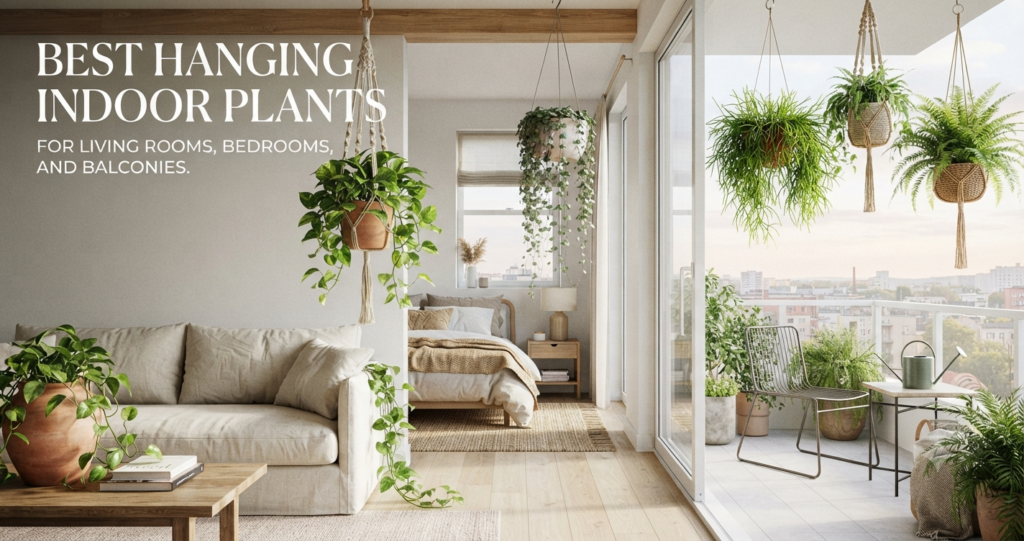
Indoor hanging plants are more than decorative accents—they’re a simple yet transformative way to bring nature into your everyday spaces. Whether you’re styling a cozy apartment, refreshing your work-from-home setup, or adding character to a spacious living room, hanging plants turn overlooked vertical spaces into vibrant displays of life.
At GreenGrow, we believe every home deserves the calming presence of greenery. From cascading vines that soften modern interiors to sculptural foliage that creates striking focal points, the right indoor hanging plants can instantly elevate both your décor and your well-being.
In this guide, you’ll discover the best indoor hanging plants for every lifestyle, practical care tips, creative styling ideas, and expert advice to help your indoor garden flourish throughout the year.
Why Indoor Hanging Plants Have Become a Modern Home Essential
As homes become more compact and design trends embrace natural elements, indoor hanging plants offer the perfect balance of beauty and functionality. They allow you to introduce lush greenery without sacrificing valuable floor space, making them ideal for both small apartments and spacious homes.
Make Every Inch Count
Limited floor space doesn’t mean you have to compromise on greenery. Hanging planters make use of ceilings, walls, shelves, curtain rods, and unused corners, allowing you to create a thriving indoor garden even in compact living spaces.
Create a Calm, Nature-Inspired Interior
Flowing vines and cascading foliage naturally soften clean architectural lines while adding texture, movement, and warmth. Whether your style is minimalist, Scandinavian, contemporary, or bohemian, indoor hanging plants blend effortlessly into every aesthetic.
Bring Everyday Comfort into Your Home
Living with plants creates spaces that feel welcoming, peaceful, and connected to nature. Their presence transforms ordinary rooms into relaxing environments where you can unwind, recharge, and enjoy a healthier lifestyle.
Suitable for Every Room
Indoor hanging plants complement almost every corner of your home, including:
- Living rooms
- Bedrooms
- Kitchens
- Bathrooms
- Home offices
- Balconies
- Entryways
With thoughtful placement and the right plant selection, every room can become a refreshing green retreat.
Best Indoor Hanging Plants for Every Home
Choosing the right indoor hanging plant depends on your available light, humidity levels, and the amount of care you can provide. Fortunately, there’s a perfect option for every experience level—from complete beginners to seasoned plant enthusiasts.
Beautiful Trailing Vines
Trailing plants remain some of the most popular indoor hanging varieties because they’re easy to maintain and create stunning cascading displays.
Pothos
Pothos is one of the most beginner-friendly indoor plants available. Its vibrant heart-shaped leaves grow quickly and adapt to a wide range of indoor conditions.
Why homeowners love it:
- Exceptionally low maintenance
- Thrives in low to bright indirect light
- Fast-growing trailing vines
- Easy to propagate from cuttings
If you’re starting your indoor plant journey, Pothos is one of the most rewarding choices.
Philodendron
Philodendrons offer lush cascading foliage that instantly adds elegance to any room. Their forgiving nature makes them an excellent choice for busy households.
They thrive in:
- Living rooms
- Bedrooms
- Home offices
- Reading corners
With minimal care, Philodendrons continue producing long, graceful vines that create a luxurious indoor look.
Tradescantia
Known for its striking combination of purple, silver, and green foliage, Tradescantia introduces vibrant colour and texture into indoor spaces. Its fast-growing habit makes it ideal for hanging baskets where its colourful vines can spill naturally over the edges.
Scindapsus (Satin Pothos)
Scindapsus is admired for its velvety leaves decorated with shimmering silver patterns. Its sophisticated appearance makes it a favourite for modern interiors seeking a refined botanical touch.
Elegant Trailing Succulents
If you’re looking for plants that require less frequent watering, trailing succulents are an excellent alternative.
String of Pearls
Among the most distinctive hanging plants, String of Pearls features cascading strands of bead-like leaves that resemble delicate green necklaces. It creates a dramatic waterfall effect in bright spaces and is perfect for contemporary interiors.
String of Hearts
Graceful vines adorned with tiny heart-shaped leaves make String of Hearts one of the most charming indoor hanging plants. Its delicate appearance pairs beautifully with modern, minimalist décor.
Burro’s Tail
Burro’s Tail stands out with its thick, trailing stems covered in plump succulent leaves. When displayed in hanging baskets, its cascading growth creates an eye-catching statement while requiring relatively little maintenance.
Lush Ferns for Soft, Natural Texture
Ferns introduce softness, movement, and timeless elegance to indoor spaces. Their rich foliage works beautifully in homes that embrace a calm, nature-inspired atmosphere.
Boston Fern
With its full, feathery fronds, the Boston Fern remains one of the most loved indoor hanging plants. It thrives in humid environments, making it an excellent choice for bathrooms, enclosed balconies, and bright spaces with consistent moisture.
Bird’s Nest Fern
Unlike traditional ferns, Bird’s Nest Fern produces broad, gently rippled leaves that emerge from a central rosette. Its sculptural form adds a contemporary touch while remaining surprisingly easy to care for.
Maidenhair Fern
Delicate yet incredibly rewarding, Maidenhair Fern is admired for its soft, airy foliage. Given consistent moisture and humidity, it becomes one of the most elegant additions to any indoor plant collection.
Unique Hanging Plants That Make a Statement
If you’re looking for something beyond classic foliage, these distinctive plants bring personality and visual interest to your home.
Air Plants
Air Plants offer endless styling possibilities because they don’t require soil. Display them in glass terrariums, decorative holders, or suspended installations to create a truly modern botanical feature.
Lipstick Plant
Named for its vibrant tubular flowers that resemble lipstick tubes, this tropical beauty adds bursts of colour while maintaining lush trailing foliage throughout the year.
Monstera Adansonii
Often referred to as the Swiss Cheese Vine, Monstera Adansonii is instantly recognisable for its naturally perforated leaves. As its vines mature, they create a dramatic tropical display that becomes a striking focal point in any room
Lighting Requirements for Indoor Hanging Plants
Light is one of the most important factors in keeping your indoor hanging plants healthy and vibrant. Understanding each plant’s lighting preferences ensures stronger growth, healthier foliage, and long-lasting beauty.
Low-Light Friendly Plants
Not every home is blessed with abundant sunlight—and that’s perfectly fine. Many indoor hanging plants thrive even in rooms with limited natural light.
Some of the best low-light options include:
- Pothos
- Philodendron
- Scindapsus (Satin Pothos)
- Bird’s Nest Fern
These adaptable plants continue to grow beautifully in bedrooms, hallways, home offices, and living rooms with filtered daylight.
Bright, Indirect Light
Most tropical hanging plants flourish in bright, indirect sunlight. Position them near east- or north-facing windows, or a few feet away from south-facing windows where sheer curtains soften the sunlight.
Plants that thrive in these conditions include:
- Monstera Adansonii
- Tradescantia
- Lipstick Plant
- String of Hearts
Providing consistent indirect light encourages fuller growth, richer foliage colours, and healthier vines.
Direct Morning Sun
Some succulents appreciate a few hours of gentle morning sunlight.
Plants like:
- String of Pearls
- Burro’s Tail
perform well with mild direct sun early in the day but should be protected from intense afternoon heat, which may scorch their delicate foliage.
Watering Your Indoor Hanging Plants the Right Way
Watering is often where new plant owners struggle the most. Rather than following a strict schedule, focus on your plant’s individual needs and the condition of its soil.
Check Before You Water
The simplest way to know when your plant needs water is to feel the soil.
Insert your finger about an inch into the potting mix. If the top layer feels dry, it’s time to water. If it’s still moist, wait another day or two before checking again.
This simple habit helps prevent the most common plant care mistake—overwatering.
Prioritise Proper Drainage
Healthy roots need both moisture and airflow. Always choose planters with drainage holes to allow excess water to escape.
Without proper drainage, water collects around the roots, increasing the risk of root rot and fungal diseases.
A Great Solution for Busy Plant Parents
If you travel frequently or have a busy work schedule, self-watering planters can help maintain consistent moisture levels while reducing the chances of underwatering or overwatering.
They’re particularly useful for tropical varieties that appreciate evenly moist soil.
Keep Watering Clean and Easy
Watering hanging plants doesn’t have to be messy.
For the best results:
- Remove the planter whenever possible.
- Water slowly until excess water drains from the bottom.
- Allow all excess water to drain completely before hanging the planter back in place.
This protects your furniture and flooring while ensuring your plant receives a thorough watering.
Creating the Ideal Growing Environment
Indoor plants rely on more than just light and water. Temperature, humidity, and airflow all contribute to long-term health and vigorous growth.
Maintain Comfortable Humidity
Many popular indoor hanging plants originate from tropical climates where humidity levels remain naturally high.
You can increase indoor humidity by:
- Grouping several plants together
- Using a room humidifier
- Placing plants in naturally humid areas like bathrooms
A little extra humidity often results in healthier leaves, stronger growth, and fewer brown leaf edges.
Keep Temperatures Consistent
Most indoor hanging plants thrive in temperatures between 18°C and 27°C.
Avoid placing plants directly beside air conditioners, heaters, fireplaces, or drafty windows, as sudden temperature fluctuations can stress the plant.
Encourage Healthy Airflow
Good air circulation reduces excess moisture around leaves and helps minimise fungal diseases.
Simply ensuring gentle airflow around your plants can make a noticeable difference in their overall health.
Ongoing Care for Healthy, Fuller Plants
Consistent maintenance keeps your indoor hanging plants lush, balanced, and visually appealing throughout the year.
Prune Regularly
Trim long or leggy vines to encourage fuller, bushier growth.
Regular pruning also helps maintain a tidy shape while stimulating fresh new growth from existing stems.
Feed During the Growing Season
Plants benefit from regular nutrition during periods of active growth.
Apply a balanced liquid fertiliser every four to six weeks during spring and summer.
As growth naturally slows in autumn and winter, reduce feeding to avoid unnecessary stress on the plant.
Multiply Your Collection Through Propagation
One of the joys of owning trailing plants is how easily many varieties can be propagated.
Pothos, Philodendron, Tradescantia, and Scindapsus readily produce new plants from stem cuttings placed in water or fresh potting mix.
It’s a rewarding way to expand your indoor garden or share healthy plants with friends and family.
Styling Ideas for Indoor Hanging Plants
Indoor hanging plants are not just houseplants—they’re living design elements that add depth, movement, and personality to your home.
Create Layered Plant Displays
Instead of hanging a single plant, combine several varieties at different heights.
Layering cascading foliage creates a lush, indoor jungle effect that instantly transforms blank walls or empty corners into stunning focal points.
Mix Different Plant Textures
Combining contrasting foliage creates visual interest and a more natural appearance.
Try pairing:
- Cascading vines
- Soft ferns
- Flowering varieties
- Trailing succulents
The blend of shapes, colours, and textures gives your indoor garden a professionally styled look.
Make the Most of Vertical Space
Look beyond windows.
Hang plants above shelves, beside staircases, near reading nooks, or in underused corners to maximise every part of your home while keeping surfaces clutter-free.
Build a Living Feature
A thoughtfully arranged collection of hanging plants can become the centrepiece of your living room, dining area, or home office.
By varying plant sizes, foliage textures, and hanging heights, you can create a dynamic display that feels balanced, elegant, and naturally inviting.
Choosing the Right Hanging Planter
The planter you choose is just as important as the plant itself. A well-designed hanging planter not only complements your home’s aesthetic but also supports healthy root growth and proper drainage.
At GreenGrow, we recommend selecting planters that strike the perfect balance between style and functionality.
Ceramic Planters
Ceramic hanging pots offer a clean, contemporary look that pairs beautifully with modern interiors. Their sturdy construction and timeless appeal make them ideal for showcasing statement plants like Monstera Adansonii or Philodendron.
Terracotta Planters
Known for their excellent breathability, terracotta pots allow excess moisture to evaporate naturally, making them a great choice for succulents and plants that prefer drier soil.
Woven Baskets
Natural woven baskets introduce warmth, texture, and a relaxed organic feel. When paired with a waterproof liner, they become both practical and visually appealing for tropical hanging plants.
Macramé Hangers
Macramé plant hangers continue to be a favourite for creating effortless vertical displays. They add height, texture, and a handcrafted charm that suits everything from minimalist apartments to bohemian-inspired homes.
Glass Terrariums
For air plants, glass terrariums offer a sleek and modern way to display greenery while allowing maximum visibility from every angle.
GreenGrow Tip: Always choose lightweight planters with drainage holes whenever possible. Healthy roots begin with proper drainage.
The Best Places to Hang Indoor Plants
Choosing the right location helps your plants thrive while enhancing the overall feel of your home.
Living Room
The living room is often the perfect space for creating a lush focal point.
Place trailing plants near bright windows, reading corners, or beside bookshelves to introduce softness and natural texture without occupying valuable floor space.
Bedroom
Bedrooms benefit from calming greenery that creates a peaceful atmosphere.
Low-maintenance favourites like Pothos and Philodendron add subtle elegance while helping your space feel more relaxing and inviting.
Bathroom
Bathrooms with natural light provide the humidity that many tropical plants love.
Boston Ferns, Bird’s Nest Ferns, and other moisture-loving varieties flourish beautifully in these environments.
Kitchen
Bright kitchen windows offer excellent growing conditions for compact trailing plants and fresh herbs.
Hanging greenery above countertops or near breakfast nooks brings freshness into one of the busiest rooms in your home.
Home Office
Whether you’re working remotely or simply need a productive workspace, hanging plants soften the room and create a more comfortable environment.
A few carefully placed trailing plants can make your workspace feel brighter, calmer, and more inspiring throughout the day.
Smart Ways to Hang Indoor Plants
Creating beautiful hanging displays doesn’t always require permanent fixtures.
Permanent Hanging Solutions
For long-term installations, consider:
- Ceiling hooks
- Wall-mounted brackets
- Heavy-duty anchors
- Hanging rails
These options provide secure support for larger planters while creating elegant vertical displays.
No-Drill Alternatives
If you’re renting or prefer not to drill into walls, there are several practical alternatives.
Popular options include:
- Curtain rods
- Tension rods
- Freestanding plant stands
- Open shelving systems
These solutions make it easy to rearrange your indoor garden whenever inspiration strikes.
Creative DIY Displays
Personalise your home by repurposing everyday items into unique plant displays.
Ideas include:
- Wooden ladders
- Decorative wall grids
- Floating shelves
- Vintage baskets
- Hanging wooden frames
These creative touches add personality while showcasing your growing collection in a distinctive way.
Common Mistakes to Avoid
Even low-maintenance indoor plants benefit from thoughtful care. Avoiding these common mistakes will help your hanging plants stay healthy and beautiful for years to come.
Overwatering
Too much water remains the leading cause of indoor plant problems.
Always check the soil before watering rather than following a fixed schedule.
Poor Drainage
Decorative pots without drainage holes may look attractive, but they can trap excess moisture around the roots.
Choose containers that allow water to drain freely whenever possible.
Incorrect Lighting
Every plant has different lighting needs.
Placing sun-loving succulents in dark corners—or shade-loving plants in harsh direct sunlight—can quickly affect their health and appearance.
Ignoring Humidity
Many tropical plants appreciate higher humidity levels.
If leaf edges begin turning brown, your plant may simply need more moisture in the surrounding air.
Skipping Routine Maintenance
Regular pruning removes leggy growth, encourages fuller vines, and keeps your hanging plants looking neat and balanced.
Cleaning dust from leaves also helps plants absorb more light and maintain healthy growth.
Bring Nature Home with GreenGrow
Indoor hanging plants offer one of the simplest ways to transform your home into a greener, more welcoming space. Whether you choose easy-care favourites like Pothos and Philodendron or eye-catching varieties such as String of Pearls and Monstera Adansonii, every plant adds beauty, texture, and life to your surroundings.
With the right balance of light, water, humidity, and thoughtful placement, your hanging plants will continue to thrive season after season.
At GreenGrow, we believe every home deserves the calming presence of nature. Start with one plant, experiment with different display styles, and let your indoor garden grow naturally over time. Every vine, every leaf, and every new shoot brings you one step closer to a healthier, more inspiring living space.
Frequently Asked Questions
What is the easiest indoor hanging plant for beginners?
Pothos is one of the best indoor hanging plants for beginners. It’s highly adaptable, grows quickly, and tolerates a wide range of indoor conditions, making it both forgiving and rewarding to care for.
Which indoor hanging plants grow well in low light?
Several varieties thrive in low to medium light, including Pothos, Philodendron, Scindapsus (Satin Pothos), and Bird’s Nest Fern.
How often should I water indoor hanging plants?
Instead of watering on a fixed schedule, check the top inch of soil. If it feels dry, water thoroughly until excess water drains from the pot. The exact frequency depends on the plant species, indoor temperature, humidity, and season.
Can hanging plants thrive in bathrooms?
Yes. Bathrooms with natural light provide the humidity that tropical plants enjoy. Boston Ferns, Bird’s Nest Ferns, and many Philodendron varieties perform especially well in these conditions.
What type of planter is best for hanging plants?
Lightweight planters with drainage holes are ideal. Ceramic pots, terracotta planters, woven baskets with liners, and macramé hangers all provide excellent options, depending on your décor and the plant’s watering needs.
Are indoor hanging plants suitable for home offices?
Absolutely. Low-maintenance plants like Pothos, Philodendron, and Scindapsus are excellent choices for workspaces. They add natural beauty, require minimal care, and help create a calmer, more inviting environment.