
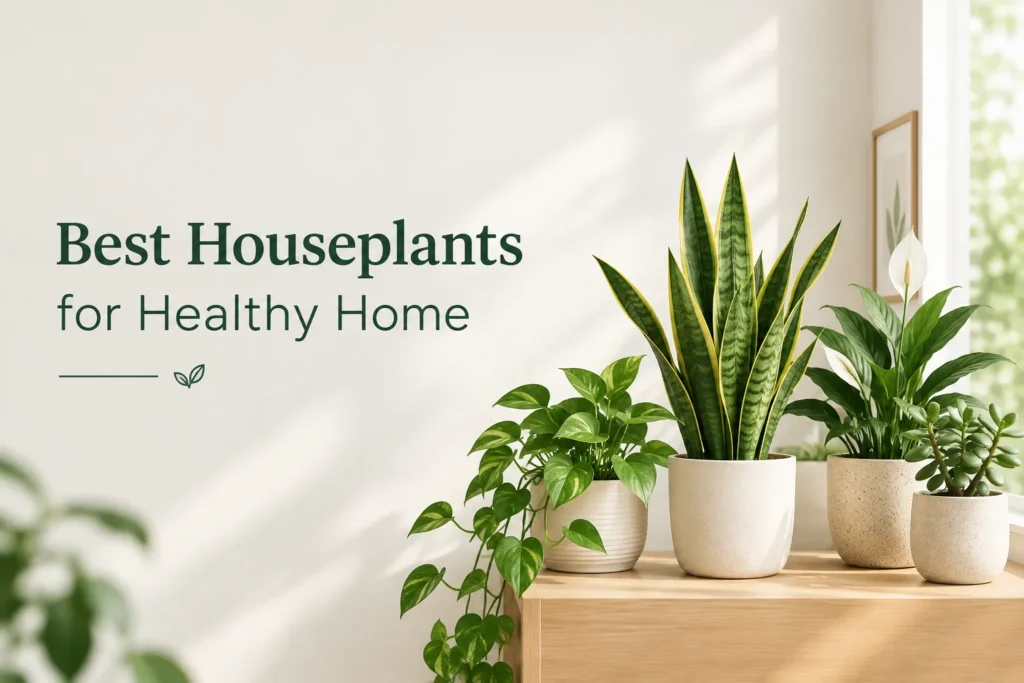
Bringing plants into your home is an easy way to add greenery, improve the look of your space, and create a more relaxing indoor environment. But with hundreds of varieties available, choosing the right plant can feel overwhelming, especially if you are a beginner.
The good news is that you do not need to be an experienced gardener to grow beautiful plants indoors. Many best houseplants are easy to care for and can adapt to different light conditions and indoor spaces.
Whether you live in an apartment, work in an office, or simply want to make your home greener, there are plenty of best indoor plants to choose from.
Here are 10 popular best plants for home, along with their light requirements, watering needs, and maintenance levels.
1. Snake Plant
The Snake Plant is one of the most popular indoor plants for beginners. Its tall, upright leaves make it an attractive choice for bedrooms, living rooms, offices, and corners with limited space.
It is also known for being highly tolerant of neglect, making it a great choice for people with busy schedules.
Light: Low to bright indirect light
Watering: Water when the soil has dried out
Maintenance: Very low
If you often forget to water your plants, the Snake Plant can be a good starting point.
2. Money Plant / Pothos
Money Plant, commonly known as Pothos, is a popular indoor plant because it grows easily and adapts to different indoor conditions. Its trailing vines can be placed on shelves, tables, or hanging planters.
It is one of the most useful easy-care houseplants for beginners.
Light: Low to bright indirect light
Watering: Water when the top layer of soil becomes dry
Maintenance: Low
Regular trimming can help keep the plant compact and encourage fuller growth.
3. Peace Lily
Peace Lily is valued for its attractive green leaves and white flowers. It can add a fresh, elegant look to living rooms, bedrooms, and workspaces.
It generally prefers consistent moisture and indirect light.
Light: Bright, indirect light; can tolerate lower light
Watering: Water when the soil begins to dry
Maintenance: Moderate
Drooping leaves can be a sign that the plant needs water, although other issues can also cause drooping.
4. Spider Plant
Spider Plant is another excellent option for people looking for best houseplants for beginners. It produces long, arching leaves and can develop small plantlets that grow from its stems.
It works well in hanging baskets and on shelves.
Light: Bright, indirect light
Watering: Water when the top layer of soil dries
Maintenance: Low
Avoid keeping it in harsh, direct sunlight for long periods because this can damage its leaves.
5. ZZ Plant
The ZZ Plant is a strong choice for homes and offices where plant care may not happen regularly. Its glossy leaves and upright growth give it a clean, modern appearance.
It is particularly suitable for people searching for low-maintenance indoor plants.
Light: Low to bright indirect light
Watering: Allow the soil to dry between watering
Maintenance: Very low
Overwatering is one of the main things to avoid with ZZ Plants.
6. Rubber Plant
Rubber Plant is a striking houseplant with large, glossy leaves. It can become a focal point in a living room or spacious indoor area.
It prefers good indirect light and can grow well when given suitable conditions.
Light: Bright, indirect light
Watering: Water when the upper layer of soil dries
Maintenance: Moderate
Wiping the leaves occasionally can help remove dust and keep them looking clean.
7. Areca Palm
Areca Palm can bring a tropical feel to your home. Its long, arching fronds work particularly well in living rooms, balconies with suitable conditions, and larger indoor spaces.
It generally prefers bright, indirect light and more consistent watering than drought-tolerant plants.
Light: Bright, indirect light
Watering: Keep the soil lightly moist but avoid waterlogging
Maintenance: Moderate
Give the plant enough room to spread its fronds as it grows.
8. Aloe Vera
Aloe Vera is a useful choice for sunny homes. Its thick, fleshy leaves store water, allowing it to tolerate periods of dry soil.
It is especially suitable for windowsills and areas that receive plenty of natural light.
Light: Bright light, including some direct sunlight
Watering: Allow the soil to dry well between watering
Maintenance: Low
Use a well-draining pot and avoid keeping the roots in standing water.
9. Jade Plant
Jade Plant is a compact succulent with thick leaves and woody stems. It can be a good decorative option for desks, shelves, and sunny windows.
Like other succulents, it does not require frequent watering.
Light: Bright light
Watering: Allow the soil to dry between watering
Maintenance: Low
Good drainage is important because consistently wet soil can cause root problems.
10. English Ivy
English Ivy is a trailing plant that can create a beautiful cascading effect when grown in hanging baskets or placed on shelves.
It prefers good light and appropriate humidity, but it may require more attention than some of the other plants on this list.
Light: Bright, indirect light
Watering: Keep the soil moderately moist, allowing the surface to dry slightly
Maintenance: Moderate
Frequently Asked Questions
What is the best houseplant for beginners?
Snake Plant, Pothos, Spider Plant, and ZZ Plant are among the easiest options for beginners because they can tolerate a range of indoor conditions and generally require simple care.
Which houseplant needs the least care?
Snake Plant and ZZ Plant are excellent choices when you want a plant that requires relatively little maintenance. Both can tolerate periods of dry soil, but they still need appropriate light and proper watering.
Which indoor plant grows fastest?
Growth speed depends on light, temperature, water, nutrients, pot size, and the plant variety. Pothos can grow relatively quickly when provided with suitable growing conditions.
What are the best houseplants for low light?
Snake Plant, ZZ Plant, Pothos, and Peace Lily can tolerate lower-light indoor conditions. However, low light does not mean no light. Plants still need enough light to remain healthy.
How often should houseplants be watered?
There is no single watering schedule that works for every houseplant. Check the soil before watering and consider the plant’s species, light, temperature, pot, and season. Overwatering can be just as harmful as underwatering.
Conclusion
Choosing the right houseplant can make indoor gardening easier and more enjoyable. From the low-maintenance Snake Plant and ZZ Plant to the tropical Areca Palm and decorative Rubber Plant, there is a plant for almost every indoor space and experience level.
Start by understanding your home’s light conditions, available space, and your preferred level of maintenance. Then choose a plant that fits those conditions.
With the right plant and consistent care, you can create a greener, more welcoming home.