
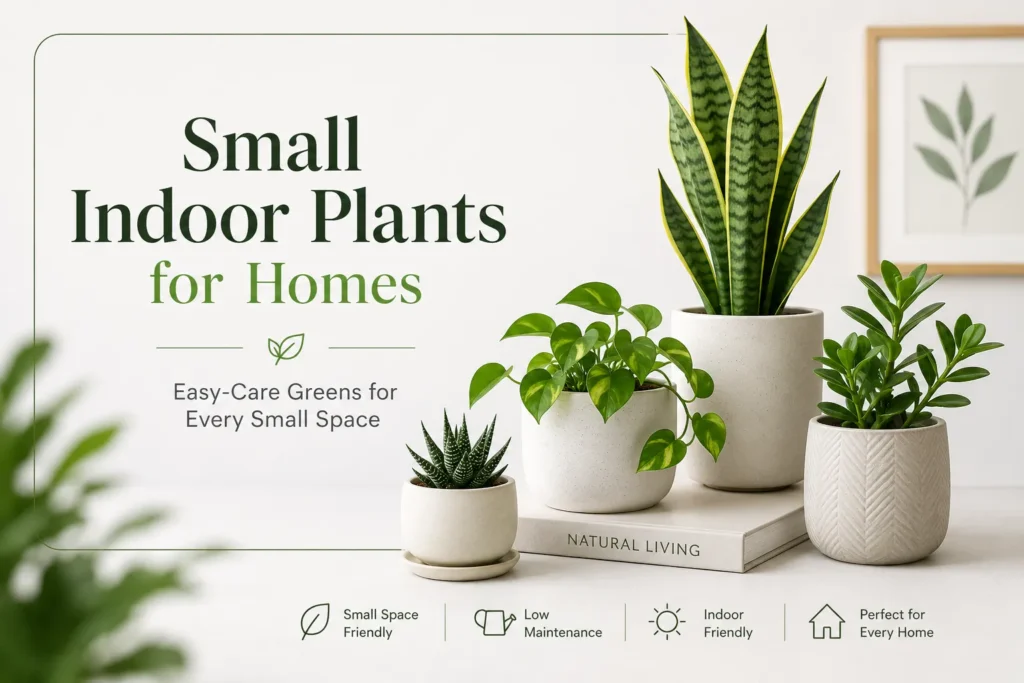
Small indoor plants are perfect for compact homes. They add greenery without taking much space. They also make rooms feel fresh and welcoming. Whether you live in an apartment or a small house, the right plant can transform your space.
Choosing small indoor plants for homes depends on several factors. Consider the plant’s size and maintenance needs first. Light requirements are also very important. You should also consider growth patterns and placement options.
Some plants grow upright and stay compact. Others trail from shelves or hanging pots. Some plants also climb walls and supports. This makes them useful for small rooms.
If you choose carefully, plants can improve your home decor. They can also make unused spaces more attractive. Let’s explore the best options for compact homes.
Low-Maintenance Small Indoor Plants
Low-maintenance plants are ideal for beginners. They need less attention and care. Many also tolerate changing indoor conditions. These plants work well for busy homeowners.
Snake Plant
Snake plants are excellent small house indoor plants. Compact varieties fit easily into corners. They also work well on small stands.
Snake plants need very little water. They can tolerate low-light conditions too. This makes them suitable for bedrooms and corners.
Choose dwarf varieties for smaller spaces. Their upright growth also saves floor space. Avoid watering them too frequently.
ZZ Plant
ZZ plants are extremely easy to maintain. They can handle low-light indoor conditions. They also tolerate periods without water.
Their glossy leaves add a decorative touch. Compact varieties work well in apartments. Place them on stands or shelves.
Water only when the soil dries. Avoid keeping the roots constantly wet. This helps prevent common root problems.
Cast-Iron Plant
The cast-iron plant is very hardy. It handles low-light areas remarkably well. It is also a slow-growing plant.
Its strong foliage adds natural texture. It works nicely in quiet corners. It is also suitable for beginner plant owners.
Give it well-draining soil. Water when the upper soil dries. Avoid placing it in harsh sunlight.
Pothos
Pothos is one of the easiest plants. It adapts to different indoor conditions. It also offers several styling possibilities.
You can train pothos to climb. You can also allow its stems to trail. Hanging baskets work especially well.
Place pothos near bright indirect light. It can also tolerate lower light. However, growth may become slower there.
Trailing and Climbing Plants
Trailing plants are excellent for small homes. They use vertical space instead of floors. They also create beautiful decorative displays.
String of Pearls
String of Pearls has unique bead-like foliage. Its trailing growth looks beautiful in hanging pots. It is perfect for compact spaces.
This plant prefers bright indirect light. It also needs well-draining soil. Allow the soil to dry between watering.
Avoid excessive moisture around its roots. Too much water can cause problems. A pot with drainage is essential.
Arrowhead Vine
Arrowhead vine has attractive arrow-shaped leaves. It works beautifully on shelves. Its stems can trail naturally.
You can also provide climbing support. This creates a vertical green display. It is useful in small rooms.
Give it bright indirect light. Keep the soil lightly moist. Avoid keeping the roots waterlogged.
Hoya
Hoya is another decorative trailing plant. Its thick leaves add visual interest. It works especially well in hanging displays.
Hoyas generally prefer bright indirect light. Let the soil dry slightly between watering. Avoid placing them in constantly wet soil.
Tradescantia
Tradescantia is known for colorful foliage. Some varieties have purple or striped leaves. They can quickly brighten dull spaces.
Their fast-growing stems work well in hanging pots. They can also trail from shelves. Regular trimming helps maintain their shape.
Foliage and Ferns
Foliage plants add texture to interiors. Many are suitable for shelves and desks. They can also work well in humid rooms.
Spider Plant
Spider plants are beginner-friendly choices. They produce small baby plants naturally. These babies can create a fuller display.
They work well on shelves and stands. They also adapt to bright indirect light. Avoid strong direct afternoon sunlight.
Philodendron
Philodendrons are easy-care foliage plants. They are suitable for indirect light. Many varieties have attractive heart-shaped leaves.
Compact varieties work well indoors. Place them on shelves or plant stands. Some varieties can also trail beautifully.
Peperomia
Peperomia plants are small and compact. They are ideal for desks and shelves. Their attractive leaves add personality to rooms.
They generally prefer bright indirect light. Allow the soil to dry slightly between watering. Avoid using oversized pots.
Peace Lily
Peace lilies provide attractive white flowers. They can make indoor spaces feel elegant. Compact varieties work well in homes.
They prefer bright indirect light. They also appreciate consistent moisture. However, avoid leaving them in standing water.
Blue Star Fern
Blue Star Fern has soft foliage. Its leaves create a calm appearance. It works particularly well in humid spaces.
Bathrooms can provide suitable conditions. Keep the soil evenly moist. Good humidity can support healthy growth.
Succulents
Succulents are excellent space-saving plants. Most varieties need very little water. They also come in many interesting shapes.
Aloe Vera
Aloe vera is compact and practical. It works well near bright windows. It can also look attractive in kitchens.
Allow the soil to dry between watering. Use a well-draining potting mix. Avoid keeping its roots constantly wet.
Jade Plant
Jade plants have small, attractive leaves. They prefer bright light indoors. Their compact growth suits desks and shelves.
Water only after the soil dries. Avoid frequent watering. A sunny window can support healthy growth.
Haworthia
Haworthia is a compact succulent. It is excellent for desks and shelves. Its unusual leaves create visual interest.
It prefers bright indirect light. Allow the soil to dry completely. Use a small pot with drainage.
Echeveria
Echeveria forms beautiful rosette-shaped foliage. Its compact size suits small containers. It works especially well on windowsills.
Echeveria needs plenty of light. Place it near a bright window. Avoid excessive watering.
Small Statement Plants for Homes
Small spaces can still have statement plants. You do not always need many plants. One larger plant can become a focal point.
Choose a plant with bold foliage. Place it in an empty corner. Keep surrounding furniture visually simple.
Rubber Plant
Rubber plants have bold foliage. They create an attractive focal point. Smaller varieties can work in compact homes.
Place them near bright indirect light. Rotate the pot occasionally for balanced growth. Avoid keeping the soil constantly wet.
Areca Palm
Areca palms create a tropical atmosphere. They work well in larger corners. Their foliage adds softness to interiors.
Choose a size suitable for your room. Give the plant bright indirect light. Maintain consistent but moderate moisture.
Dwarf Fiddle-Leaf Fig
Dwarf fiddle-leaf figs offer decorative foliage. Their vertical growth saves floor space. They can become attractive focal points.
Place them near bright indirect light. Avoid sudden environmental changes. Water when the upper soil dries.
Mini Monstera
Mini monstera has attractive split foliage. Its vertical growth makes it useful. It can add a modern look indoors.
Provide bright indirect light. Give it climbing support when needed. Avoid excessive watering.
Benefits of Small Indoor Plants for Homes
Plants offer more than visual beauty. They can make indoor spaces feel more pleasant. Their benefits also extend to everyday wellbeing.
Air Purification
Some indoor plants can contribute to a fresher-feeling environment. However, houseplants should not replace ventilation. Good airflow remains important indoors.
Plants can still bring natural greenery. They also make rooms feel more connected to nature.
Stress Reduction
Greenery can create a relaxing atmosphere. Looking after plants can become a calming routine. Small plants also make dull spaces feel lively.
A few plants can change the mood. They can make rooms feel softer. This is especially useful in busy homes.
Mental Wellness
Plant care can become a simple daily activity. Watering and checking plants encourages attention. Watching new growth can also feel rewarding.
Plants can create a calming home environment. This can make personal spaces more enjoyable.
Natural Aesthetics
Plants add natural color to rooms. They also introduce texture and shape. Different leaves create different visual effects.
You can use plants with your existing decor. Choose pots that complement your furniture. This creates a more balanced appearance.
Increased Productivity
Greenery can make workspaces feel pleasant. Plants can also make desks more inviting. A small plant can brighten a home office.
Choose compact plants for limited desk space. Jade plants and peperomias work well. Pothos can also trail from shelves.
How to Care for Small Indoor Plants in Homes
Good plant care starts with basic needs. Water, light, and soil are important. Pot size also affects plant health.
Watering
Always check soil moisture first. Do not water plants automatically every day. Different plants have different watering needs.
Succulents need less water than ferns. Peace lilies generally need more consistent moisture. Snake plants prefer their soil to dry.
Always use pots with drainage holes. Avoid letting water collect at the bottom. More water does not mean healthier plants.
Lighting
Light requirements vary between plants. Some plants prefer bright indirect light. Others can tolerate lower-light conditions.
Snake plants and ZZ plants tolerate low light. Echeveria and jade plants need brighter conditions. Peace lilies prefer bright indirect light.
Observe the light in each room. Then choose plants accordingly. This helps plants grow more successfully.
Potting
Choose a pot that matches plant size. Avoid using an oversized container. Excess soil can retain too much moisture.
Always choose pots with drainage holes. Use a suitable potting mix for each plant. Succulents need especially well-draining soil.
Repot plants when roots become crowded. Move them into a slightly larger pot. Avoid making a sudden, large size increase.
Indoor Plant Styling Ideas for Homes
Small homes require smart decorating choices. Vertical displays can save valuable floor space. Elevated plants can also create visual interest.
Vertical Gardens
Vertical gardens make use of wall space. They are useful for small rooms. They can also work on compact balconies.
Arrange several plants at different heights. Choose plants with different leaf shapes. Keep the arrangement balanced.
Hanging Baskets
Hanging baskets save valuable floor space. They are perfect for trailing plants. Pothos, hoya, and string of pearls work well.
Place baskets near suitable windows. Make sure the ceiling support is secure. Avoid blocking walkways with hanging plants.
Wall-Mounted Planters
Wall-mounted planters use empty wall space. They can create beautiful decorative displays. They are especially useful in compact rooms.
Choose lightweight plants for wall planters. Keep watering needs in mind. Protect walls from excess moisture.
Tabletop Grouping
Group several small plants together. Use pots with different heights. This creates a more interesting display.
Avoid placing too many plants together. Leave enough visual space between them. This keeps the arrangement clean.
Floating Shelves
Floating shelves are excellent for small plants. They create vertical interest without using floors. Living rooms and bedrooms can benefit from them.
Place compact plants on different shelves. Use trailing plants on upper levels. Keep shelves strong enough to support the pots.
Window Sills
Window sills are often unused spaces. They are perfect for light-loving plants. Succulents can work particularly well here.
Avoid placing sensitive plants in harsh sunlight. Observe the window’s light conditions first. Then choose suitable plants.
Room-Wise Plant Recommendations
Different rooms offer different growing conditions. Choose plants based on light and humidity. Your lifestyle should also influence your choice.
| Room | Recommended Plants |
| Living Room | Rubber Plant, Pothos, Philodendron |
| Bedroom | Snake Plant, ZZ Plant, Peace Lily |
| Kitchen | Aloe Vera, Spider Plant, Peperomia |
| Home Office | Jade Plant, Haworthia, Pothos |
| Bathroom | Peace Lily, Spider Plant, Ferns |
| Balcony | Succulents, Hoya, String of Pearls |
This approach makes plant selection easier. It also prevents unsuitable placements. Always check each plant’s specific requirements.
How to Choose Indoor Plants for a Small Home
Choosing the right plant starts with your space. Think about your room, light, and lifestyle. Then select plants that fit naturally.
Consider Available Space
Measure your available plant space first. Choose compact or vertical-growing varieties. Avoid plants that quickly outgrow their location.
Shelves work well for small plants. Hanging baskets are useful for trailing plants. Corners can accommodate taller statement plants.
Check Natural Light
Observe how much sunlight enters each room. Identify bright, medium, and low-light areas. Then match plants with those conditions.
This simple step can prevent many problems. Plants placed in unsuitable light may struggle. Choosing the right plant makes care easier.
Consider Maintenance
Beginners should start with easy-care plants. Snake plants and ZZ plants are good options. Succulents can also work well for busy owners.
Consider how often you can water plants. Also consider your travel and work schedule. Choose plants that match your routine.
Think About Growth Pattern
Plant growth pattern matters in small homes. Upright plants save horizontal space. Trailing plants work well on shelves.
Climbing plants can use vertical supports. Compact plants are ideal for desks. Choose the growth style that suits your room.
Match Plants With Your Decor
Plants should complement your existing decor. Consider the pot style and plant color. Leaf shape can also influence the overall appearance.
For modern rooms, choose clean and simple pots. For natural interiors, use earthy textures. Match plants with your furniture and room aesthetics.
Conclusion
Small indoor plants can transform compact homes. They add greenery without requiring much space. The right plant can also improve your interior styling.
Start by checking your available space. Then consider light and maintenance requirements. Finally, choose plants that match your decor.
Snake plants, ZZ plants, pothos, peperomias, and succulents are excellent choices. Trailing plants can make shelves more attractive. Statement plants can also create a strong focal point.
With the right placement and care, even small homes can feel greener. You do not need a large garden to enjoy plants. A few carefully chosen small indoor plants for homes can make a big difference.