
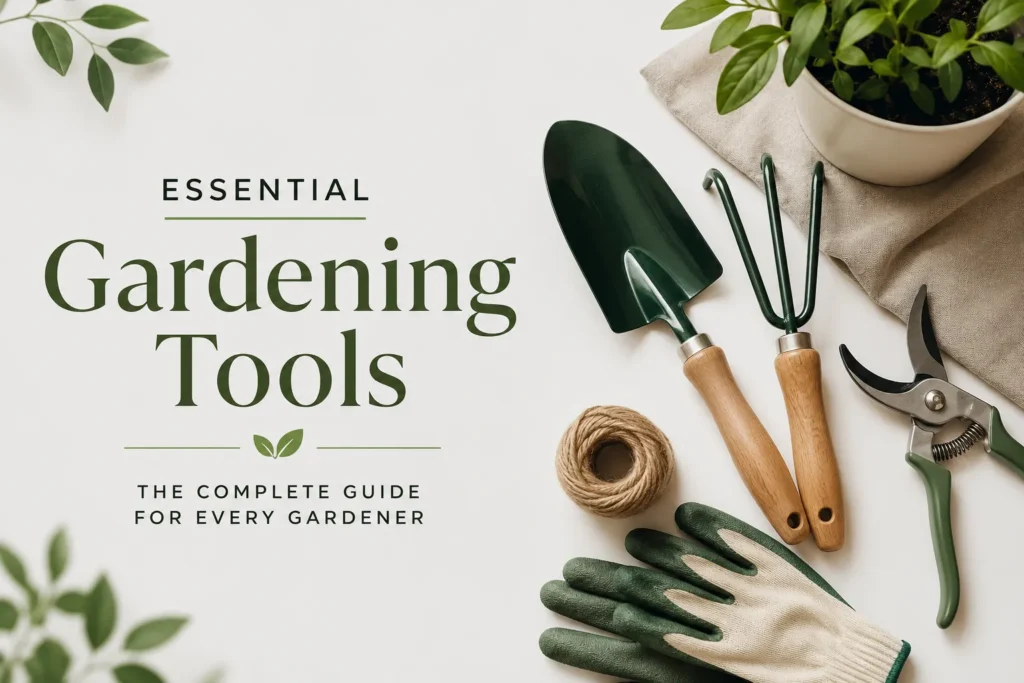
Gardening is one of the most rewarding hobbies you can enjoy. Whether you grow vegetables, flowers, herbs, or indoor plants, the right tools make every gardening task easier. They help you prepare soil, plant seeds, remove weeds, water plants, and maintain a healthy garden with less effort.
Many beginners think they need expensive equipment to start gardening. In reality, a few well-chosen tools are enough to build a productive and beautiful garden. As your gardening skills grow, you can gradually add more specialized tools based on your needs.
This guide covers the essential gardening tools every gardener should know. You’ll learn what each tool does, when to use it, how to choose the right one, and how to keep your tools in excellent condition for years.
Why Every Gardener Needs the Right Tools
Using the right gardening tools is more than a matter of convenience. Proper tools improve your gardening experience and help your plants thrive. They reduce physical strain, save time, and make everyday tasks much more efficient.
Quality tools also help protect your plants. Sharp pruning shears make clean cuts that heal quickly, while the right digging tools reduce root damage during planting or transplanting. Using the wrong tool can injure plants and make gardening harder than it needs to be.
Good gardening tools are also a smart long-term investment. Durable tools made from stainless steel or forged metal can last for many years with proper care. Instead of replacing cheap tools every season, you can rely on quality equipment that performs consistently.
Another advantage is safety. Ergonomic handles, balanced designs, and well-built tools provide better control and reduce the risk of injuries. Whether you have a small balcony garden or a large backyard, having the right equipment allows you to work comfortably and confidently.
In the following sections, we’ll explore the different categories of gardening tools and explain how each one contributes to successful gardening.
Small Hand Gardening Tools
Small hand gardening tools are the foundation of every successful garden. They are lightweight, easy to use, and perfect for everyday tasks like planting, weeding, pruning, and maintaining flower beds or containers. Whether you have a balcony garden, indoor plants, or a large backyard, these tools help you work with precision and care.
Investing in a few high-quality hand tools can make gardening more enjoyable while reducing effort and improving plant health. Below are the must-have small hand gardening tools every gardener should know.
Hand Trowel (Khurpi)
A hand trowel, also known as a khurpi in many regions, is one of the most essential gardening tools. It features a small scoop-shaped metal blade attached to a comfortable handle, making it ideal for digging and planting in small spaces.
Gardeners commonly use a hand trowel to transplant seedlings, plant flowers, remove weeds, and mix compost into the soil. It is especially useful for container gardening, raised beds, and indoor plant care where larger tools are impractical.
When buying a hand trowel, choose one made from stainless steel or forged steel to prevent rust and ensure durability. A non-slip ergonomic handle provides a comfortable grip and reduces hand fatigue during extended gardening sessions.
Best for:
- Planting seedlings
- Digging small holes
- Transplanting plants
- Container gardening
- Mixing compost
Pro Tip: Choose a trowel with engraved depth markings to plant bulbs and seedlings at the correct depth.
Hand Cultivator (Garden Fork)
A hand cultivator, often called a hand garden fork, is designed with three or four sturdy prongs. It loosens compacted soil, improves aeration, and mixes organic matter into the ground.
Healthy soil needs proper airflow and drainage for strong root development. A hand cultivator breaks up hard soil without disturbing nearby plants, making it an excellent tool for maintaining flower beds and vegetable gardens.
It is also highly effective for removing shallow-rooted weeds before they spread throughout your garden.
Best for:
- Loosening compact soil
- Soil aeration
- Mixing compost
- Removing small weeds
- Preparing planting beds
Buying Tip: Look for forged steel prongs that resist bending when working in heavy soil.
Pruning Shears (Secateurs)
Pruning shears, also called secateurs, are essential for keeping plants healthy and attractive. They create clean cuts on stems and branches, helping plants heal quickly and encouraging fresh growth.
Regular pruning removes dead, diseased, or damaged branches before they affect the rest of the plant. It also improves airflow and sunlight penetration, reducing the risk of fungal diseases.
There are two common types of pruning shears. Bypass pruners make clean cuts on living stems, while anvil pruners work best for dry or dead branches.
Best for:
- Trimming shrubs
- Cutting flowers
- Harvesting fruits
- Removing dead branches
- Shaping ornamental plants
Pro Tip: Clean and disinfect pruning shears after trimming diseased plants to prevent the spread of infections.
Gardening Scissors (Snips)
Gardening scissors, or snips, are lightweight cutting tools designed for delicate gardening tasks. Their sharp, narrow blades allow precise trimming without damaging surrounding foliage.
They are commonly used for harvesting herbs, deadheading flowers, trimming indoor plants, and shaping bonsai. Unlike larger pruning shears, snips provide better control when working with small stems and soft growth.
A pair of high-quality gardening scissors is a must-have for indoor plant enthusiasts and herb gardeners.
Best for:
- Harvesting herbs
- Trimming flowers
- Indoor plant maintenance
- Bonsai care
- Precision pruning
Buying Tip: Choose stainless steel blades that stay sharp longer and resist corrosion.
Hand Weeder
Weeds compete with your plants for water, nutrients, and sunlight. A hand weeder helps remove unwanted plants from the soil while pulling out their roots, reducing the chance of regrowth.
This tool features a narrow, forked blade that easily slides under weeds and lifts them from the soil with minimal disturbance to nearby plants.
Using a hand weeder regularly keeps your garden neat and healthy while reducing the need for chemical herbicides.
Best for:
- Removing weeds
- Uprooting taproots
- Cleaning flower beds
- Vegetable gardens
- Lawn edges
Pro Tip: Weed after watering or rainfall when the soil is soft. This makes root removal much easier.
Hori Hori Knife
The Hori Hori knife is a versatile Japanese gardening tool known for its strength and precision. It combines the functions of a knife, trowel, saw, and measuring tool into a single compact design.
Its serrated edge cuts roots and stems, while the pointed blade digs planting holes and removes stubborn weeds. Many Hori Hori knives include depth measurements on the blade, making planting more accurate.
Because of its versatility, many experienced gardeners consider it an all-in-one gardening tool.
Best for:
- Digging
- Cutting roots
- Harvesting vegetables
- Dividing perennials
- Removing weeds
Buying Tip: Select a full-tang stainless steel blade with a protective sheath for durability and safe storage.
Japanese Weeding Sickle
A Japanese weeding sickle is designed to remove weeds quickly and efficiently. Its curved, razor-sharp blade glides just beneath the soil surface, cutting weeds before they mature.
Unlike pulling weeds by hand, this tool allows you to clear large planting beds with less physical effort. It is especially useful in vegetable gardens where weeds grow between rows of crops.
Its lightweight design makes it comfortable to use for extended periods.
Best for:
- Surface weed removal
- Vegetable gardens
- Garden pathways
- Flower beds
- Between planting rows
Pro Tip: Keep the blade sharp for cleaner cuts and more efficient weeding.
Dibbler
A dibbler is a simple yet valuable planting tool that creates uniform holes for seeds, bulbs, and seedlings. Consistent planting depth improves seed germination and encourages healthy root development.
Gardeners often use a dibbler when planting vegetables, annual flowers, or spring bulbs. Some models include measurement markings for greater planting accuracy.
Although basic in design, it saves considerable time during planting season.
Best for:
- Planting seeds
- Planting bulbs
- Transplanting seedlings
- Vegetable gardening
- Flower gardens
Buying Tip: Wooden or stainless steel dibblers with measurement markings offer the best durability and accuracy.
Soil Block Maker
A soil block maker is an eco-friendly tool used to create compact soil cubes for starting seeds. Instead of using plastic seed trays or pots, gardeners press moist potting mix into solid blocks that support healthy seedling growth.
Soil blocks encourage air pruning, which produces stronger root systems and reduces transplant shock when moving seedlings into the garden.
This method is popular among organic gardeners because it minimizes plastic waste and promotes sustainable gardening practices.
Best for:
- Seed starting
- Organic gardening
- Vegetable seedlings
- Flower seedlings
- Sustainable gardening
Pro Tip: Use a high-quality seed-starting mix that holds its shape while allowing proper drainage.
Tomato and Grape Shears
Tomato and grape shears are specially designed for harvesting delicate fruits without bruising or damaging the plant. Their small, pointed blades make precise cuts, allowing fruits to remain fresh and attractive after harvest.
These shears are also useful for harvesting peppers, herbs, and other soft fruits where careful handling is important.
If you grow edible plants, these specialized shears make harvesting faster and more efficient.
Best for:
- Harvesting tomatoes
- Picking grapes
- Harvesting peppers
- Collecting herbs
- Soft fruit harvesting
Buying Tip: Choose spring-loaded shears with stainless steel blades for smooth cutting and long-lasting performance.
Choosing the Right Hand Gardening Tools
Not every gardener needs every tool. Start with the essentials based on your gardening style and expand your collection as your garden grows.
For beginners, these five tools are enough to handle most daily gardening tasks:
- Hand Trowel
- Hand Cultivator
- Pruning Shears
- Gardening Gloves
- Hand Weeder
As you gain experience, you can add specialized tools like a Hori Hori knife, soil block maker, or Japanese weeding sickle to improve efficiency and tackle more advanced gardening projects.
Standing Gardening Tools
Standing gardening tools are designed for larger gardening tasks that require more power and reach than hand tools. These long-handled tools reduce bending and kneeling, making gardening more comfortable while helping you work faster. They are ideal for preparing soil, removing weeds, planting, and transporting materials around the garden.
Whether you have a vegetable patch, flower garden, or spacious backyard, standing tools are essential for maintaining healthy soil and keeping your garden productive throughout the year.
Hoe (Stirrup Hoe and Draw Hoe)
A hoe is one of the oldest and most useful gardening tools. It is mainly used to remove weeds, loosen the soil, and prepare planting rows. Regular hoeing also improves soil aeration and helps rainwater reach plant roots more effectively.
There are different types of hoes for different tasks. A draw hoe is perfect for digging and shaping soil, while a stirrup hoe is designed to cut weeds just below the soil surface with minimal effort.
Using a hoe regularly reduces weed growth before weeds become established, making garden maintenance much easier.
Best for:
- Removing weeds
- Loosening soil
- Creating planting rows
- Breaking surface crust
- Vegetable gardens
Buying Tip: Choose a hoe with a sturdy hardwood or fiberglass handle and a forged steel blade for better durability.
Garden Rake (Metal and Leveling Rake)
A garden rake is essential for preparing smooth planting beds. It removes stones, leaves, sticks, and other debris while leveling the soil before planting seeds or laying grass.
Metal rakes are stronger and suitable for heavier tasks such as breaking soil clumps and spreading mulch. Leveling rakes have wider heads that create a flat and even soil surface, improving seed germination.
Keeping your garden beds level also helps distribute water evenly during irrigation.
Best for:
- Leveling soil
- Removing debris
- Spreading compost
- Preparing seedbeds
- Lawn maintenance
Pro Tip: Rake the soil after adding compost to distribute nutrients evenly across the planting area.
Shovel and Spade
Although many people use these names interchangeably, a shovel and a spade serve different purposes.
A shovel has a curved blade with a pointed tip. It is designed for digging, scooping soil, moving compost, gravel, or mulch, and transferring loose materials.
A spade has a flat, straight blade with squared edges. It is ideal for cutting through turf, creating clean garden edges, dividing perennials, and transplanting shrubs or small trees.
Having both tools allows you to tackle a wider range of gardening tasks efficiently.
| Shovel | Spade |
| Curved blade | Flat blade |
| Scooping materials | Precise digging |
| Moving soil | Edging and transplanting |
| Deep digging | Cutting roots |
Best for:
- Digging planting holes
- Moving compost
- Edging lawns
- Transplanting plants
- Soil preparation
Buying Tip: Choose a steel blade with a comfortable D-shaped handle for improved control and reduced strain.
Mattock (Pickaxe)
A mattock is a heavy-duty gardening tool designed for breaking compacted soil, cutting through roots, and removing rocks. It combines the features of an axe and a hoe, making it highly effective in difficult ground conditions.
If your garden has clay soil, rocky terrain, or neglected land, a mattock can save hours of manual digging. It is also useful when preparing new garden beds or planting trees.
Because of its weight and power, always use a mattock with controlled swings and proper safety gear.
Best for:
- Breaking hard soil
- Removing tree roots
- Digging new beds
- Rocky gardens
- Land preparation
Pro Tip: Wear sturdy boots and gloves when using heavy digging tools to improve safety.
Broadfork
A broadfork is a manual soil-aerating tool with several long steel tines and two handles. Unlike a rototiller, it loosens deep soil without disturbing the natural soil layers or beneficial microorganisms.
Organic gardeners often prefer a broadfork because it improves drainage, encourages earthworm activity, and supports healthier root growth without excessive soil disruption.
It works especially well in raised beds and vegetable gardens where maintaining soil structure is important.
Best for:
- Deep soil aeration
- Organic gardening
- Raised beds
- Improving drainage
- Reducing soil compaction
Buying Tip: Choose a broadfork with strong welded tines and hardwood handles for long-term durability.
Seeder
A garden seeder simplifies planting by placing seeds at consistent depths and spacing. This improves germination rates and reduces the need for thinning seedlings later.
Manual seeders are ideal for home vegetable gardens, while larger push seeders are suitable for bigger plots. Many models allow you to adjust planting depth based on the type of seed.
Using a seeder saves time and produces straighter planting rows.
Best for:
- Vegetable gardens
- Flower gardens
- Large planting areas
- Row planting
- Seed spacing
Pro Tip: Read the seed packet instructions before adjusting your seeder for the correct planting depth.
Wheelbarrow and Garden Cart
Transporting soil, compost, mulch, plants, and gardening supplies becomes much easier with a wheelbarrow or garden cart. Instead of carrying heavy loads by hand, these tools reduce physical strain and improve efficiency.
A wheelbarrow typically has one or two wheels and is excellent for uneven garden terrain. Garden carts usually feature four wheels, making them more stable when transporting heavier loads over flat surfaces.
Choosing the right transport tool depends on the size and layout of your garden.
Best for:
- Moving soil
- Carrying mulch
- Transporting compost
- Moving plants
- Garden cleanup
Buying Tip: Pneumatic tires provide better stability on rough ground, while solid tires require less maintenance.
Pitchfork
A pitchfork features several long, pointed tines designed for lifting and moving lightweight organic materials. It is commonly used for turning compost piles, spreading mulch, and handling straw or hay.
Turning compost regularly introduces oxygen into the pile, helping organic matter decompose faster and producing nutrient-rich compost for your garden.
A pitchfork also works well for loosening mulch without disturbing nearby plants.
Best for:
- Turning compost
- Moving mulch
- Handling straw
- Spreading organic matter
- Garden cleanup
Pro Tip: Turn your compost every one to two weeks to improve airflow and speed up decomposition.
Choosing the Right Standing Gardening Tools
The tools you need depend on your garden’s size and the type of work you do most often. Beginners don’t need to buy every tool at once. Start with versatile tools that handle a wide range of tasks, then expand your collection as your gardening experience grows.
For most home gardens, these essential standing tools provide everything needed for regular maintenance:
- Hoe
- Garden Rake
- Shovel
- Spade
- Wheelbarrow
If you have a larger vegetable garden or frequently prepare new planting beds, adding a broadfork, seeder, and mattock can make gardening more efficient while reducing physical effort.
Power Gardening Tools
Power gardening tools are designed to handle large or labor-intensive gardening tasks with greater speed and efficiency. While hand tools are enough for small gardens, power tools become valuable when maintaining large lawns, preparing extensive planting areas, or managing heavy soil.
These machines reduce physical effort, save time, and improve productivity. However, they also require regular maintenance and should be chosen based on your garden’s size and specific needs.
Let’s explore the most common power gardening tools and where they are most useful.
Garden Tractor
A garden tractor is a powerful machine built for maintaining large gardens, landscapes, orchards, and small farms. Unlike a standard lawn mower, it can handle a variety of attachments, making it one of the most versatile gardening machines.
Depending on the model, a garden tractor can mow grass, pull trailers, spread fertilizer, remove snow, and cultivate soil. It is an excellent investment for gardeners with large properties who regularly perform multiple maintenance tasks.
Although it has a higher upfront cost, its versatility can save significant time and effort over the years.
Best for:
- Large gardens
- Orchards
- Estate landscaping
- Pulling garden trailers
- Multi-purpose garden maintenance
Buying Tip: Consider the engine power, attachment compatibility, and turning radius before purchasing.
Lawn Mower
A lawn mower is one of the most commonly used power gardening tools. It keeps grass healthy by maintaining a consistent cutting height, improving the overall appearance of your lawn.
There are several types of lawn mowers available, including manual reel mowers, electric mowers, battery-powered models, and petrol-powered machines. The right choice depends on the size of your lawn and your maintenance preferences.
Regular mowing encourages thicker grass growth while helping prevent weeds from taking over.
Types of Lawn Mowers
- Push mower
- Self-propelled mower
- Cordless battery mower
- Electric mower
- Petrol mower
- Riding mower
Best for:
- Lawn maintenance
- Residential gardens
- Public landscapes
- Sports fields
- Parks
Pro Tip: Never remove more than one-third of the grass blade in a single mowing session. This keeps your lawn healthier and reduces stress on the grass.
Walk-Behind Two-Wheel Tractor
A walk-behind two-wheel tractor is a compact but highly versatile machine designed for medium-sized gardens and small farms. The operator walks behind the machine while controlling its direction and attachments.
It can perform several tasks, including tilling, plowing, mowing, planting, and hauling small loads. Because it accepts interchangeable attachments, it offers excellent value for gardeners who need multiple functions without purchasing several machines.
It is particularly popular among organic farmers and serious home gardeners.
Best for:
- Medium-sized gardens
- Vegetable farms
- Soil preparation
- Multiple garden tasks
- Sustainable farming
Buying Tip: Choose a model with easily interchangeable attachments to maximize its usefulness throughout the year.
Garden Tiller
A garden tiller is used to loosen compacted soil and prepare planting beds before sowing seeds or transplanting plants. It breaks large soil clumps into finer particles, making it easier for roots to spread and absorb nutrients.
Tillers are especially useful when starting a new vegetable garden or incorporating compost and organic matter into the soil. They significantly reduce the time and effort required compared to manual digging.
However, excessive tilling can damage beneficial soil organisms, so it should only be used when necessary.
Types of Tillers
- Front-tine tiller
- Rear-tine tiller
- Mini cultivator
- Electric tiller
- Petrol tiller
Best for:
- Preparing new garden beds
- Mixing compost
- Breaking hard soil
- Vegetable gardens
- Seasonal soil preparation
Pro Tip: Till only when the soil is slightly moist. Wet soil becomes compacted, while overly dry soil is difficult to break apart.
Rotary Plow
A rotary plow is a specialized attachment or machine designed for deep soil cultivation. Its rotating blades dig into the ground, turning and loosening the soil while improving drainage and root penetration.
Unlike standard tillers that mainly work near the surface, rotary plows can cultivate deeper layers of soil. They are often used in commercial farming, orchards, and large vegetable gardens where deep cultivation is necessary.
Because of their power and size, rotary plows are generally not required for small home gardens.
Best for:
- Deep soil cultivation
- Commercial gardening
- Orchards
- Large vegetable farms
- Preparing heavy soils
Buying Tip: Match the plow size to your tractor or power unit to ensure safe and efficient operation.
Safety Tips for Using Power Gardening Tools
Power tools make gardening easier, but they should always be used responsibly. Following basic safety practices helps prevent accidents and extends the life of your equipment.
- Read the manufacturer’s instructions before use.
- Wear safety gloves, sturdy footwear, and eye protection.
- Keep children and pets away while operating machines.
- Inspect blades and moving parts before each use.
- Turn off the engine before cleaning or making adjustments.
- Store machines in a clean, dry, and secure location.
Proper maintenance not only improves safety but also keeps your equipment performing at its best.
How to Choose the Right Power Gardening Tools
Not every gardener needs powered equipment. Before investing in a machine, consider these important factors:
Garden Size
Small gardens usually require only hand tools. Medium to large gardens benefit more from power equipment.
Soil Type
Heavy clay or compacted soil often requires a tiller or rotary plow for effective preparation.
Frequency of Use
If you garden regularly throughout the year, investing in durable, high-quality equipment offers better long-term value.
Budget
Power gardening tools can be expensive. Start with essential machines and add specialized equipment as your gardening needs grow.
Maintenance Requirements
Choose equipment that you can comfortably maintain. Battery-powered tools often require less maintenance than petrol-powered machines.
Quick Recommendations
| Garden Size | Recommended Power Tools |
| Balcony or Indoor Garden | No power tools needed |
| Small Backyard | Electric Lawn Mower, Mini Tiller |
| Medium Garden | Lawn Mower, Garden Tiller |
| Large Garden | Garden Tractor, Walk-Behind Tractor |
| Farm or Orchard | Garden Tractor, Rotary Plow, Walk-Behind Tractor |
Choosing the right power gardening tools helps you complete demanding tasks with less effort while improving the overall health and appearance of your garden. Select equipment based on your garden’s size, maintenance needs, and long-term gardening goals.
Watering and Plant Care Tools
Watering is one of the most important parts of gardening. Plants need the right amount of water to grow healthy roots, produce flowers, and develop strong foliage. Too little water can cause plants to wilt, while too much water may lead to root rot and fungal diseases.
Using the right watering and plant care tools helps you deliver water efficiently, reduce waste, and maintain healthier plants. Whether you care for indoor plants, balcony gardens, or large landscapes, these tools make watering easier and more effective.
Watering Can
A watering can is a simple but essential gardening tool. It is perfect for watering seedlings, potted plants, hanging baskets, and indoor plants where gentle watering is necessary.
Most watering cans have a removable rose (sprinkler head) that distributes water evenly, preventing soil erosion and protecting delicate plants. They are available in plastic, galvanized steel, and stainless steel designs.
Plastic watering cans are lightweight and affordable, while metal watering cans are more durable and long-lasting.
Best for:
- Indoor plants
- Seedlings
- Hanging baskets
- Balcony gardens
- Small flower beds
Buying Tip: Choose a watering can with a long spout for better control and easier watering around dense foliage.
Spray Bottle and Pressure Sprayer
Spray bottles and pressure sprayers are designed to apply a fine mist or controlled spray to plants. They are commonly used for misting tropical houseplants, applying liquid fertilizers, and spraying organic pesticides.
A handheld spray bottle is ideal for indoor plants that prefer higher humidity, such as ferns, orchids, and calatheas. Larger pressure sprayers are better suited for outdoor gardens where you need to cover a wider area.
Using a sprayer ensures even application while minimizing waste.
Best for:
- Misting indoor plants
- Applying fertilizers
- Organic pest control
- Leaf cleaning
- Disease prevention
Pro Tip: Always clean your sprayer thoroughly after using fertilizers or pesticides to prevent residue buildup.
Garden Hose and Accessories
A garden hose is one of the fastest and most convenient ways to water larger gardens. Modern hoses can be paired with various accessories, including adjustable spray nozzles, sprinklers, hose reels, and quick connectors.
Different spray settings allow you to switch between a gentle shower for flowers and a stronger stream for cleaning garden paths or watering shrubs.
Choosing the correct hose length and material improves durability and makes watering more convenient.
Common Hose Accessories
- Adjustable spray nozzle
- Hose reel
- Quick connectors
- Hose splitter
- Oscillating sprinkler
- Soaker hose
Best for:
- Large gardens
- Lawns
- Flower beds
- Shrubs
- Garden cleaning
Buying Tip: Select a kink-resistant hose with UV protection for a longer lifespan.
Drip Irrigation Kit
A drip irrigation system delivers water slowly and directly to the root zone of plants through small tubes and emitters. This method minimizes water loss due to evaporation and runoff, making it one of the most efficient watering systems available.
Drip irrigation is especially useful during hot weather and water shortages. It also helps reduce weed growth because only the desired plants receive water.
Many modern drip systems include timers that automate watering, saving both time and water.
Benefits of Drip Irrigation
- Conserves water
- Reduces evaporation
- Prevents overwatering
- Encourages healthy root growth
- Saves time through automation
Best for:
- Vegetable gardens
- Raised beds
- Greenhouses
- Container gardens
- Fruit plants
Pro Tip: Check emitters regularly to ensure they are not clogged with dirt or mineral deposits.
Soil Test Kit
Healthy plants begin with healthy soil. A soil test kit helps you understand the condition of your soil by measuring important factors such as pH levels and nutrient availability.
Different plants thrive in different soil conditions. For example, blueberries prefer acidic soil, while many vegetables grow best in slightly acidic to neutral soil. Testing your soil before adding fertilizers prevents unnecessary applications and supports healthier plant growth.
Some advanced kits can also measure moisture levels and light intensity, helping you make better gardening decisions.
What a Soil Test Kit Measures
- Soil pH
- Nitrogen
- Phosphorus
- Potassium
- Moisture
- Light levels (advanced models)
Best for:
- Vegetable gardens
- Flower gardens
- Lawns
- Indoor plants
- Fruit trees
Buying Tip: Digital soil testers provide quick readings, while chemical testing kits often offer more detailed nutrient analysis.
Choosing the Right Watering Tools
Every garden has different watering needs. The best tools depend on the size of your garden, the types of plants you grow, and how much time you can spend maintaining them.
For indoor plants, a watering can and spray bottle are usually enough. They allow precise watering and help maintain humidity for tropical plants.
For balcony and container gardens, combine a watering can with a small hose or drip irrigation kit to make watering more efficient.
For large home gardens, a garden hose with adjustable nozzles and sprinklers provides excellent coverage. Adding a drip irrigation system can further reduce water usage while keeping plants consistently hydrated.
If you are serious about plant health, a soil test kit is a valuable investment. Understanding your soil helps you apply the right nutrients and avoid common problems caused by incorrect pH or nutrient imbalances.
Watering Best Practices
Using the right tools is only part of successful watering. Following good watering habits helps plants stay healthy throughout the growing season.
- Water early in the morning to reduce evaporation.
- Water deeply rather than frequently to encourage strong root growth.
- Check soil moisture before watering.
- Avoid wetting leaves late in the evening to reduce fungal diseases.
- Adjust watering based on weather conditions and seasonal changes.
- Regularly inspect irrigation equipment for leaks or blockages.
Proper watering, combined with the right tools, promotes stronger roots, healthier foliage, and more productive plants while conserving water and reducing maintenance.
Conclusion
The right gardening tools can make every task easier, faster, and more enjoyable. From planting seeds and pruning branches to watering plants and preparing the soil, each tool plays an important role in creating a healthy and thriving garden. Whether you’re just starting with a few indoor plants or managing a large backyard, investing in quality tools helps you work more efficiently and care for your plants with confidence.
You don’t need to buy every gardening tool at once. Begin with the essentials, such as a hand trowel, pruning shears, watering can, garden rake, and shovel. As your garden grows, you can gradually add specialized tools like a broadfork, drip irrigation system, or garden tiller based on your gardening needs.
Remember, even the best gardening tools require proper care. Clean them after each use, keep blades sharp, store them in a dry place, and inspect them regularly for damage. Well-maintained tools not only last longer but also make gardening safer and more effective.
With the right equipment and a little practice, you’ll spend less time struggling with garden tasks and more time enjoying healthy plants, colorful flowers, and rewarding harvests. Choose tools that match your garden size, maintain them well, and let them become reliable companions on your gardening journey. Happy gardening!