
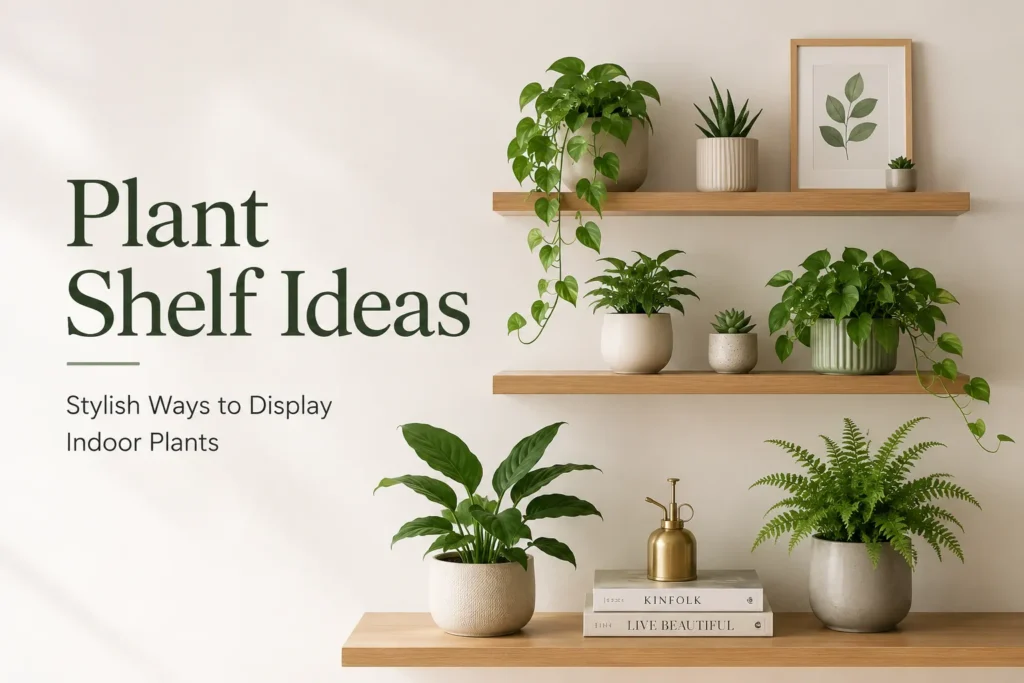
Plant shelves come in many styles, making it easy to find one that matches your home and your indoor garden. The best choice depends on your available space, interior design, lighting conditions, and the number of plants you own. Whether you prefer a modern look or a rustic feel, there is a plant shelf that can transform your space into a beautiful green corner.
Wall-Mounted Plant Shelves
Wall-mounted shelves are one of the most popular ways to display indoor plants. They save floor space while creating an attractive vertical garden. These shelves work well in living rooms, bedrooms, hallways, and even kitchens.
Floating Shelves
Floating shelves offer a clean and modern appearance. Their hidden brackets create a minimal look that keeps the focus on your plants. Install them near a bright window to give your plants enough indirect sunlight. They are ideal for pothos, snake plants, ZZ plants, and small ferns.
Geometric Shelves
Geometric shelves add both style and function. Their unique shapes turn your plant display into wall art while providing space for multiple pots. They pair well with modern and Scandinavian interiors. Mix different plant sizes to create visual interest.
Pipe Shelves
Pipe shelves combine wood with metal pipes to create an industrial look. They are strong enough to hold medium-sized pots and decorative items. These shelves work well in loft apartments and modern homes. They also add a bold character to empty walls.
Corner Shelves
Corners often remain unused in many homes. Corner shelves help you make the most of these spaces while displaying several plants without taking up valuable floor area. They are perfect for small apartments where every inch matters.
Cubby Shelves
Cubby shelves contain multiple square or rectangular compartments. Each section can hold a different plant, making the display look organized and balanced. You can also decorate empty cubbies with books, candles, or small sculptures to create a stylish arrangement.
Window Plant Shelves
Windows provide the natural light that most indoor plants need. Adding shelves around windows allows you to grow more plants while making the area look bright and lively.
Hanging Glass Shelves
Glass shelves allow sunlight to pass through, helping plants on lower levels receive light. Their transparent design creates an open and airy appearance. These shelves are excellent for succulents, herbs, and other light-loving plants.
Window Perches
Window perches extend from the windowsill and create additional growing space. They are simple to install and work well in apartments with limited room. Many homeowners use them for herbs, flowering plants, and compact tropical plants.
Built-in Window Shelves
Built-in shelves provide a permanent display solution. They maximize vertical window space and allow you to showcase a large plant collection. If your window receives bright indirect light, this setup can become the centerpiece of your indoor garden.
Plant Stands
Plant stands are flexible because they do not require wall installation. You can move them whenever you rearrange your furniture or change your home’s layout.
Ladder Shelves
Ladder shelves lean against the wall and feature multiple tiers. The stepped design allows each plant to receive light without blocking the others. Place larger plants on the lower shelves and smaller ones near the top for a balanced look.
Multi-tier Stands
Multi-tier stands maximize vertical space while holding many plants in a compact area. They work well in corners, beside sofas, or near windows. They are ideal for people with growing plant collections.
Corner Stands
Corner stands fit neatly into unused corners. Their compact design makes them perfect for apartments, offices, and bedrooms. Even a small corner can become a beautiful indoor garden with the right stand.
Rolling Stands
Rolling stands come with wheels, allowing you to move plants closer to sunlight whenever needed. They also make cleaning much easier since you can shift the entire collection without lifting heavy pots.
Folding Stands
Folding stands are practical for people who like flexibility. They can be folded and stored when not in use, making them a great option for renters or anyone with limited storage space.
Alternative Plant Display Spaces
You do not always need a dedicated plant shelf to create an attractive display. Many everyday furniture pieces can double as stylish plant stands.
Countertops
Kitchen and bathroom countertops are perfect for small plants that enjoy bright light. Herbs, succulents, and compact foliage plants fit well without taking up much space.
Bookshelves
Bookshelves provide an excellent opportunity to mix plants with books and decorative objects. Leave enough empty space between items to keep the shelf from looking crowded. Trailing plants can soften the straight lines of the shelves.
Benches
Wooden benches create a natural display for medium-sized plants. Place a bench near a window or entryway to create a welcoming green corner. You can combine plants of different heights for added depth.
Side Tables
Side tables work well for statement plants. A single healthy plant in a decorative pot can instantly brighten a living room or bedroom. Choose a table that complements your interior style for a cohesive look.
Intermediate DIY Projects
If you have basic woodworking experience and a few extra tools, you can build larger plant shelves that hold more plants and become a decorative feature in your home.
Ladder Shelf
A DIY ladder shelf is one of the most popular plant display projects. It includes several shelves placed at different heights, allowing each plant to receive enough light. Use treated wood for better durability and apply a waterproof finish to protect the surface from moisture. This shelf works well in living rooms, balconies, and sunrooms.
Staircase Shelf
A staircase shelf follows a step-like design, making it easy to organize plants according to their height. Place taller plants on the lower levels and smaller pots on the upper shelves. This arrangement prevents plants from blocking each other’s light and creates a balanced display.
Outdoor Plant Shelf
If you have a covered balcony or patio, consider building a weather-resistant plant shelf. Choose treated wood or powder-coated metal to withstand humidity and changing weather conditions. Make sure the shelf has drainage gaps so water does not collect beneath the pots.
Plant Cabinet Projects
Plant cabinets have become a popular trend among indoor gardening enthusiasts. They combine storage with controlled growing conditions, making them perfect for tropical plants.
IKEA Greenhouse Cabinet
Many plant lovers convert IKEA glass cabinets into indoor greenhouses. By adding grow lights, small fans, and humidity monitors, the cabinet creates an ideal environment for humidity-loving plants such as anthuriums, philodendrons, and orchids. The glass panels also protect delicate plants from pets and dust while creating a beautiful display.
Hanging Rod Shelf
A hanging rod shelf combines wooden shelves with suspended rods or ropes. Hanging plants can grow from the upper section while potted plants sit on the lower shelves. This design creates layers of greenery and adds visual depth to your room.
Plant Shelf Styling Tips
A beautiful plant shelf is more than a collection of pots. Good styling creates balance, highlights your plants, and complements your home’s interior design. Simple design principles can make even a small shelf look professionally arranged.
Visual Balance
Vary Heights
Avoid placing plants of the same height next to each other. Mix tall, medium, and small plants to create a natural flow. Different heights make the display more dynamic and visually appealing.
Layer Plants
Place larger plants toward the back and smaller ones in front. This layered arrangement ensures every plant remains visible while creating depth. Trailing plants can hang over the edges to soften the overall look.
Symmetry
If you prefer a clean and organized appearance, arrange plants symmetrically. Matching pots and evenly spaced plants create a calm and elegant display that suits modern interiors.
Negative Space
Do not fill every inch of the shelf with decorations. Empty space allows each plant to stand out and prevents the arrangement from feeling cluttered. A little breathing room improves the overall appearance.
Focal Point
Choose one larger or more colorful plant as the centerpiece. Build the rest of the arrangement around it. A focal point naturally draws attention and gives the shelf a clear visual anchor.
Choose Plants Carefully
Different plants offer different shapes, colors, and textures. Combining them thoughtfully creates a more attractive display.
Trailing Plants
Trailing plants add movement and softness to shelves. Popular choices include pothos, string of pearls, heartleaf philodendron, and English ivy. Allow them to cascade naturally over the shelf edges.
Upright Plants
Plants with upright growth create structure and height. Snake plants, ZZ plants, rubber plants, and peace lilies provide strong vertical lines that balance trailing varieties.
Succulents
Succulents fit perfectly on small shelves because they remain compact and require minimal watering. Their unique shapes add texture and variety to your display.
Flowering Plants
Flowering indoor plants introduce vibrant colors throughout the year. African violets, anthuriums, orchids, and peace lilies can brighten any shelf while adding seasonal interest.
Practical Care Tips
A stylish shelf should also support healthy plant growth.
Similar Water Needs
Group plants with similar watering requirements together. This makes your care routine easier and reduces the risk of overwatering or underwatering individual plants.
Proper Lighting
Place sun-loving plants near bright windows and shade-tolerant plants farther from direct sunlight. Matching plants with the right lighting conditions encourages healthier growth.
Drainage
Always use pots with drainage holes or place waterproof trays beneath them. This protects your shelves from water damage while preventing root rot.
Regular Rotation
Rotate your plants every few weeks so all sides receive equal light. Regular rotation encourages even growth and prevents plants from leaning toward the window.
Plant Shelf Ideas by Room
Every room has different lighting, humidity, and available space. Choosing the right shelf for each area helps both your plants and your home look their best.
Living Room
The living room is often the best place for a statement plant shelf. A tall ladder shelf, floating shelves, or a large corner stand can transform an empty wall into a beautiful indoor garden. Mix plants with books, candles, and decorative pieces to create a balanced display.
Bedroom
Bedrooms benefit from calming greenery. Choose compact shelves with low-maintenance plants such as snake plants, ZZ plants, or pothos. Avoid overcrowding the space, and keep the arrangement simple for a relaxing atmosphere.
Kitchen
The kitchen is perfect for growing herbs like basil, mint, rosemary, and parsley. Install small floating shelves near a bright window to keep fresh herbs within easy reach while cooking. Compact foliage plants also thrive in kitchens with good natural light.
Bathroom
Bathrooms usually have higher humidity, making them suitable for ferns, pothos, peace lilies, and certain orchids. Install moisture-resistant shelves and ensure the room receives enough indirect light for healthy growth.
Office
Adding plants to your workspace creates a more welcoming environment. Small shelves holding snake plants, ZZ plants, or succulents require little maintenance while adding greenery to your desk area. Their compact size makes them ideal for home offices.
Balcony
A covered balcony offers excellent conditions for larger plant shelves. Multi-tier stands and weather-resistant ladder shelves can hold flowering plants, herbs, and foliage plants. Choose materials that resist moisture and direct sunlight to increase the shelf’s lifespan.
DIY Plant Shelf Ideas
Building your own plant shelf is an affordable way to personalize your indoor garden. DIY projects let you customize the size, material, and finish to match your home’s style. Many projects require only basic tools and can be completed over a weekend.
Easy DIY Projects
Simple Wooden Shelf
A wooden plank with sturdy wall brackets creates a timeless plant shelf. Sand the wood, apply a protective finish, and mount it securely. This project suits beginners and complements almost every interior style.
Two-board Shelf
Stack two wooden boards vertically using metal brackets to create additional growing space. This simple design allows you to display more plants without occupying extra floor area.
Mini Succulent Shelf
Small wall shelves are perfect for succulents and cacti. Arrange several tiny pots together to create a compact indoor garden. These shelves work well in offices, kitchens, and study areas.
Rustic Shelf
Reclaimed wood adds warmth and character to your home. Pair it with black metal brackets or rope supports for a rustic farmhouse appearance. Each piece of reclaimed wood has unique grain patterns, making every shelf one of a kind.
Decor Accessories That Match Plant Shelves
A well-styled plant shelf includes more than just plants. Adding a few carefully chosen accessories creates balance and gives your display a personal touch. The goal is to complement your plants without making the shelf feel crowded.
Books
Books add height, color, and character to a plant shelf. Stack a few hardcover books horizontally and place a small potted plant on top. Gardening, travel, or design books also reinforce the natural theme of your display.
Artwork
Small framed prints or botanical illustrations bring personality to your shelf. Lean artwork against the wall instead of hanging it to create a relaxed and modern look. Choose simple designs that do not compete with the greenery.
Ceramics
Ceramic pots, vases, and decorative bowls introduce texture and elegance. Mixing matte and glossy finishes adds depth while maintaining a cohesive appearance. Neutral-colored ceramics work well with almost every interior style.
Vintage Items
Vintage clocks, lanterns, or antique containers give your shelf a unique character. A few carefully selected pieces create a timeless display without overwhelming your plants. Keep the accessories minimal so the greenery remains the main focus.
Baskets
Woven baskets provide a warm and natural look. They work well as decorative pot covers or storage for gardening tools and supplies. Natural materials like seagrass and rattan blend beautifully with indoor plants.
Textured Storage
Small wooden boxes, fabric bins, or woven containers help organize plant care essentials such as pruning scissors, fertilizer, gloves, and watering bottles. Functional storage keeps your shelf tidy while adding texture to the display.
Common Plant Shelf Mistakes
Even the most attractive shelf can become unhealthy for plants if basic care principles are ignored. Avoiding these common mistakes helps your plants stay healthy while keeping your display looking organized.
Overcrowding
Adding too many plants to one shelf blocks airflow and limits light. Crowded plants compete for space, making maintenance more difficult. Leave enough room between pots so each plant has space to grow.
Poor Lighting
Many indoor plants decline because they do not receive the right amount of light. Before choosing a shelf location, observe how much natural light the area receives throughout the day. Match the shelf location with the light requirements of your plants.
Wrong Shelf Material
Some materials absorb moisture and may warp over time. Untreated wood can become damaged by repeated watering, while weak plastic shelves may bend under heavy pots. Choose durable materials such as treated wood, powder-coated metal, or high-quality engineered wood.
Ignoring Weight Capacity
Plant pots become surprisingly heavy after watering. Always check the shelf’s weight limit before placing multiple plants on it. Secure wall-mounted shelves to wall studs or use appropriate anchors for added safety.
Mixing High- and Low-Humidity Plants
Different plants thrive in different environments. Tropical plants often require higher humidity, while succulents prefer dry conditions. Group plants with similar humidity needs together to simplify care and encourage healthier growth.
No Drainage Protection
Water can stain or damage shelves over time. Always place waterproof trays or saucers beneath plant pots to catch excess water. This simple step protects both your furniture and your flooring.
How to Choose the Right Plant Shelf
Selecting the right shelf helps both your plants and your home. Consider these important factors before making your decision.
Available Space
Measure the area where you plan to place the shelf. Small apartments often benefit from wall-mounted or corner shelves, while larger homes can accommodate ladder shelves or multi-tier plant stands.
Budget
Plant shelves are available at many price points. Floating shelves and simple stands are usually affordable, while custom-built shelving systems and greenhouse cabinets require a larger investment. Choose an option that fits your budget without compromising quality.
Plant Size
Think about how large your plants will become over time. Small succulents require little space, but monsteras, rubber plants, and fiddle leaf figs need sturdy shelves with plenty of room for growth.
Room Style
Your shelf should complement your home’s interior design. Wooden shelves suit rustic and farmhouse interiors, while metal and glass shelves pair well with modern, industrial, or minimalist spaces.
Lighting
Place your shelf where plants receive the correct amount of natural light. If natural light is limited, consider adding LED grow lights to support healthy growth throughout the year.
Maintenance
Choose a shelf that allows easy access for watering, pruning, cleaning, and rotating plants. A practical design saves time and keeps your indoor garden healthy.
Frequently Asked Questions
What is the best shelf for indoor plants?
The best shelf depends on your space and plant collection. Floating shelves, ladder shelves, and multi-tier plant stands are popular because they provide good support, maximize vertical space, and complement most home interiors.
Which plants grow best on shelves?
Pothos, snake plants, ZZ plants, spider plants, philodendrons, succulents, peace lilies, and small ferns are excellent choices. Select plants based on the available light and humidity in your home.
Can plants survive on floating shelves?
Yes. Floating shelves work well when placed near a bright window or paired with grow lights. Choose plants that match the lighting conditions and avoid placing light-loving plants in dark corners.
How much sunlight do shelf plants need?
Most indoor plants grow well in bright, indirect sunlight for several hours each day. However, light requirements vary by species. Always check the specific needs of each plant before choosing its location.
How do you style a plant shelf?
Mix plants of different heights, combine trailing and upright varieties, use matching or complementary pots, leave some empty space, and add a few decorative accessories like books or ceramics for a balanced display.
Are wooden shelves safe for plants?
Yes. Treated or sealed wooden shelves are safe and durable for indoor plants. Protect the surface with waterproof trays or saucers to prevent moisture damage.
Can I grow plants on window shelves?
Absolutely. Window shelves provide excellent natural light for herbs, succulents, flowering plants, and many tropical houseplants. Ensure the plants receive the right amount of direct or indirect sunlight based on their needs.
What is the best plant shelf for apartments?
Wall-mounted shelves, corner shelves, floating shelves, and multi-tier stands are ideal for apartments because they maximize vertical space without occupying much floor area.
Conclusion
Plant shelves are a simple yet effective way to display indoor plants while making better use of your home’s space. From floating shelves and ladder stands to DIY projects and greenhouse cabinets, there is a solution for every home, budget, and interior style. Choosing the right shelf not only enhances your décor but also creates a healthier environment for your plants by improving airflow, lighting, and accessibility.
Whether you want a small collection of houseplants or a lush indoor jungle, thoughtful shelf selection and proper styling can make a significant difference. Pair your plants with suitable accessories, avoid common maintenance mistakes, and choose shelves that match your space and lifestyle. With the right setup, your indoor garden can become a beautiful focal point that brings freshness, color, and natural beauty into your home for years to come.