
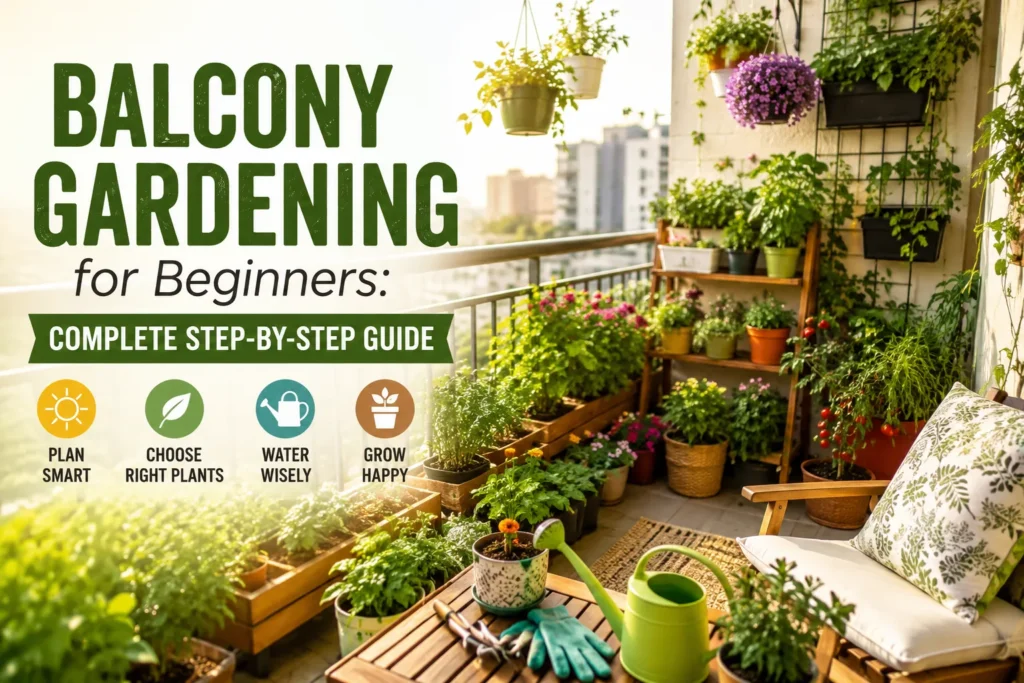
Balcony gardening is one of the easiest ways to enjoy nature while living in an apartment or urban home. Even a small balcony can become a productive green space for growing flowers, herbs, vegetables, and ornamental plants. Whether you want fresh produce, a relaxing outdoor retreat, or a beautiful home, balcony gardening makes it possible without needing a backyard.
Success begins with proper planning. Understanding your balcony’s sunlight, wind conditions, available space, and structural limitations helps you choose the right plants and containers. With quality potting mix, regular watering, and simple maintenance, even beginners can create a thriving balcony garden.
This guide covers everything you need to know—from planning and designing your space to selecting plants, maintaining healthy growth, and avoiding common mistakes.
Assessment & Planning
Before purchasing plants or containers, evaluate your balcony carefully. Good planning helps you maximize space, select suitable plants, and prevent future problems.
Analyze Sunlight
Sunlight determines which plants will grow successfully.
Full Sun (6–8+ Hours)
Balconies receiving six or more hours of direct sunlight are ideal for vegetables and flowering plants.
Best choices include:
- Tomatoes
- Chillies
- Basil
- Marigolds
- Petunias
- Lavender
- Roses
Partial Sun (3–6 Hours)
These balconies support many herbs, leafy vegetables, and ornamental plants.
Suitable plants include:
- Mint
- Coriander
- Spinach
- Lettuce
- Geraniums
- Begonias
Shade (Less Than 3 Hours)
Limited sunlight doesn’t mean limited options. Many foliage plants thrive in indirect light.
Popular shade-loving plants include:
- Peace Lily
- Ferns
- Snake Plant
- ZZ Plant
- Caladium
Observe your balcony throughout the day because sunlight changes with the seasons.
Check Wind Exposure
High-rise balconies often experience strong winds that dry soil quickly and damage delicate plants.
Protect your garden by using:
- Bamboo screens
- Wooden lattice panels
- Outdoor fabric screens
- Glass barriers
- Taller plants as natural windbreaks
These reduce wind damage while improving privacy.
Consider Structural Weight
Every balcony has a safe weight capacity. Heavy pots, wet soil, and furniture add significant load.
To reduce weight:
- Choose plastic or resin pots.
- Use fabric grow bags.
- Avoid oversized concrete planters.
- Place heavier containers close to walls for better support.
Always follow your apartment’s safety guidelines.
Measure Available Space
Measure your balcony’s:
- Length
- Width
- Door clearance
- Wall space
- Railing height
Leave enough room to walk comfortably. Proper spacing improves airflow, sunlight exposure, and makes maintenance easier.
Check Apartment Rules
Before installing shelves or hanging baskets, review your building regulations.
Confirm whether your apartment allows:
- Vertical gardens
- Hanging planters
- Balcony shelves
- Irrigation systems
Also ensure excess water does not drip onto neighboring balconies by using trays or saucers beneath containers.
Proper planning creates a solid foundation for a successful balcony garden.
Design & Layout
A smart layout makes a small balcony feel larger while improving plant health and accessibility.
Vertical Gardening
Growing upward instead of outward is one of the easiest ways to maximize limited space.
Wall Planters
Wall-mounted planters are perfect for herbs, succulents, leafy greens, and flowering plants.
Benefits include:
- Saves floor space
- Creates an attractive green wall
- Improves organization
- Makes watering easier
Shelves & Plant Stands
Multi-level shelves and stands allow you to grow more plants while ensuring each receives enough sunlight.
Place sun-loving plants on upper shelves and shade-tolerant plants below.
Privacy Screens
Privacy screens create a peaceful outdoor space while reducing wind.
Popular options include:
- Green walls
- Trellises
- Bamboo screens
- Climbing plants
Excellent climbing plants include:
- Jasmine
- Bougainvillea
- Morning Glory
- Clematis
- Passion Flower
These provide greenery, flowers, and privacy without taking up valuable floor space.
Functional Seating
Your balcony should also be a place to relax.
Even a compact balcony can accommodate:
- A folding chair
- Small table
- Outdoor cushions
- String lights
- Decorative planters
Combining plants with comfortable seating creates a peaceful retreat for reading or enjoying your morning coffee.
Thriller-Spiller-Filler Method
Professional-looking containers often use the Thriller-Spiller-Filler design technique.
- Thriller: A tall focal plant such as Cordyline or ornamental grass.
- Spiller: Trailing plants like English Ivy or Petunia that cascade over the pot.
- Filler: Medium-sized flowering plants such as Marigolds, Coleus, or Begonias that fill empty spaces.
This simple method creates balanced, attractive container arrangements.
Containers & Gardening Tools
Choosing the right containers directly affects plant health and balcony safety.
Best Containers
Lightweight containers are ideal because they are easy to move and reduce structural load.
Good options include:
- Plastic pots
- Resin planters
- Fabric grow bags
Ensure every container has drainage holes to prevent root rot.
Hanging Baskets
Hanging baskets maximize vertical space and are perfect for:
- Petunias
- Verbena
- Fuchsia
- Mint
- Basil
- Parsley
Secure them properly and follow apartment safety rules.
Essential Gardening Tools
Beginners only need a few basic tools:
- Hand trowel
- Pruning shears
- Watering can
- Gardening gloves
- Spray bottle
Quality tools make planting, watering, pruning, and maintenance much easier.
Soil & Nutrition
Healthy soil is the foundation of a successful balcony garden. Since container plants rely entirely on the potting mix for nutrients, using the right soil and feeding schedule is essential for strong roots, healthy foliage, and abundant flowers or vegetables.
Best Potting Mix
Avoid using regular garden soil alone, as it becomes compacted and drains poorly. Instead, use a lightweight potting mix containing:
- Coco peat for moisture retention
- Compost or vermicompost for nutrients
- Perlite for aeration
- River sand for drainage
- Neem cake to help prevent soil pests
A well-balanced mix provides the ideal combination of drainage, moisture, and nutrients.
Organic Fertilizers
Organic fertilizers improve soil health while supplying nutrients gradually.
Popular choices include:
- Vermicompost
- Compost
- Bone meal
- Seaweed fertilizer
Apply organic fertilizer every 4–6 weeks during the growing season for healthy growth.
Liquid Fertilizers
Fast-growing vegetables and flowering plants benefit from liquid fertilizers because nutrients are absorbed quickly.
General feeding schedule:
- Flowering plants: Every 10–14 days
- Herbs and leafy vegetables: Every 2–3 weeks
- Fruiting plants: Every 1–2 weeks
Always apply liquid fertilizer to moist soil to avoid root damage.
Drainage & Soil Care
Proper drainage prevents waterlogging and root rot.
Follow these practices:
- Use containers with drainage holes.
- Cover holes with mesh.
- Empty water trays after watering.
- Refresh potting mix every 1–2 years.
Most balcony plants prefer a soil pH between 6.0 and 7.0 for efficient nutrient absorption.
Watering Strategies
Watering is one of the most important aspects of balcony gardening. Since containers dry out faster than garden beds, regular moisture checks are essential.
Drip Irrigation
A drip irrigation system delivers water directly to plant roots while reducing waste.
Benefits include:
- Saves water
- Maintains consistent moisture
- Reduces overwatering
- Prevents fungal diseases
- Ideal for busy gardeners
Adding a timer makes watering automatic.
Manual Watering
A watering can with a fine rose attachment remains the easiest option for beginners.
Remember to:
- Water the soil instead of the leaves.
- Water until excess drains from the bottom.
- Check drainage regularly.
Saucers & Catchment Trays
Place trays beneath containers to:
- Protect balcony flooring
- Prevent water from dripping below
- Keep the area clean
Empty standing water after watering to prevent mosquito breeding.
Seasonal Watering
Watering needs change throughout the year.
Spring: Water when the topsoil becomes dry.
Summer: Check soil daily. Some plants may need watering twice during extreme heat.
Monsoon: Reduce watering and ensure good drainage.
Autumn: Water less frequently as temperatures cool.
Winter: Water only when necessary since evaporation slows.
Morning is generally the best time to water because it reduces evaporation and helps plants absorb moisture before the day becomes hot.
Choosing Plants
Choosing plants that match your balcony’s growing conditions greatly improves your chances of success. Beginners should start with hardy, low-maintenance varieties.
Edible Plants
Growing herbs and vegetables provides fresh produce while making the most of limited space.
Herbs
Easy herbs include:
- Basil
- Mint
- Coriander
- Parsley
- Oregano
These grow well in containers and require minimal care.
Vegetables
Compact vegetables suitable for balconies include:
- Tomatoes
- Chillies
- Spinach
- Lettuce
- Fenugreek
Use grow bags or medium-sized pots with adequate sunlight.
Ornamental Plants
Flowers and foliage plants add beauty throughout the year.
Popular flowering plants include:
- Marigolds
- Petunias
- Geraniums
- Begonias
For vertical gardening, grow climbers such as:
- Jasmine
- Morning Glory
- Bougainvillea
If your balcony receives limited sunlight, choose:
- Peace Lily
- Ferns
- Snake Plant
- ZZ Plant
- Caladium
Plant Selection Tips
For the best results:
- Match plants to available sunlight.
- Choose compact varieties.
- Group plants with similar watering needs.
- Mix edible and ornamental plants.
- Buy healthy plants from reliable nurseries.
Maintenance & Protection
Routine maintenance keeps your balcony garden healthy, productive, and attractive throughout the year.
Pruning
Regular pruning removes dead leaves and encourages healthy growth.
Benefits include:
- Better airflow
- More flowers and fruits
- Healthier plants
- Improved appearance
Use clean, sharp pruning shears and avoid removing more than one-third of the plant at once.
Natural Pest Control
Inspect plants regularly for pests like aphids, mealybugs, and spider mites.
Safe organic solutions include:
- Neem oil spray
- Mild soap solution
- Companion planting with marigolds or basil
Early treatment prevents major infestations.
Seasonal Protection
Protect plants according to the weather.
Summer
- Water early in the morning.
- Apply mulch.
- Use shade cloth during extreme heat.
Winter
- Water less frequently.
- Move containers closer to sunny areas.
- Protect delicate plants from cold winds.
Repotting
Most container plants need repotting every 1–2 years.
Signs include:
- Roots growing through drainage holes
- Slow growth
- Soil drying too quickly
- Yellowing leaves
Move plants into containers slightly larger than the previous one and replace old potting mix with fresh soil.
Proper maintenance keeps plants healthy while ensuring continuous flowering, fruiting, and lush foliage.
Common Beginner Mistakes
Every gardener makes mistakes in the beginning, but understanding the most common ones helps you build a healthier and more productive balcony garden.
Overwatering
Overwatering is the leading cause of plant failure in containers. Constantly wet soil prevents roots from getting oxygen and increases the risk of root rot.
Signs include:
- Yellow leaves
- Wilting despite wet soil
- Mold on the soil surface
- Soft stems
Solution:
- Water only when the top 2–3 cm of soil feels dry.
- Always use containers with drainage holes.
- Empty excess water from trays after watering.
Choosing the Wrong Plants
Many beginners buy plants based on appearance instead of growing conditions.
For example:
- Sun-loving plants struggle in shade.
- Shade-loving plants may develop scorched leaves in direct sunlight.
Solution:
- Observe your balcony’s sunlight before buying plants.
- Choose varieties suited to your light conditions and local climate.
- Start with beginner-friendly plants.
Using Heavy Containers
Large concrete or ceramic pots increase the weight on your balcony and are difficult to move.
Instead, choose:
- Plastic pots
- Resin planters
- Fabric grow bags
- Fiberglass containers
These are lightweight, durable, and ideal for apartment gardening.
Poor Drainage
Without proper drainage, water collects around the roots and encourages fungal diseases.
Prevent drainage problems by:
- Using quality potting mix
- Ensuring every pot has drainage holes
- Covering holes with mesh
- Replacing compacted soil when necessary
Ignoring Sunlight
Insufficient sunlight leads to weak growth, pale leaves, and poor flowering.
Monitor sunlight throughout the day and rotate containers occasionally so plants receive even light.
Overfertilizing
Applying too much fertilizer can burn roots and reduce flowering.
Best practices:
- Follow the recommended dosage.
- Feed according to the plant’s growth stage.
- Water after fertilizing if required.
Tips for Beginner Success
Build confidence by following these simple habits:
- Start with a small number of plants.
- Learn each plant’s care requirements.
- Inspect plants weekly.
- Keep gardening tools clean.
- Maintain a regular watering and feeding schedule.
Small improvements made consistently produce better long-term results.
Seasonal Balcony Gardening
Different seasons require different gardening practices. Adjusting watering, fertilizing, and plant care throughout the year keeps your balcony garden healthy and productive.
Spring
Spring is the best time to start planting because warmer temperatures encourage active growth.
Tasks include:
- Sow vegetable and flower seeds.
- Repot root-bound plants.
- Begin fertilizing.
- Install trellises and vertical supports.
- Check for early pest problems.
Recommended plants:
- Basil
- Coriander
- Tomatoes
- Marigolds
- Petunias
Summer
High temperatures increase water loss, so plants need extra attention.
Summer care includes:
- Water early in the morning.
- Check soil moisture daily.
- Apply mulch.
- Use shade cloth during extreme heat.
- Remove faded flowers regularly.
Recommended plants:
- Chillies
- Bougainvillea
- Aloe Vera
- Portulaca
- Succulents
Monsoon
Rainfall reduces watering needs but increases humidity and fungal diseases.
During the rainy season:
- Reduce manual watering.
- Keep drainage holes clear.
- Improve airflow between pots.
- Remove standing water.
- Watch for pests and fungal infections.
Recommended plants:
- Jasmine
- Money Plant
- Ferns
- Ginger
- Turmeric
Autumn
Cooler temperatures make autumn an excellent season for garden maintenance.
Tasks include:
- Harvest vegetables.
- Refresh potting mix.
- Apply compost.
- Remove unhealthy plants.
- Divide overcrowded plants.
Recommended plants:
- Mint
- Parsley
- Lettuce
- Chrysanthemums
- Calendula
Winter
Growth slows during winter, so maintenance becomes simpler.
Winter care includes:
- Water less frequently.
- Protect plants from cold winds.
- Move containers to sunnier spots.
- Remove dead leaves.
- Avoid excessive fertilizing.
Recommended plants:
- Peace Lily
- Spinach
- Kale
- Ferns
- Pansies
Following seasonal gardening practices helps plants remain healthy and productive throughout the year.
Budget-Friendly Balcony Gardening
Creating a beautiful balcony garden doesn’t require a large budget. With smart planning and a few DIY ideas, you can build an attractive green space while keeping costs low.
Start Small
Begin with the essentials:
- 4–6 easy-to-grow plants
- Lightweight pots or grow bags
- Quality potting mix
- Organic compost
- Basic gardening tools
Expand your collection gradually as your confidence grows.
Reuse Household Items
Many everyday objects can become attractive planters.
Examples include:
- Plastic buckets
- Wooden crates
- Tin cans
- Plastic bottles
- Ceramic bowls
- Old mugs
Always add drainage holes before planting.
Grow from Seeds and Cuttings
Seeds are more affordable than mature plants and provide a wider variety of choices.
Many plants can also be propagated from cuttings, including:
- Mint
- Money Plant
- Pothos
- Spider Plant
- Succulents
Propagation allows you to grow more plants without additional expense.
Save Money with Smart Gardening
Reduce costs by:
- Buying seasonal plants.
- Making compost from kitchen waste.
- Reusing rainwater where possible.
- Maintaining gardening tools properly.
- Exchanging cuttings with friends or gardening groups.
Starting small and expanding gradually makes balcony gardening both affordable and enjoyable.
Conclusion
Balcony gardening is a rewarding way to bring nature into your home, regardless of how much outdoor space you have. By assessing your balcony, choosing suitable containers, using quality potting mix, and selecting plants that match your growing conditions, you can create a thriving garden that provides fresh herbs, vegetables, colorful flowers, and year-round greenery.
Success comes from consistent care rather than perfection. Water plants according to their needs, feed them regularly, prune when necessary, and adjust your gardening routine with the changing seasons. As you gain experience, you can experiment with vertical gardening, new plant varieties, and creative layouts to make your balcony even more productive and attractive.
Whether your goal is to grow fresh food, beautify your home, or create a peaceful outdoor retreat, balcony gardening offers endless possibilities. Start with a few beginner-friendly plants, enjoy the learning process, and watch your small balcony transform into a vibrant green oasis.